

Ecuador
Amazon Rainforest (Sacha Lodge)
We picked Sacha Lodge for our first visit to the Amazon Rainforest and would definitely recommend it to anyone - especially if you’re already going into/out of Quito! Though expensive, we felt it was well worth the ~$1k/night price tag.
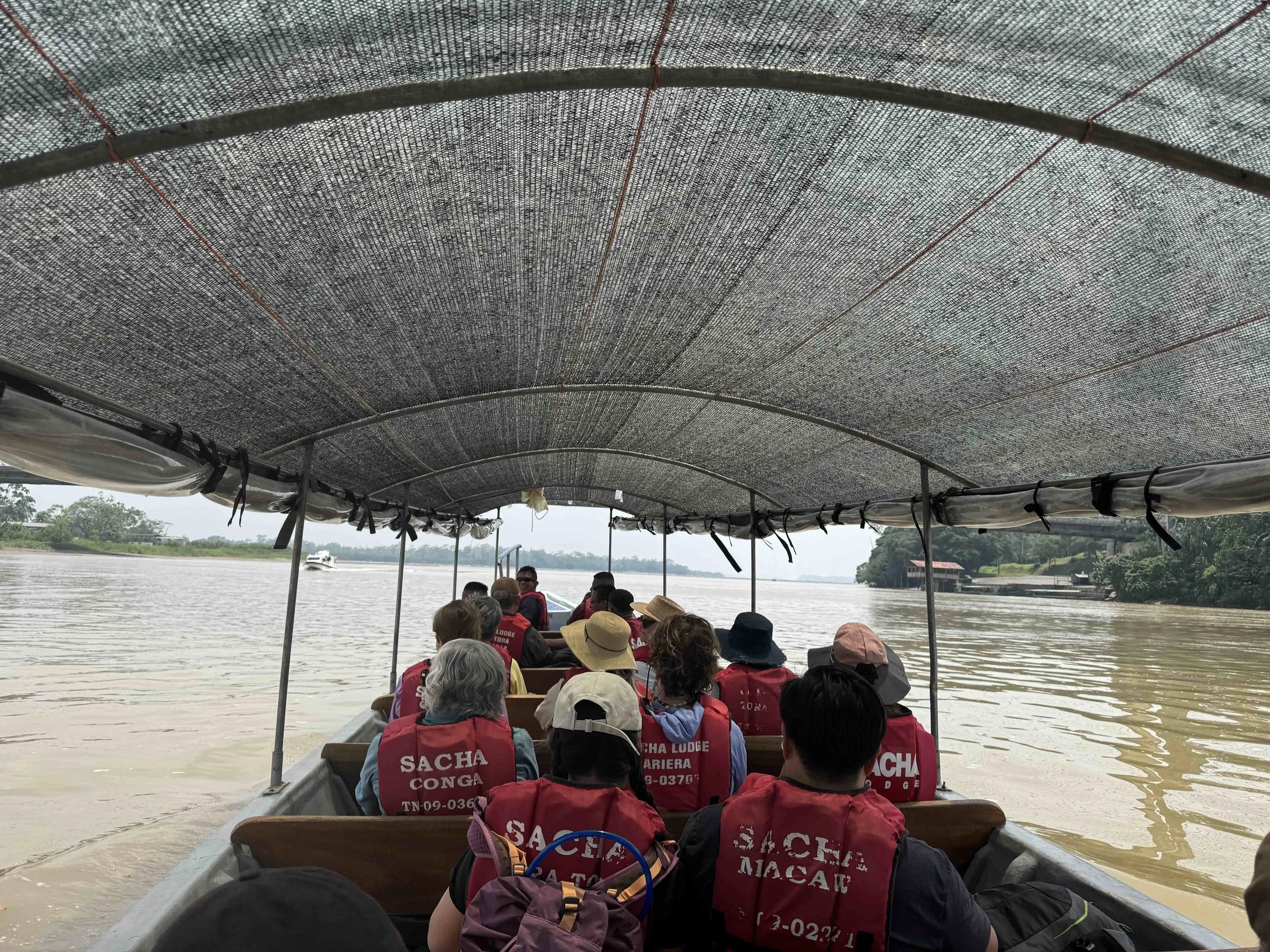
From the moment we booked, their organization and communication was impressive. We had a greeter who met us at the Quito Airport, gave us our boarding passes for the ~25 min flight to Coca, and helped get our bags checked in. Once in Coca, we handed over our checked luggage and didn’t see it again until we got to our rooms at the lodge. From the Coca airport, they loaded us into a small van for a 5 min ride to their local office where they had coffee, tea and snacks waiting. They then loaded us onto a long, fast riverboat for 1.5hrs on the Napo River. When we got off the riverboat, we had a 20 minute nature walk along a boardwalk/trail, and then another 20 minute canoe paddle through a blackwater creek and across the lagoon where the lodge is located.
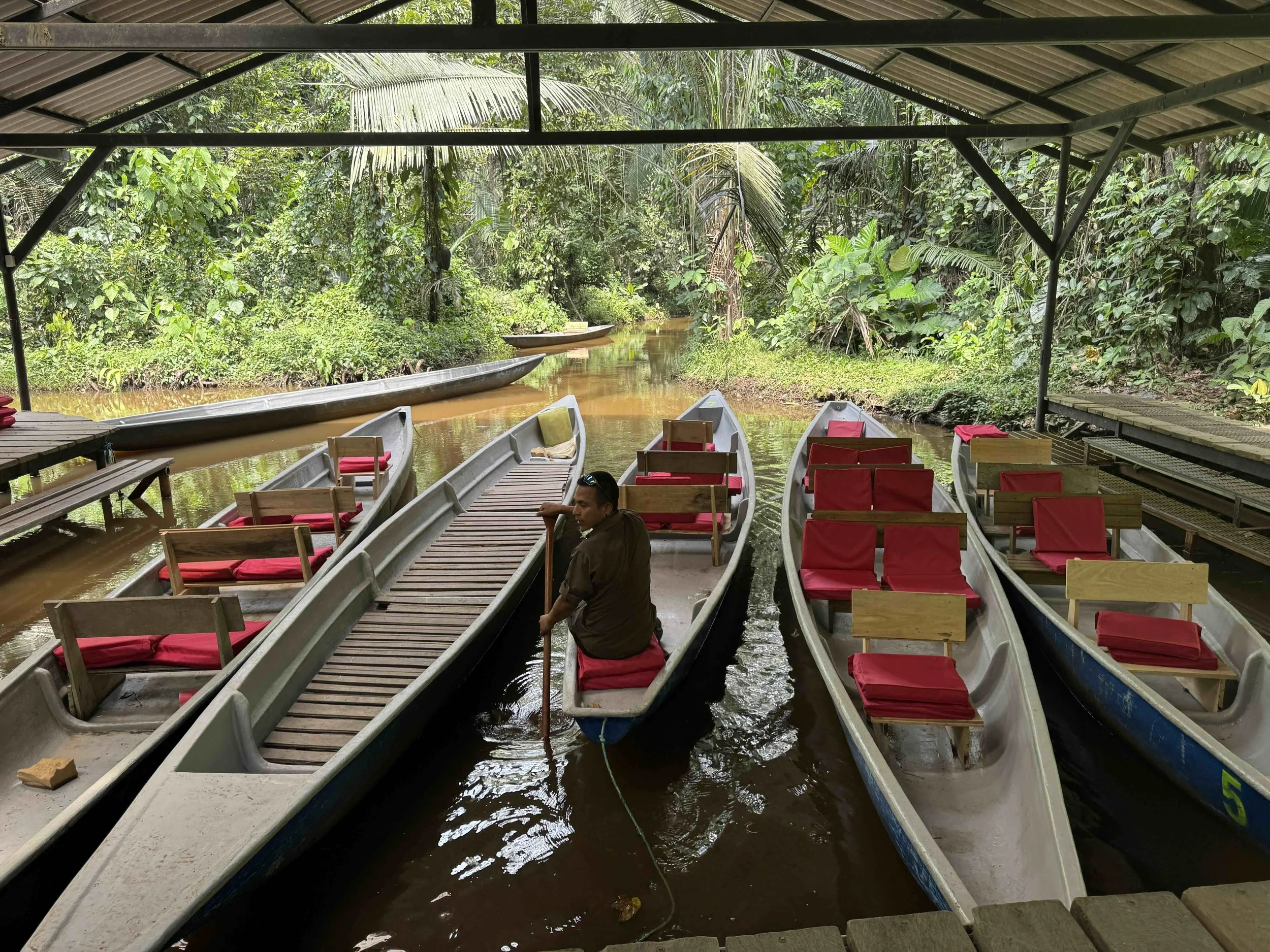
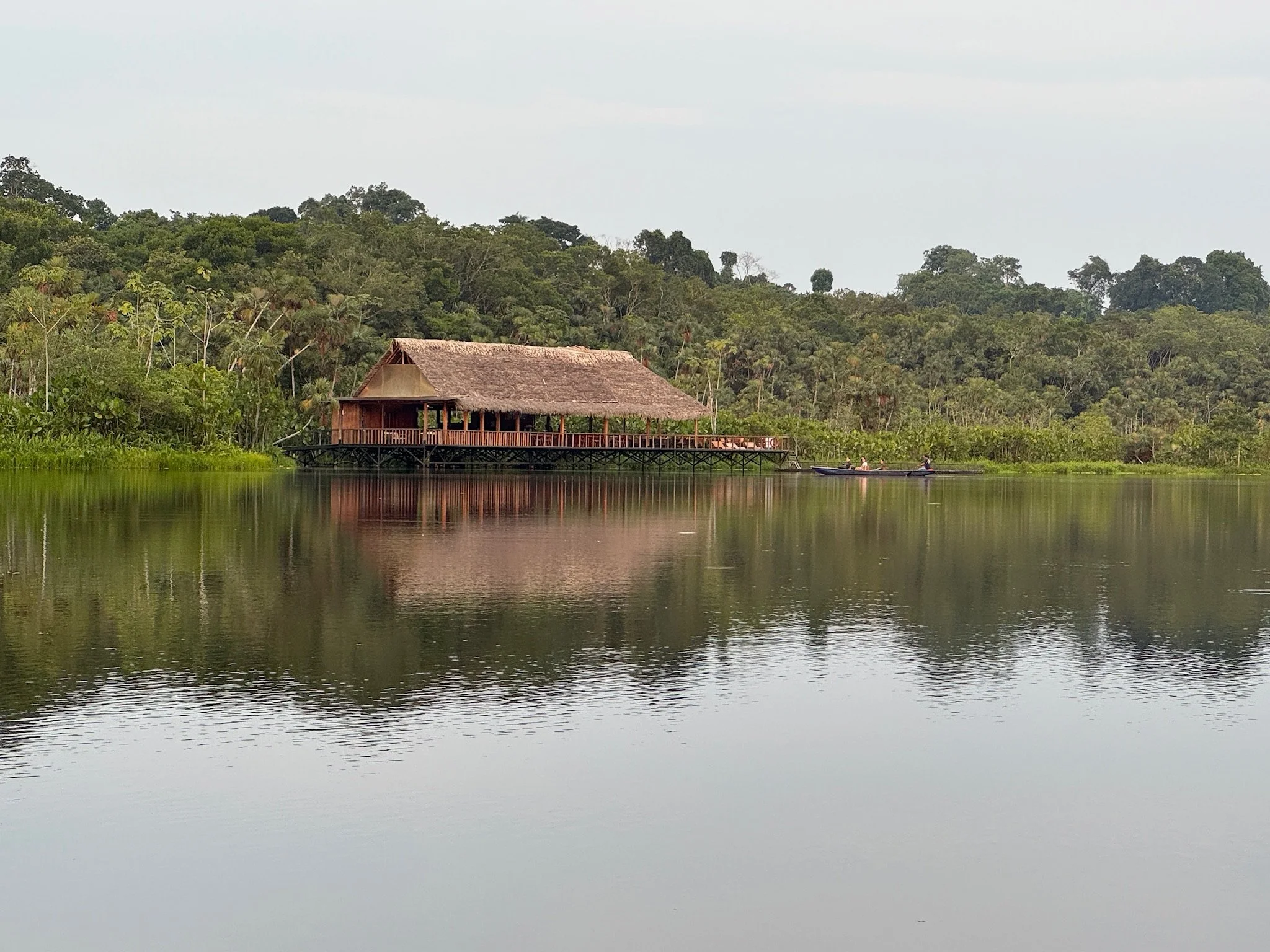
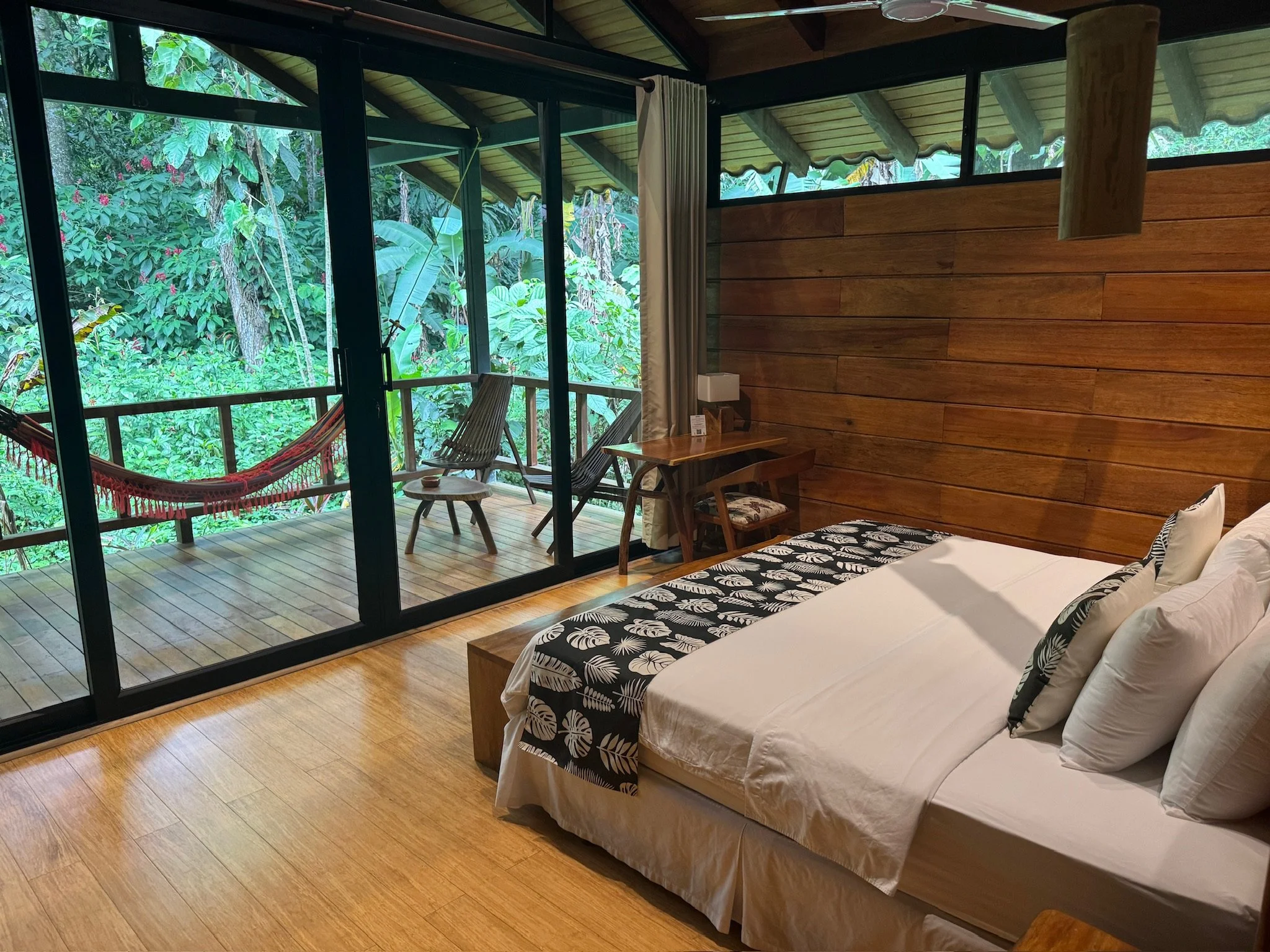
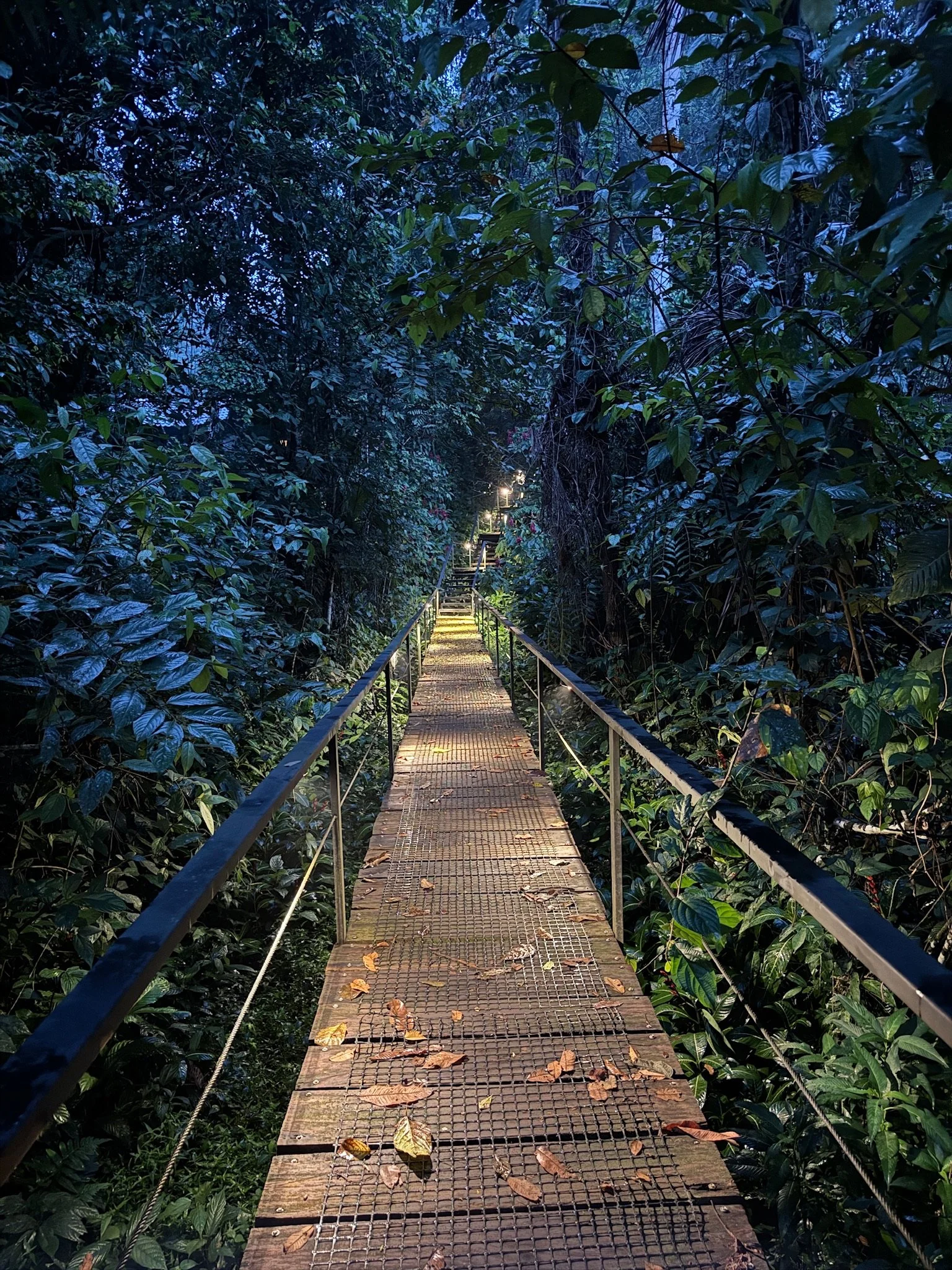
The lodge itself is beautiful, with elevated walkways throughout, outdoor dining facilities, and air-conditioned rooms for guests. Believe it or not, most Amazon lodges do NOT offer A/C! The infrastructure is impressive with miles of walking trails, blackwater creeks for canoeing, 3 towers, 1 suspension bridge, and a crane in order to get guests up into and above the canopy.
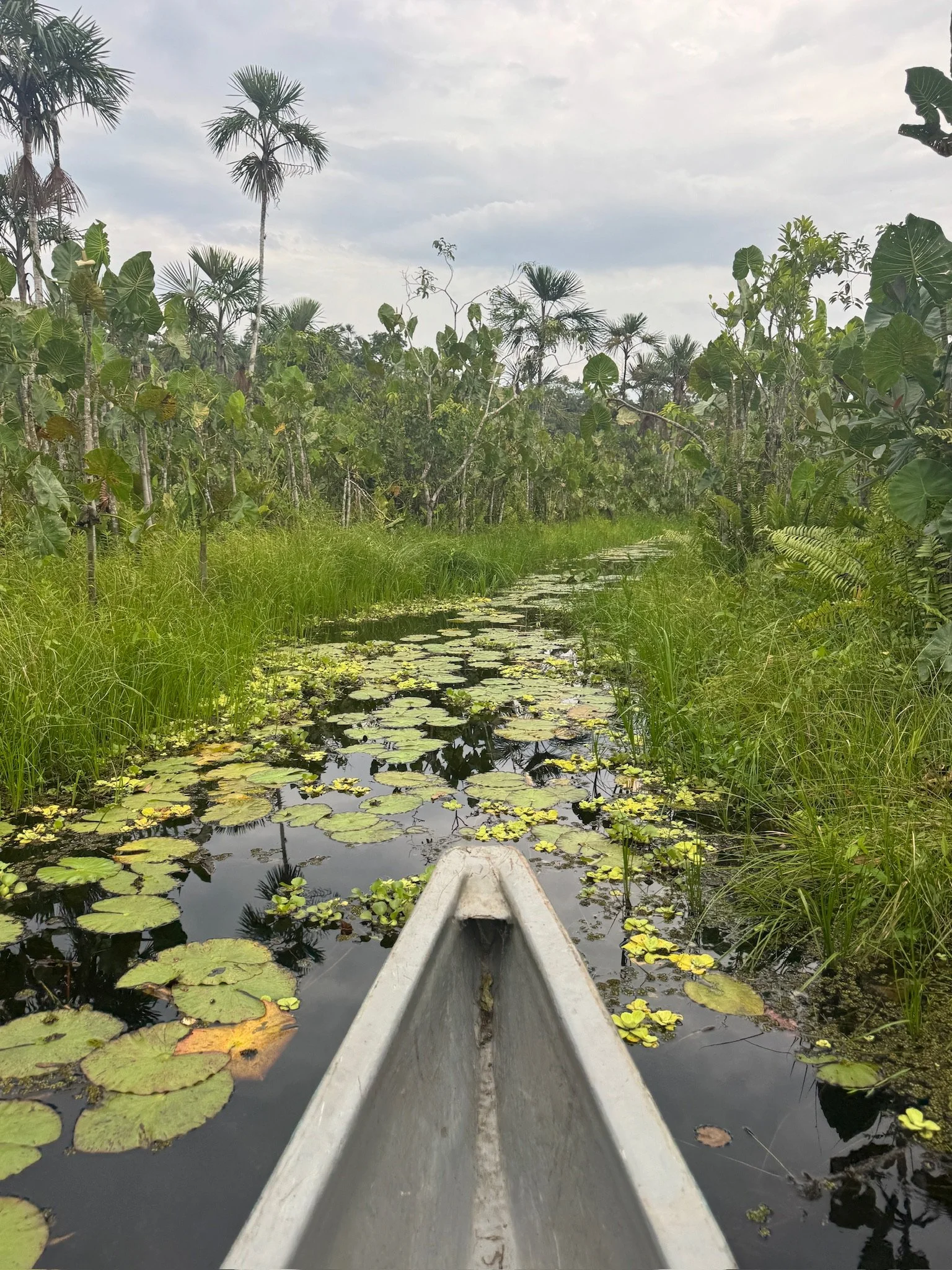
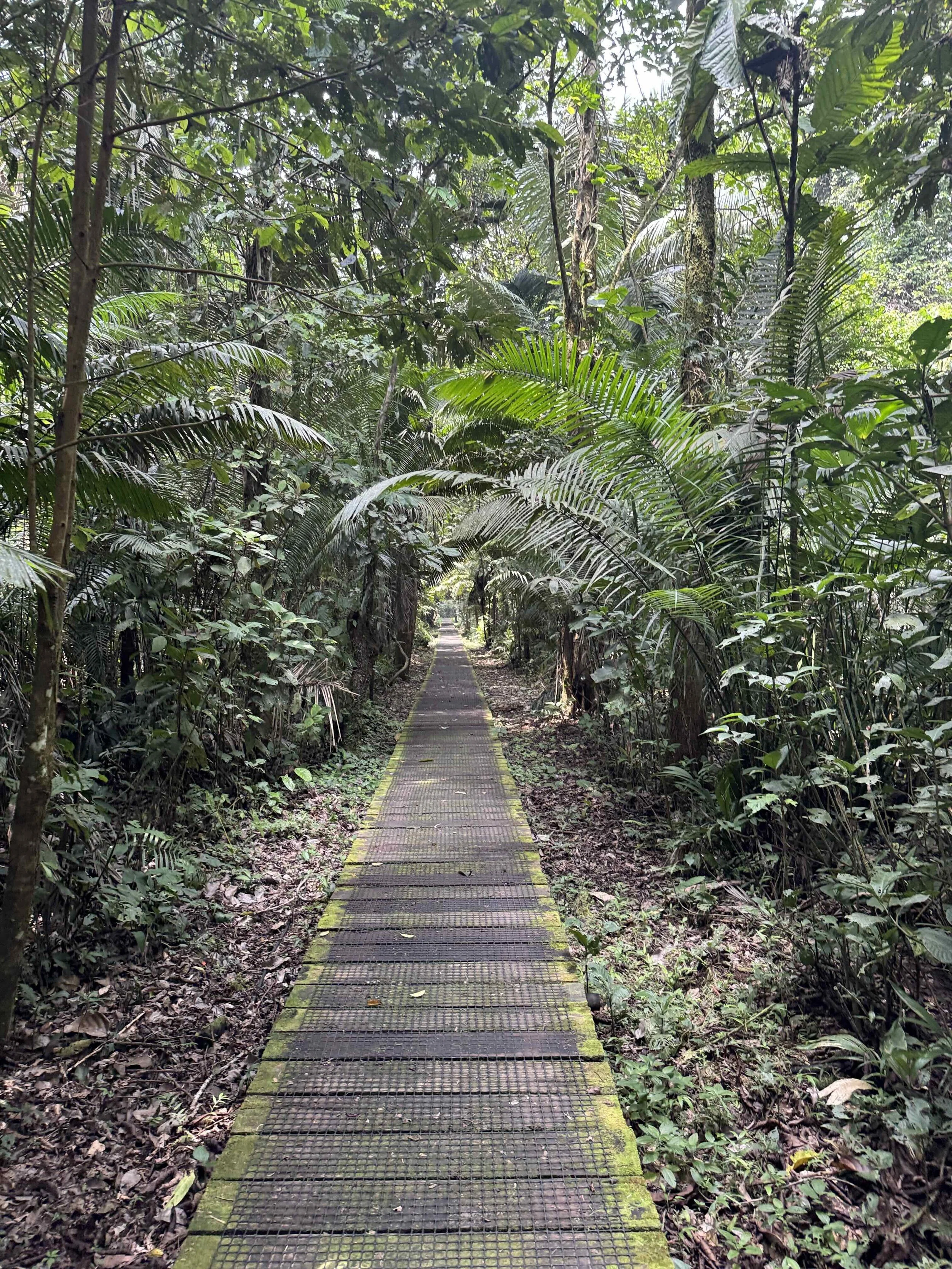
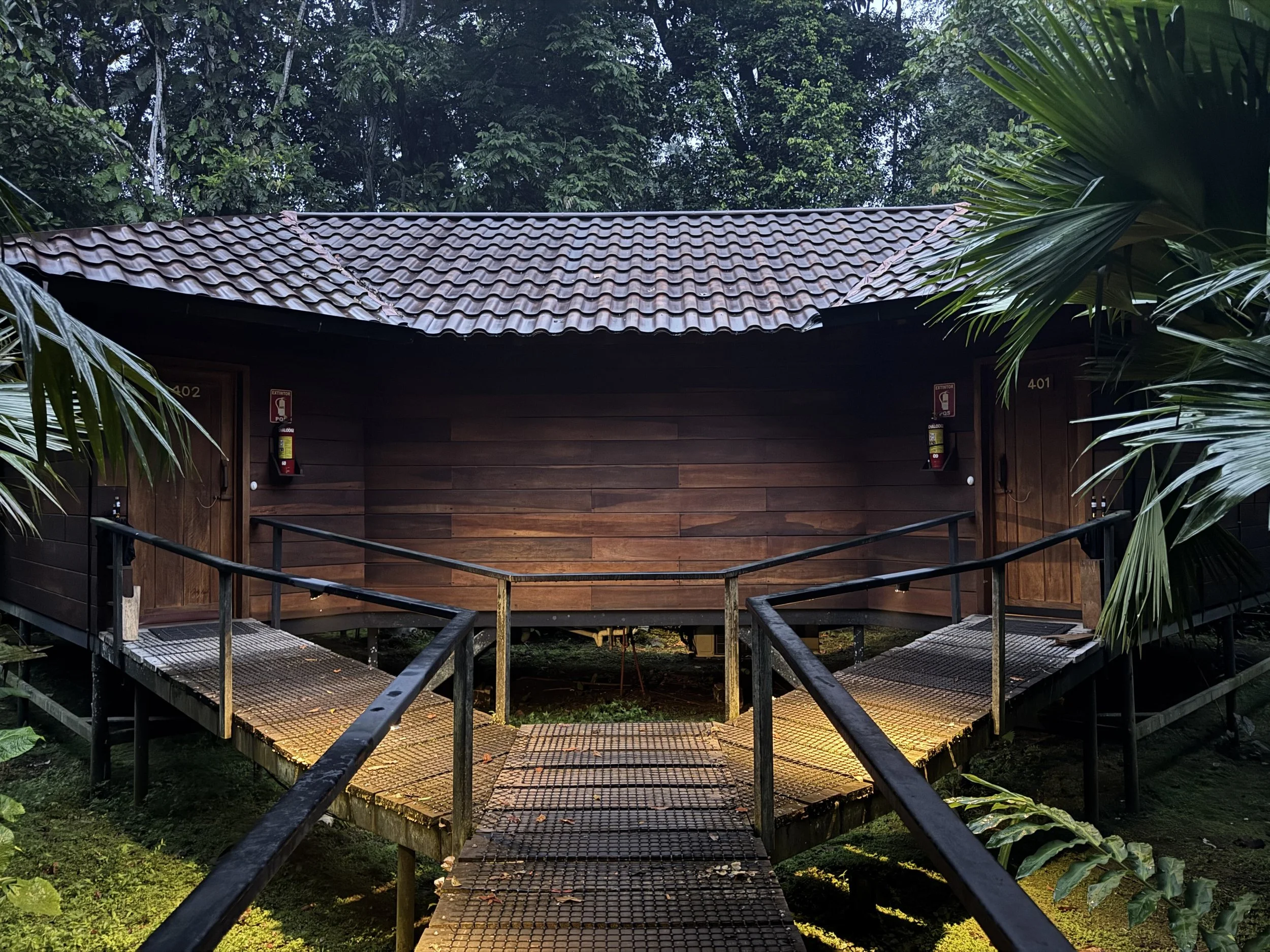
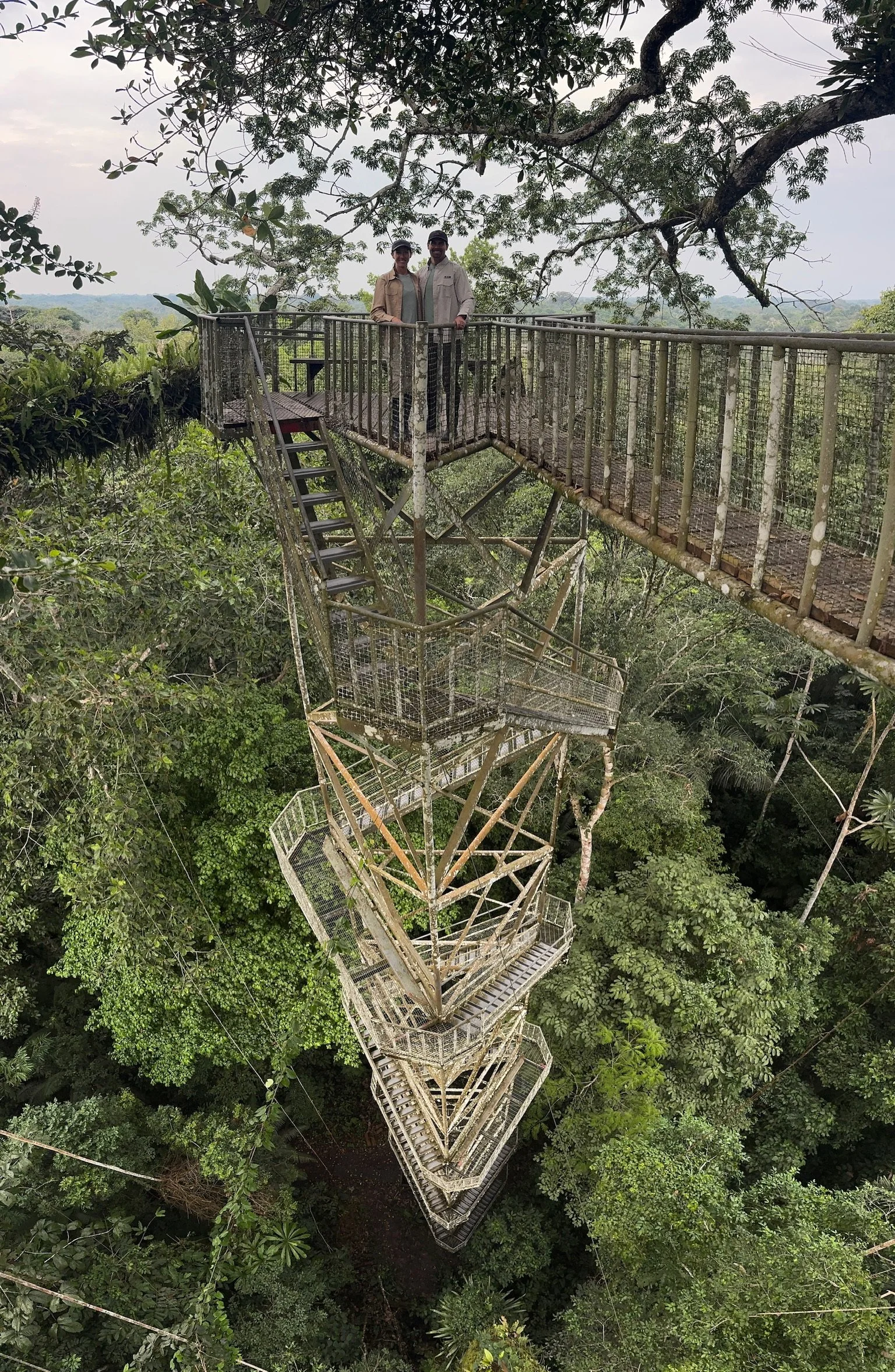
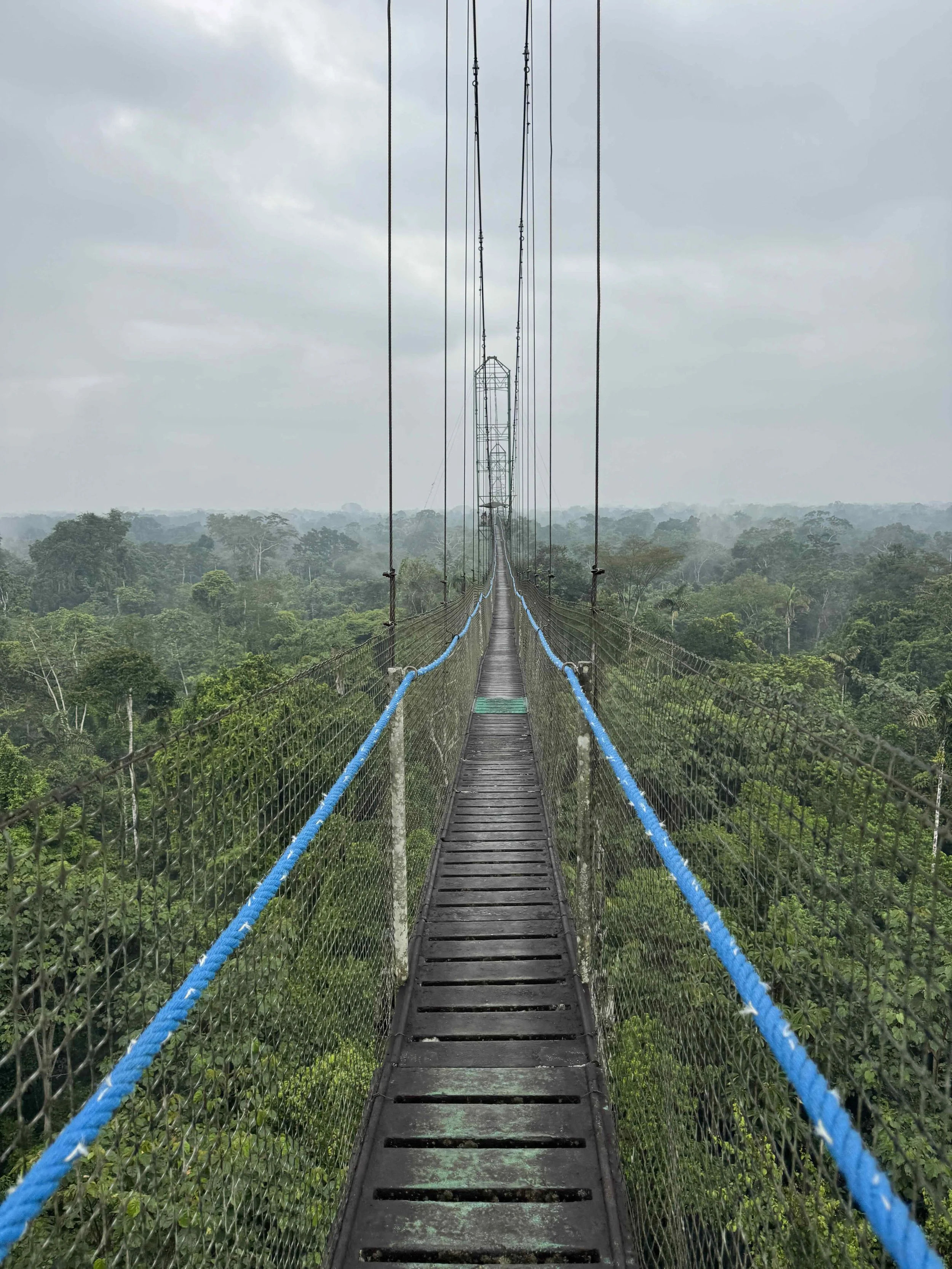
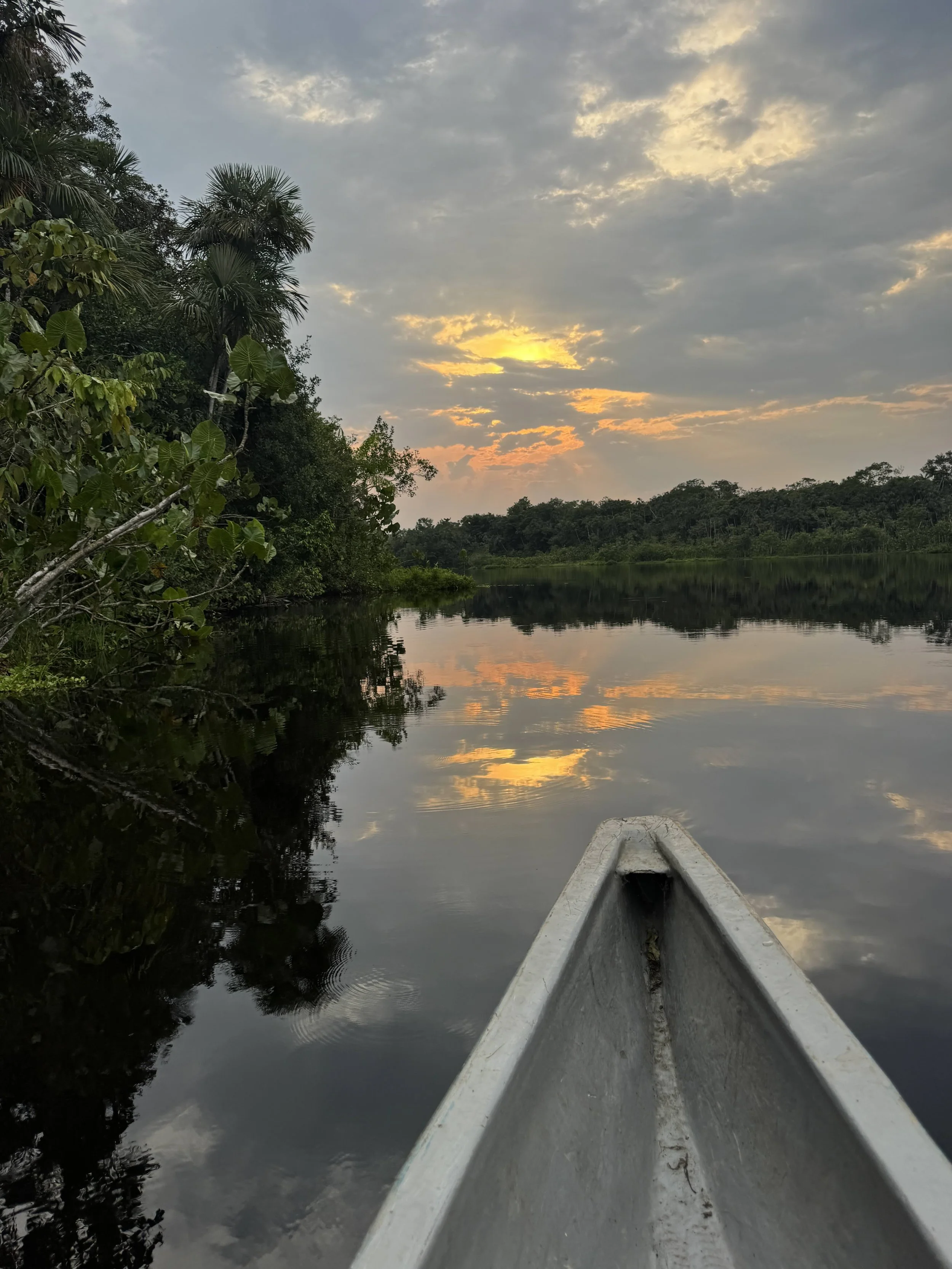
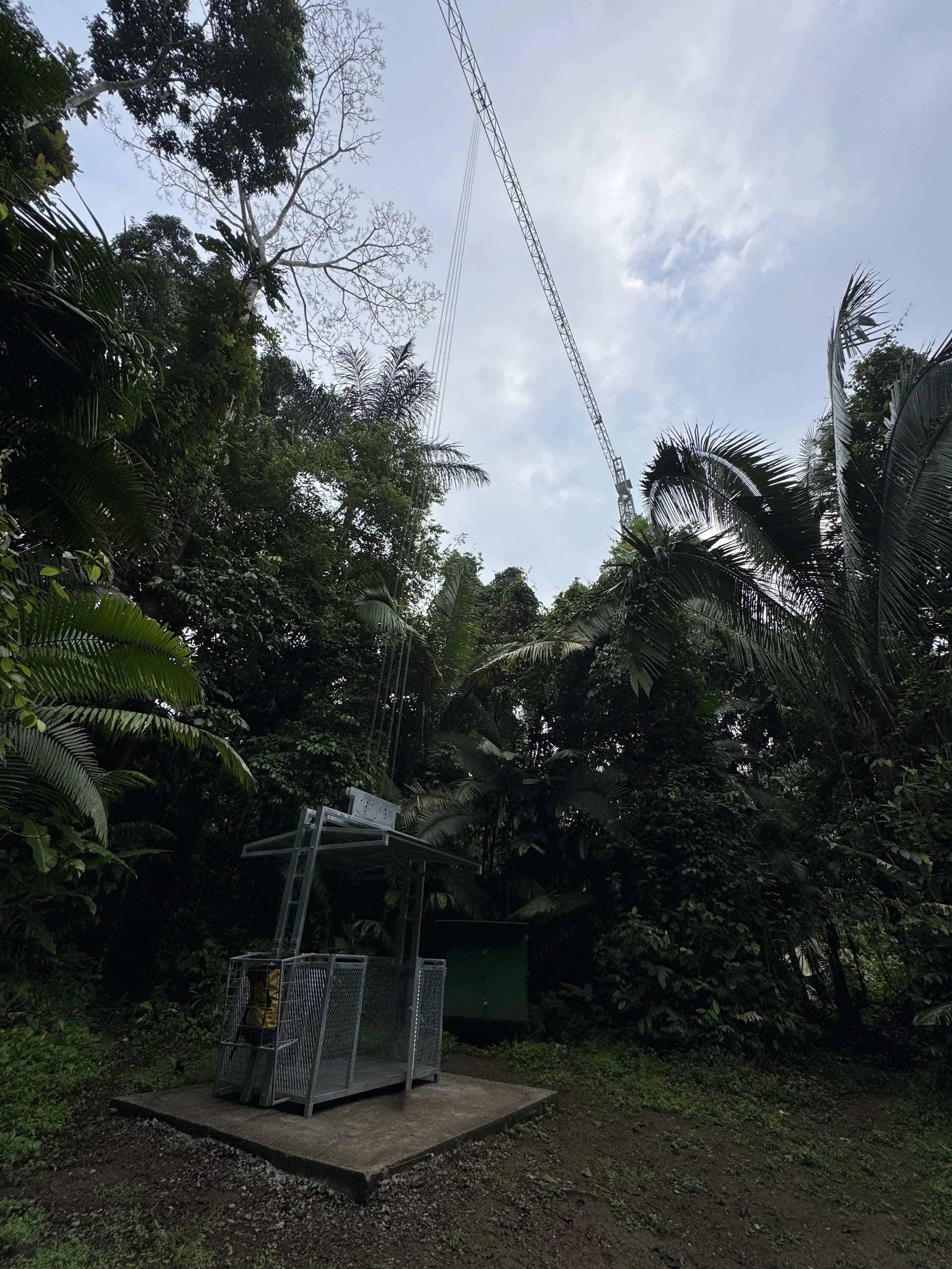
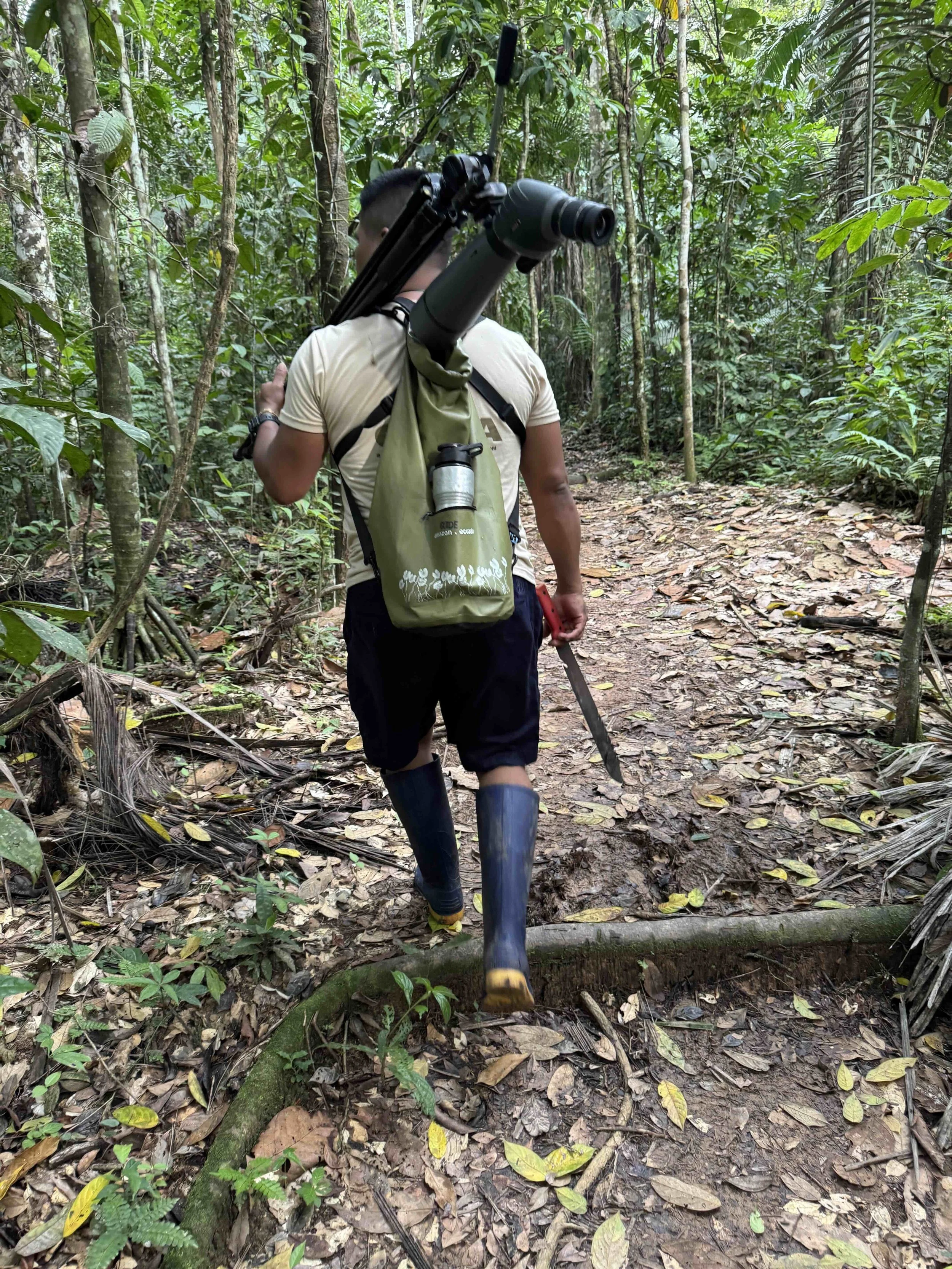
Unless you hire a private guide, the lodge will put guests into groups of 4-6, and match them with a guide for their stay. Activities include paddling in canoes, walking along trails, climbing one of the 3 towers, crossing the suspension bridge, or soaring around in the crane. Sometimes the guide and the canoe paddler are one-in-the-same, though occasionally it could be 2 different people. The guide will make the schedule for the group for the week - ensuring that you don’t run into other groups on the towers or trails, for example - and reminding everyone of where they should meet, and when.
Generally we (and other groups we observed) seemed to have an early morning outing (e.g. breakfast at 5:15 or 5:30am and departure by 5:45 or 6:00am) which lasted 3-6 hours. Then, groups were back by 11am-Noon with some free time before lunch which was available from 1-2:30pm. Afternoon outings usually started around 3:30 or 3:45pm, with returns before dinner which was available from 7-8:30pm. Then depending on the day, there might be a 45-60 minute night walk or paddle around 8 or 8:30pm.
There were a few activities available on-site at Sacha. We checked out the Butterfly House and were extremely disappointed. We saw all of 3 butterflies, all of which were the same type. Maybe just timing of our visit? The other two activities needed to be booked in advance and we didn’t opt for them: Piranha Fishing or Cacao Tasting.
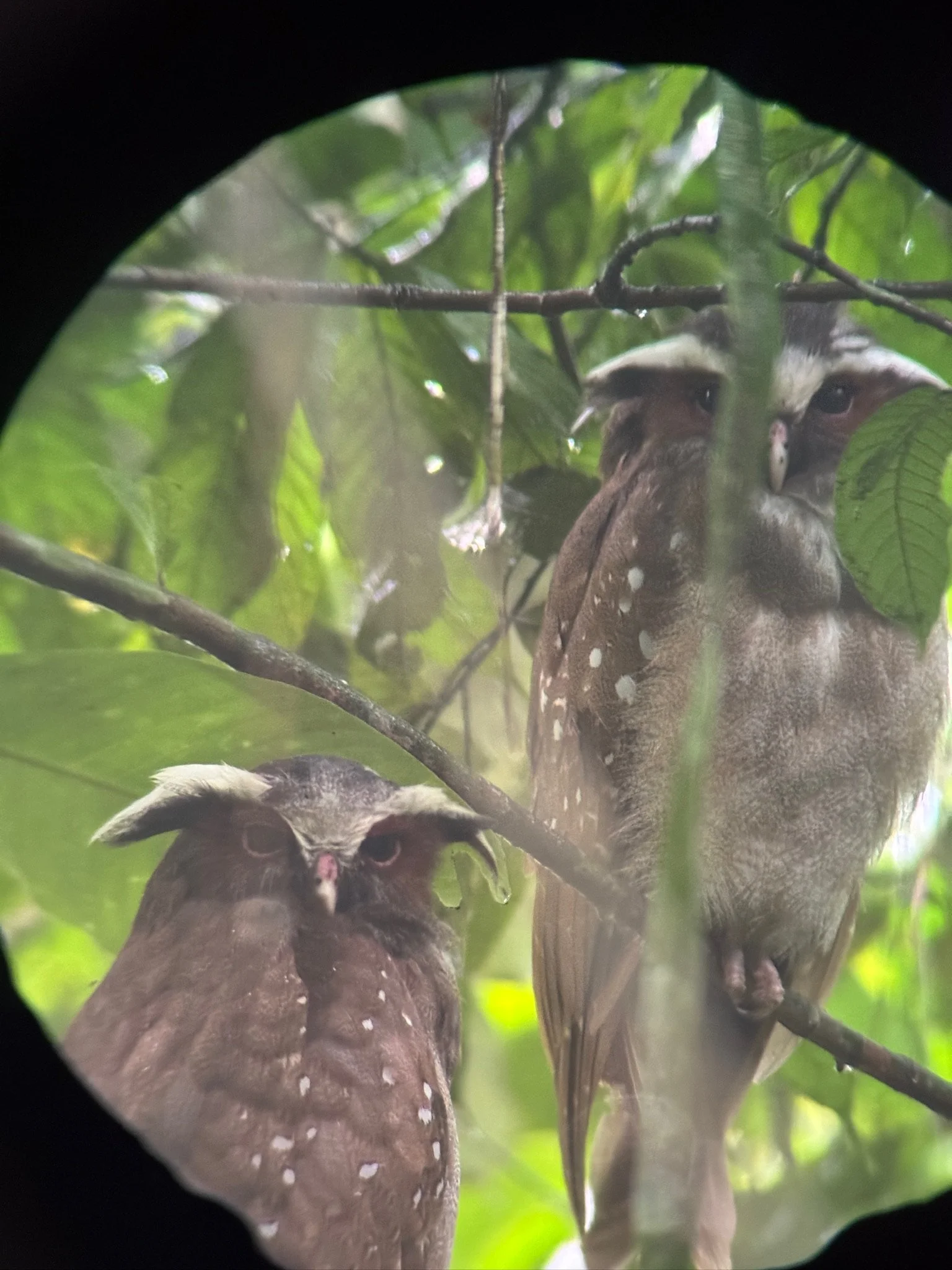
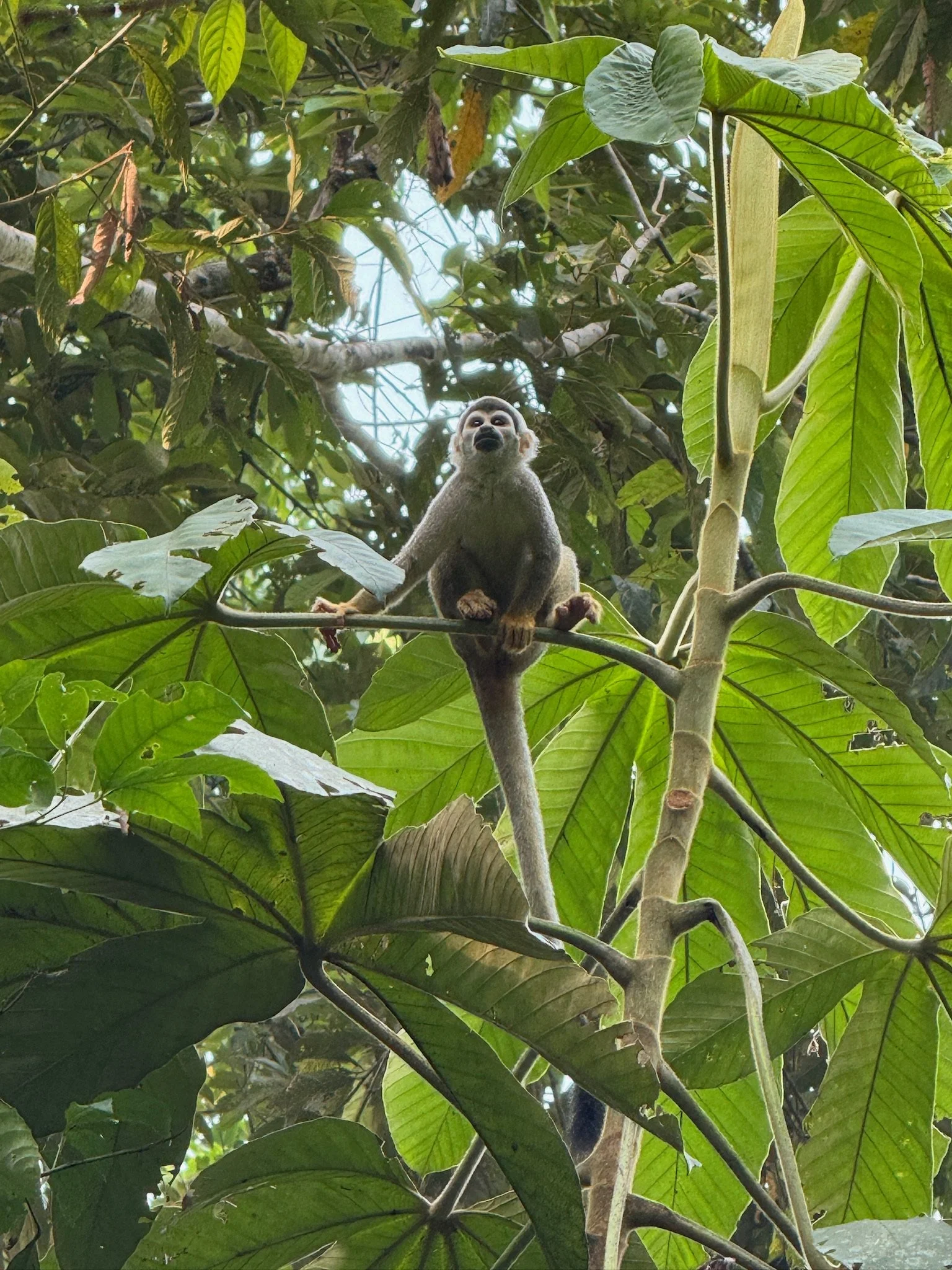
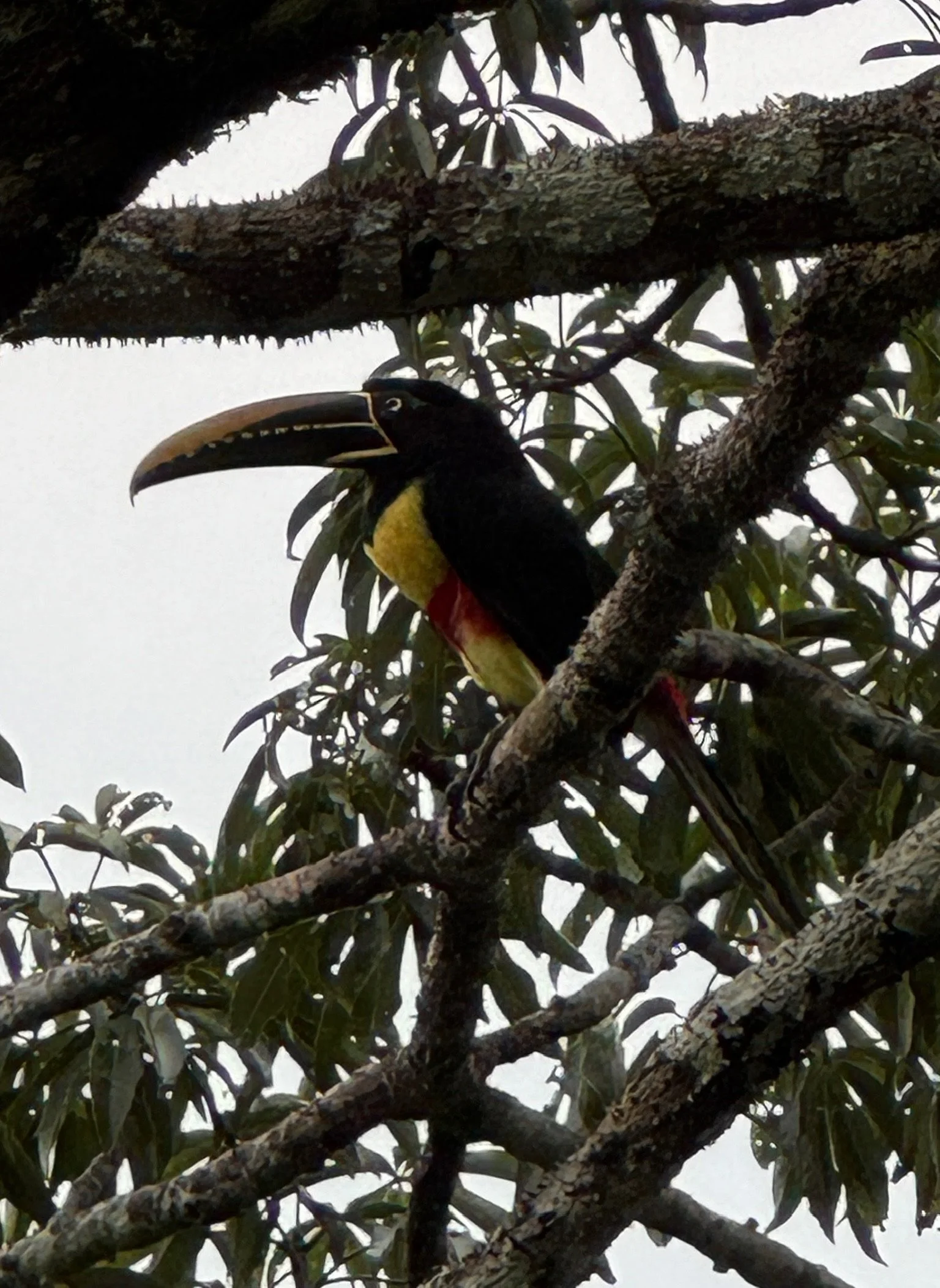
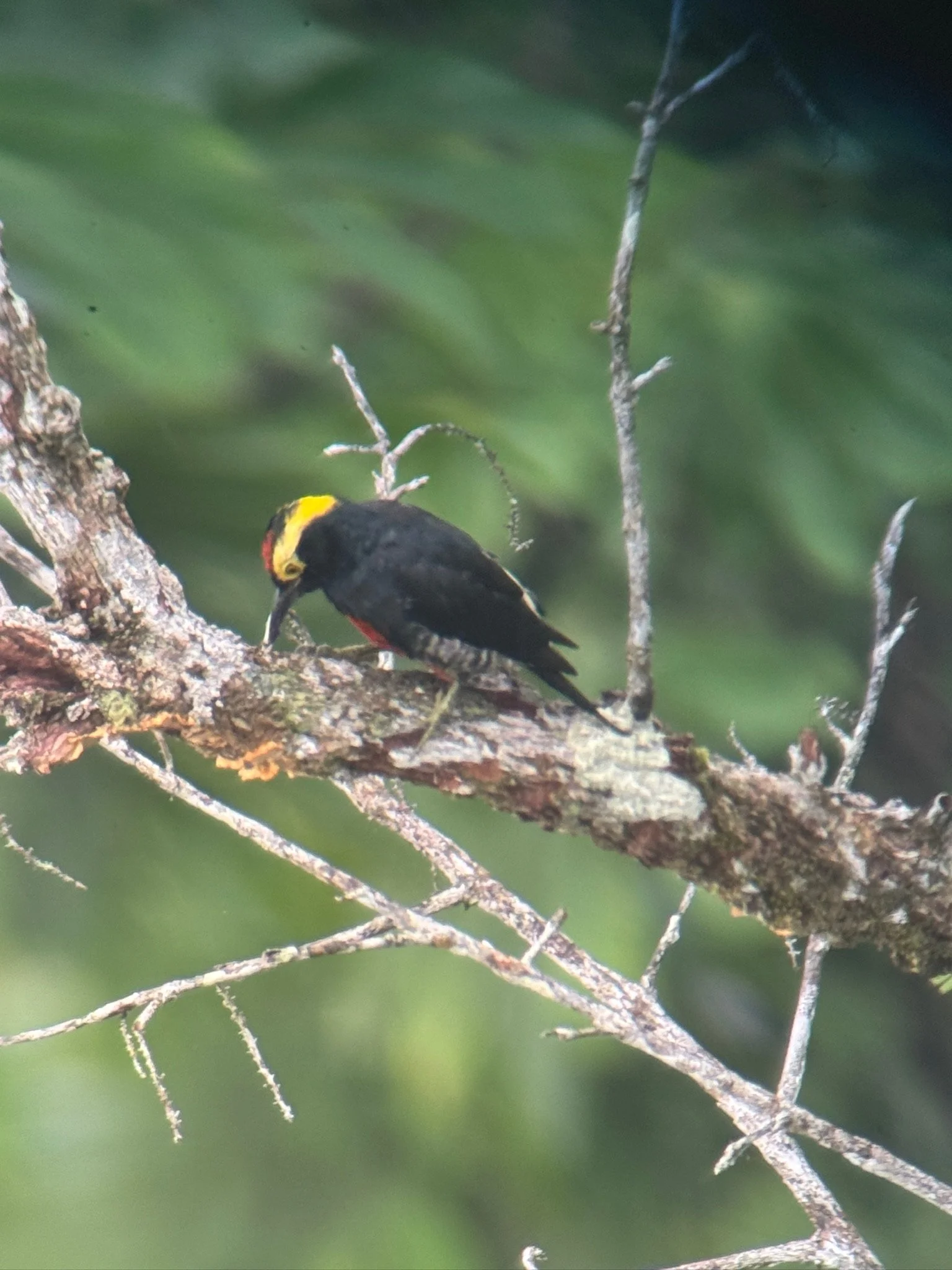
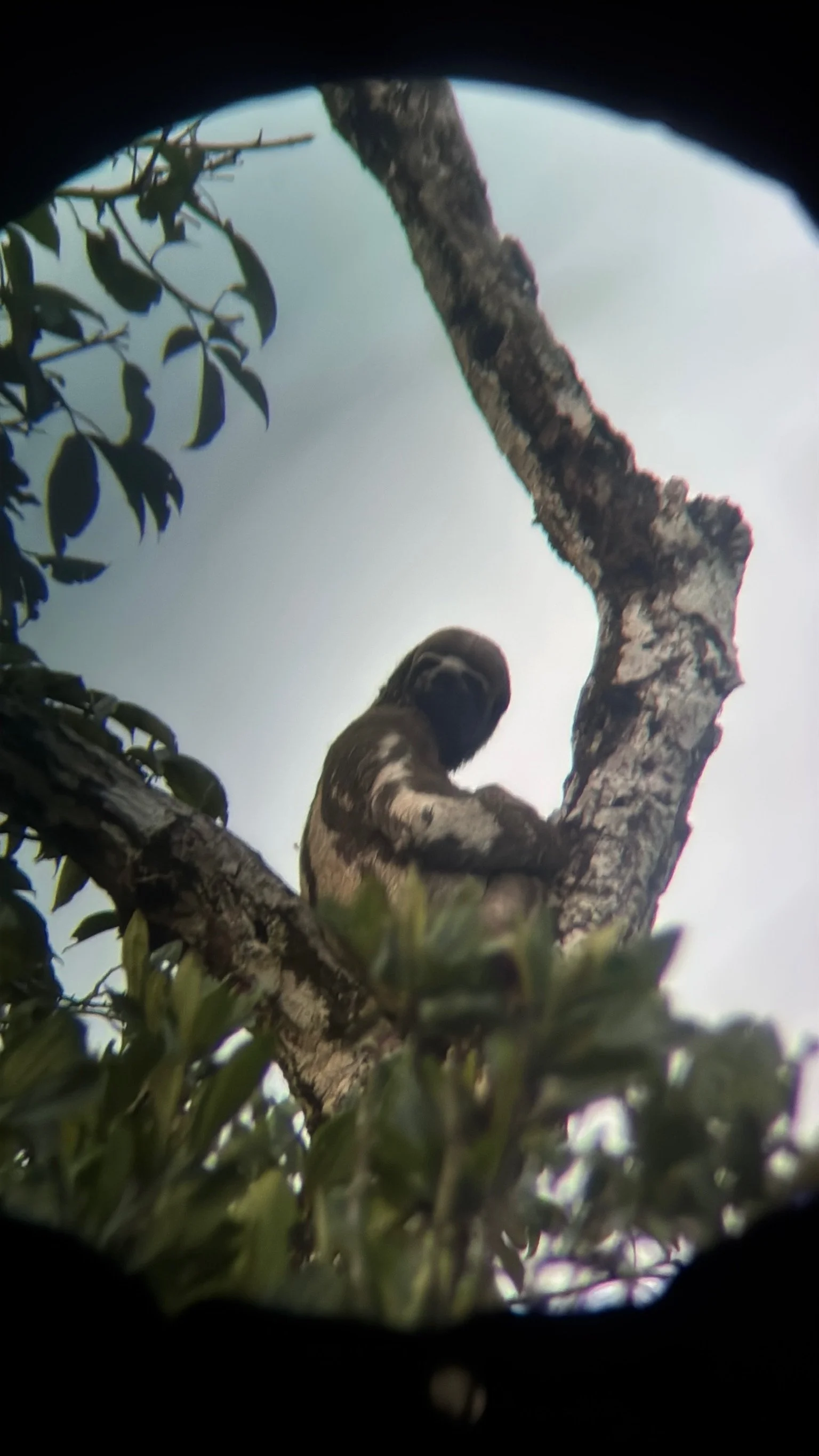
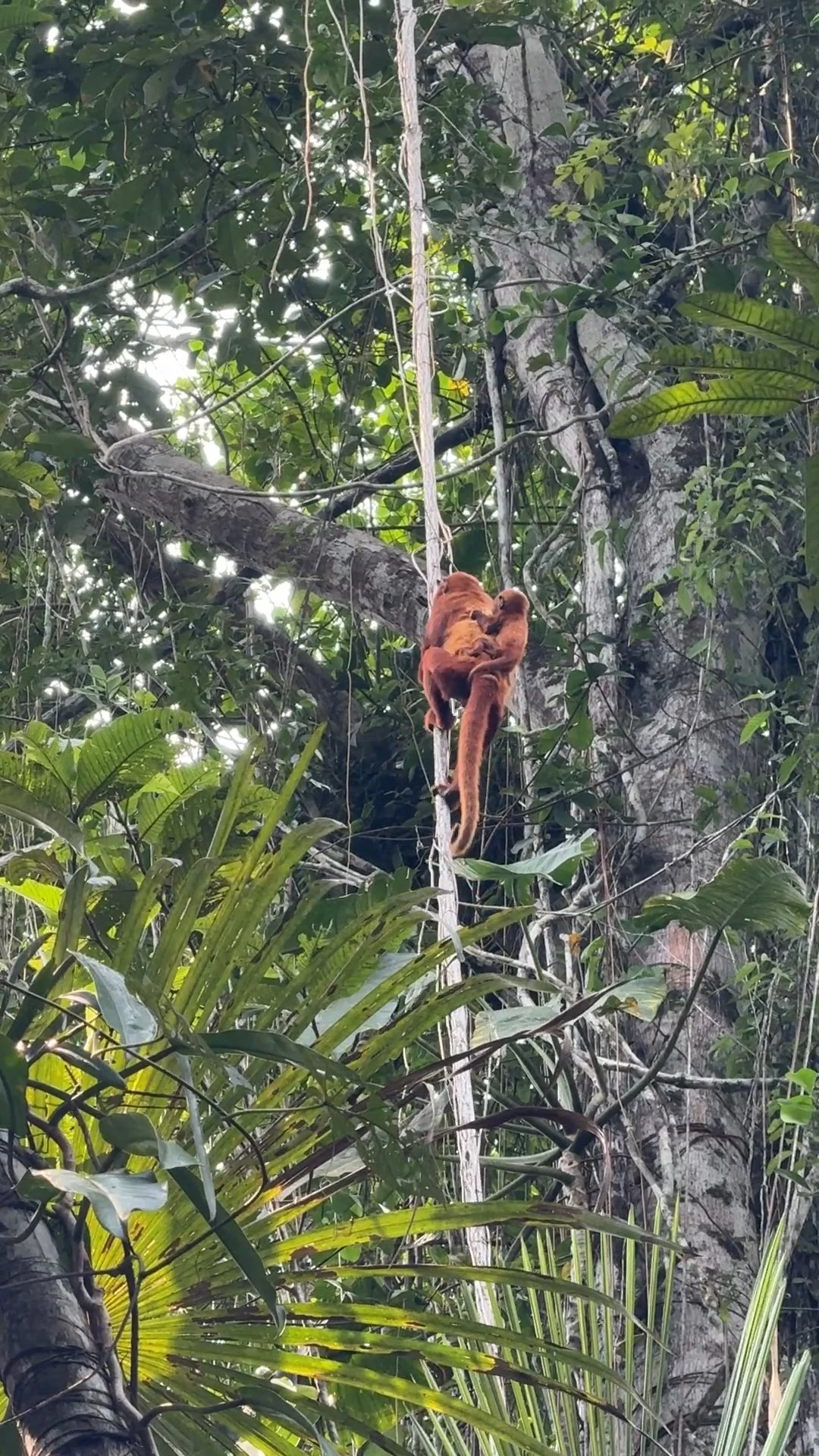
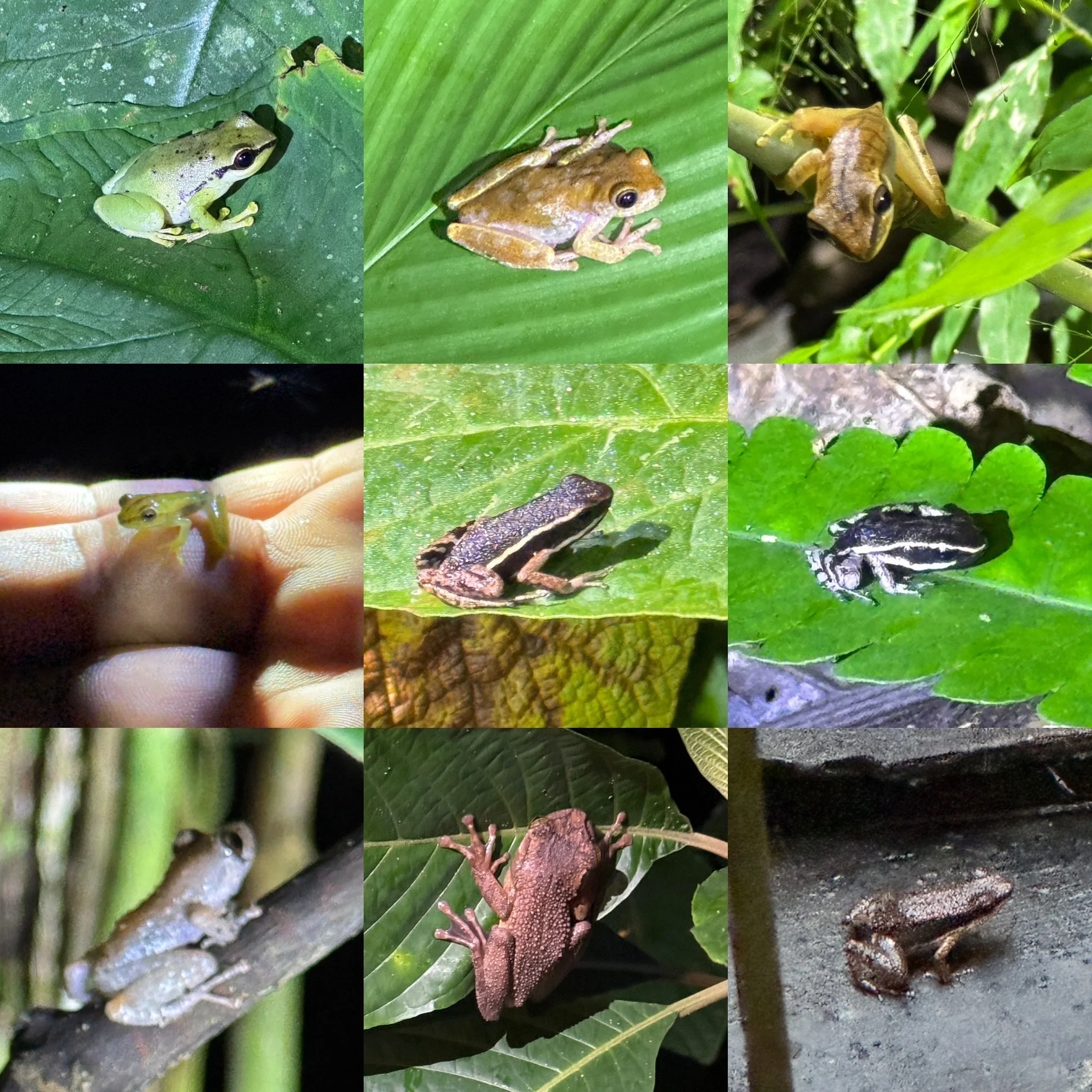
Of course the goal of visiting the Amazon Rainforest (for most travelers) is to see wildlife! Interestingly, though the biodiversity is very high, the individual animal populations remain quite small. Our morning outings were best for spotting mammals and birdlife, whereas the frogs, caimans, spiders and other insects were easier to see after dark. We were somewhat disappointed during most of our afternoon outings - it felt very quiet without much wildlife to see!
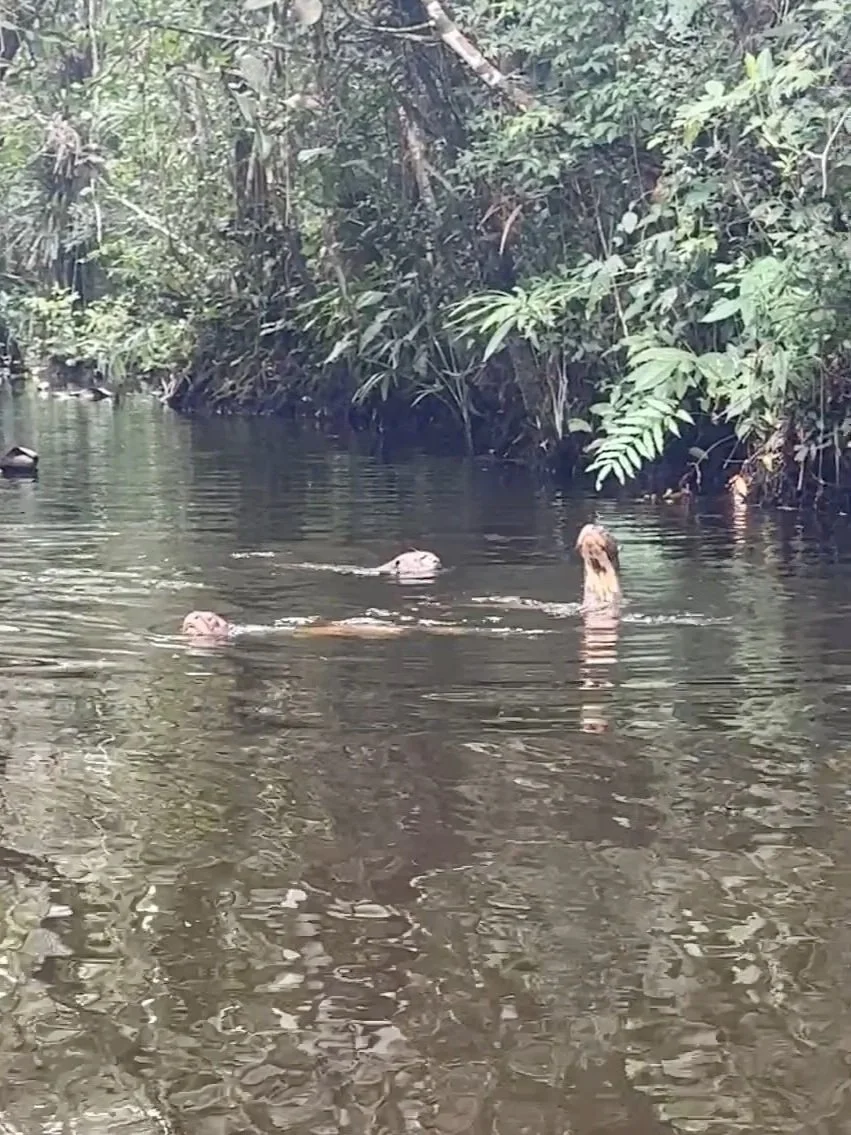
We did feel very lucky to see 3 giant river otters, who came to the lagoon where Sacha Lodge is located to snack on some fish one afternoon. The next day we even saw them during our blackwater canoe paddle! Our guide said they come and fish in the area for a handful of days, and then go elsewhere for a couple weeks, so they are never a guaranteed sighting.
Galapagos
As avid Scuba Divers, we knew that Diving in the Galapagos is a bucket-list, once-in-a-lifetime type of place. We began our search for Liveaboards on our own, but found the payment options somewhat confusing and sketchy (e.g. send a wire transfer for thousands of dollars to this generic Ecuadorian bank account?!), so we reached out to our local Denver-based dive shop. With their guidance, we explored the itineraries and amenities of a couple different Liveaboard Boats, and opted for the Tiburon Explorer. We would recommend using a knowledgeable dive shop for booking foreign Liveaboards - they made the payment transaction process much more comfortable and provided essential tips & tricks along the way!
Liveaboards boats often book up 1-2 years in advance, so with our cabin on the Tiburon Explorer booked 12 months in advance, we essentially built the rest of our South American adventure around this 7 day adventure. We opted to visit in February, when the water temperatures should be warmest, sea state calmest, currents the lowest, and visibility the best. Warm water and good visibility generally means lower nutrients in the water, therefore we knew this meant a lower likelihood of seeing Whale Sharks and massive schools of sharks.
As it turns out, we got warmer water, mellow currents and relatively calm sea state (other than at Darwin Island which was actually fairly rocky and made a number of guests and crew seasick!), but our visibility was on the low end for the season - bummer! We had some dives with only 20 feet of visibility, and others with up to maybe 80 for a few minutes.
As we learned, the Ecuadorian government strictly limits the itineraries of all boats - including which Islands they can stop at, as well as where diving, snorkeling or walking on land can take place. So as it relates to diving, when the visibility was BAD, there wasn’t really another option for finding another dive site. Our itinerary was set, and we were unable to pick another dive site on the other side of the island (for example) to search for better visibility.
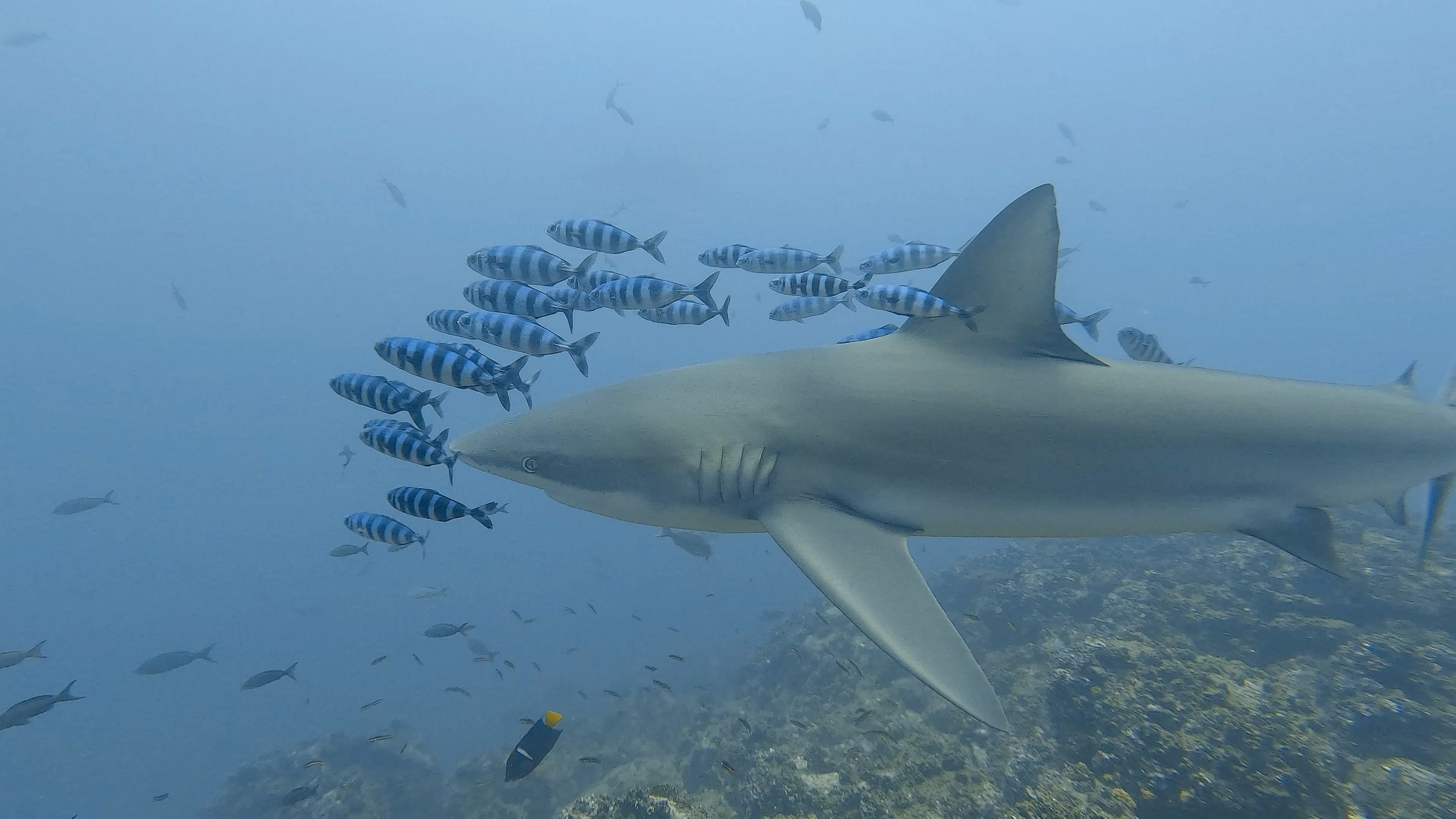
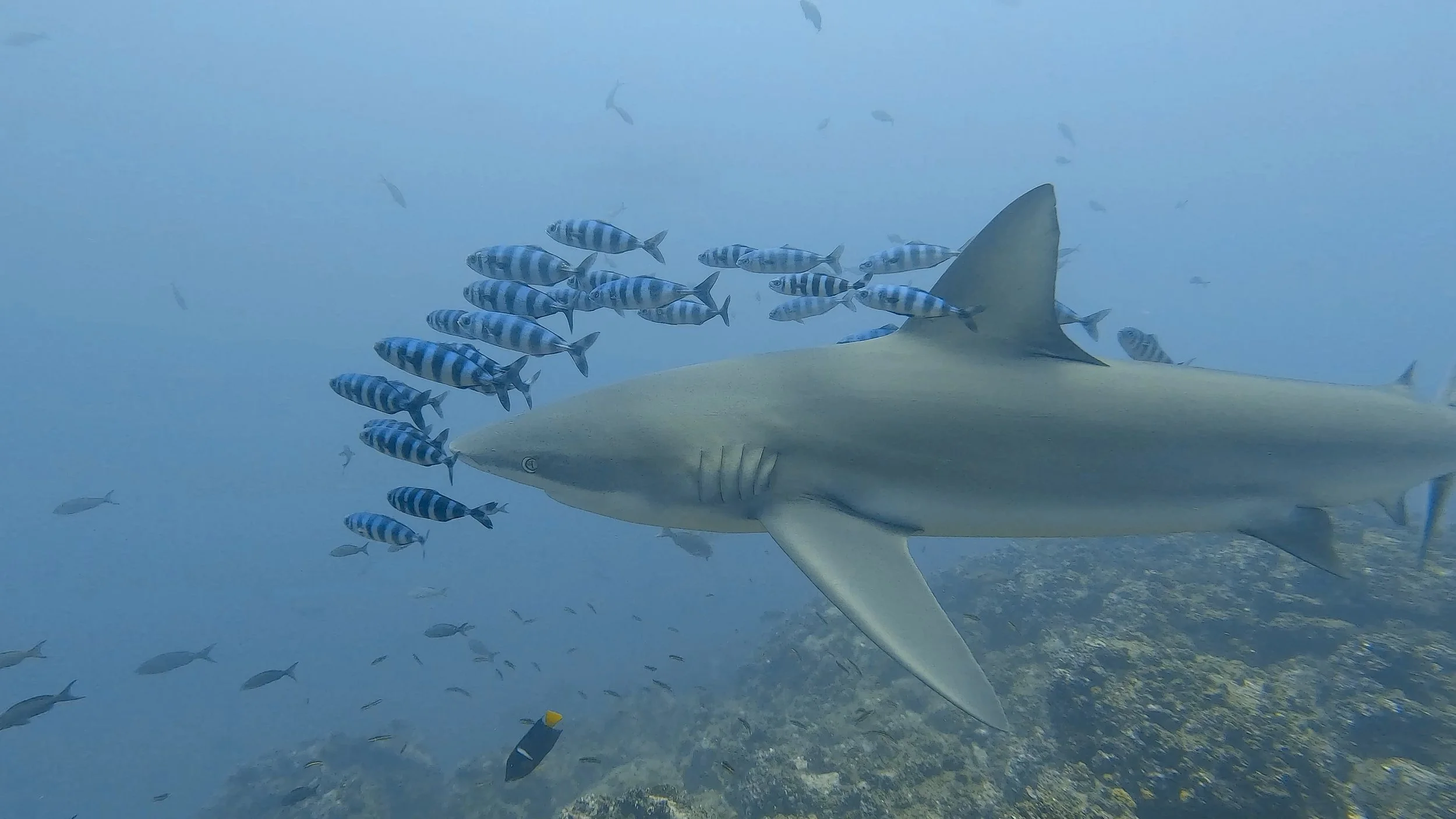
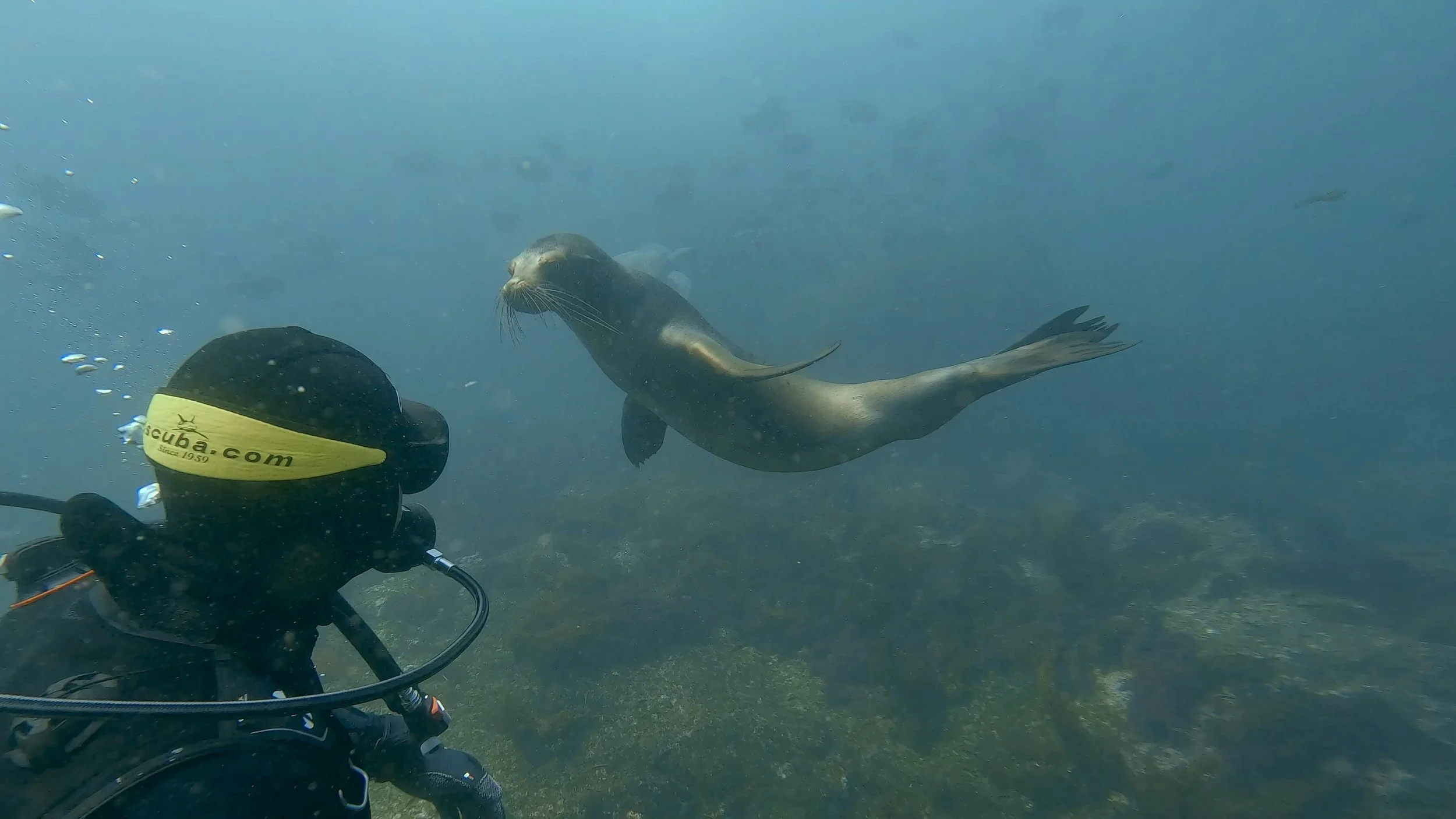
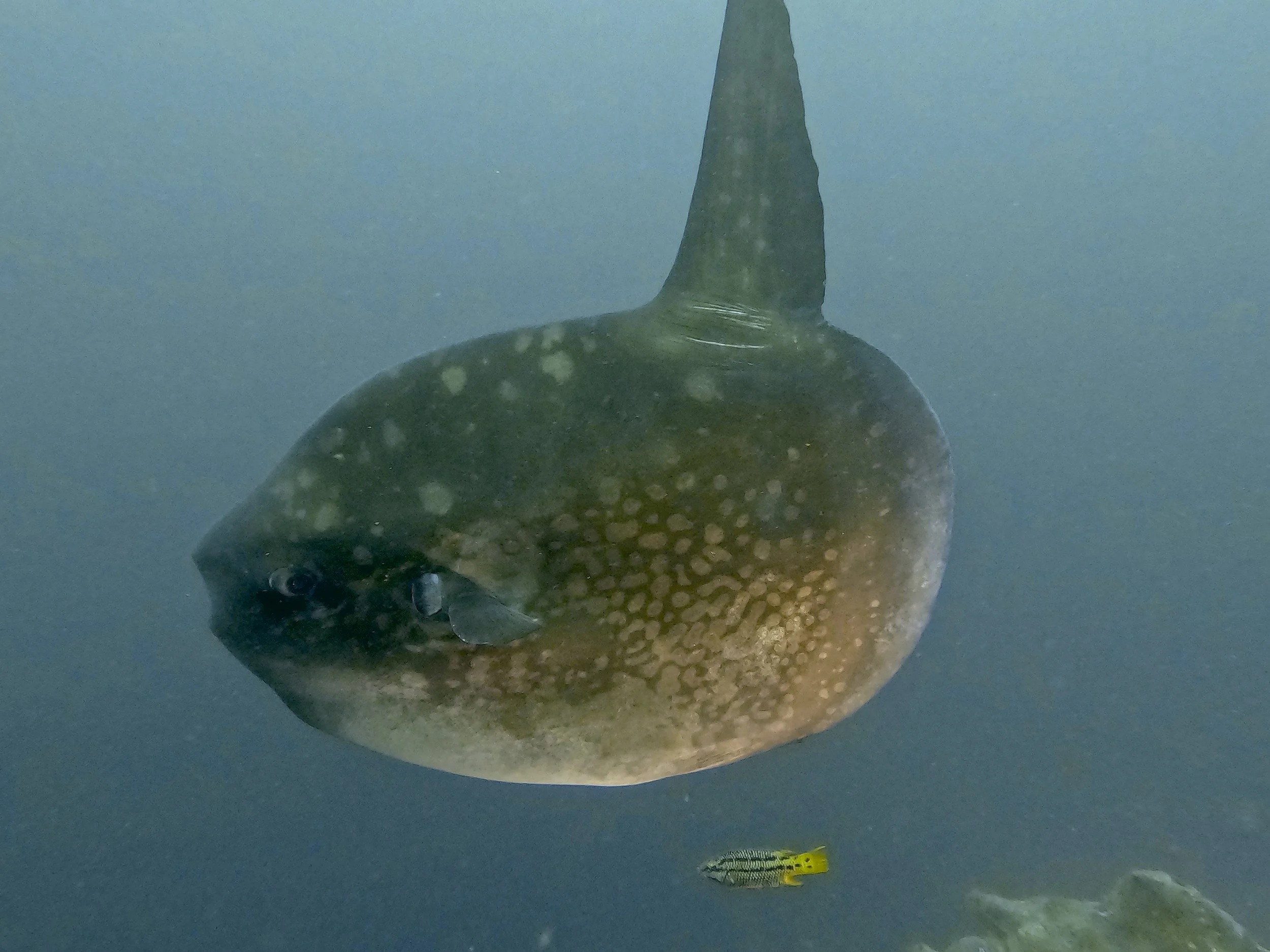
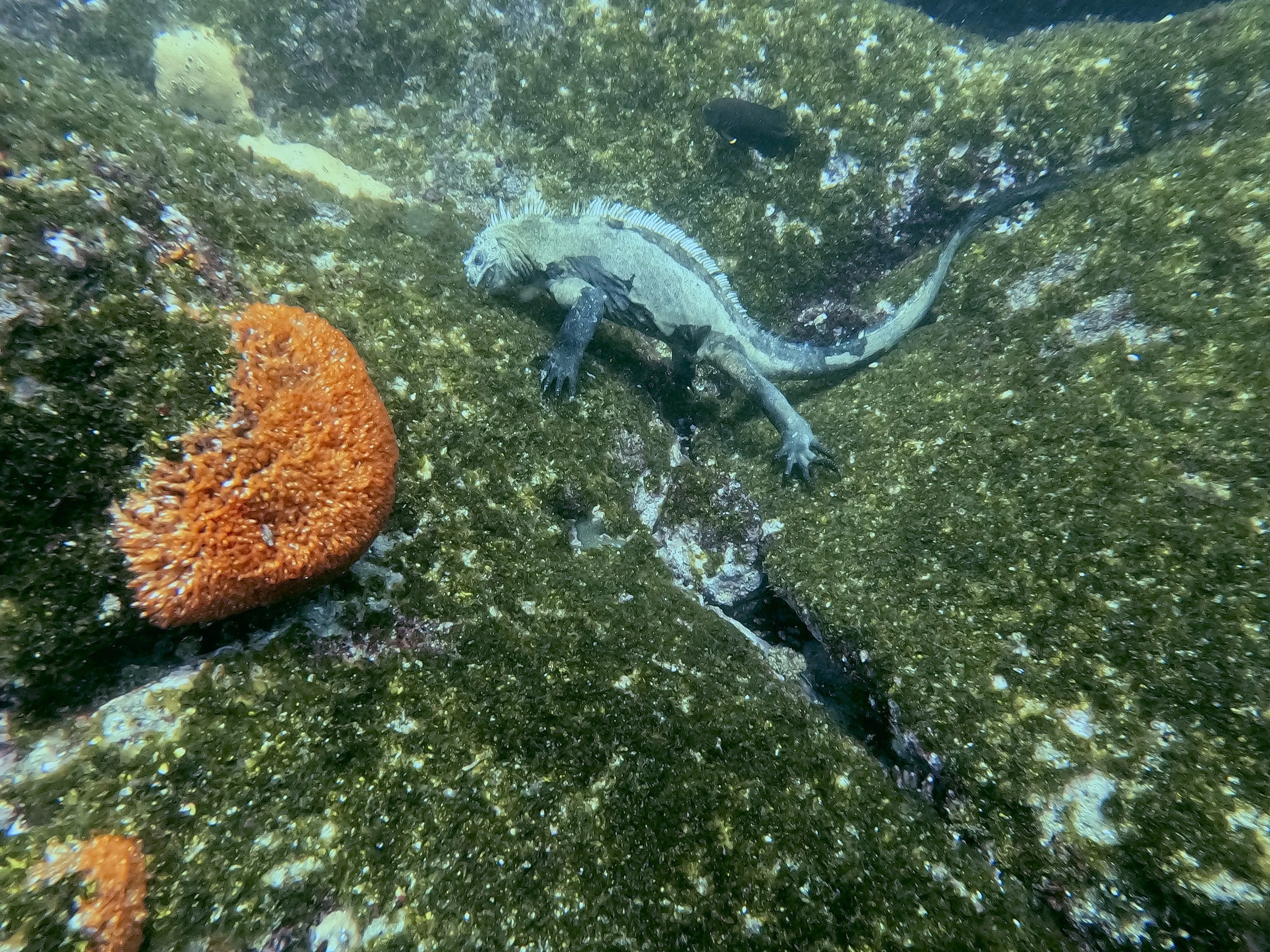
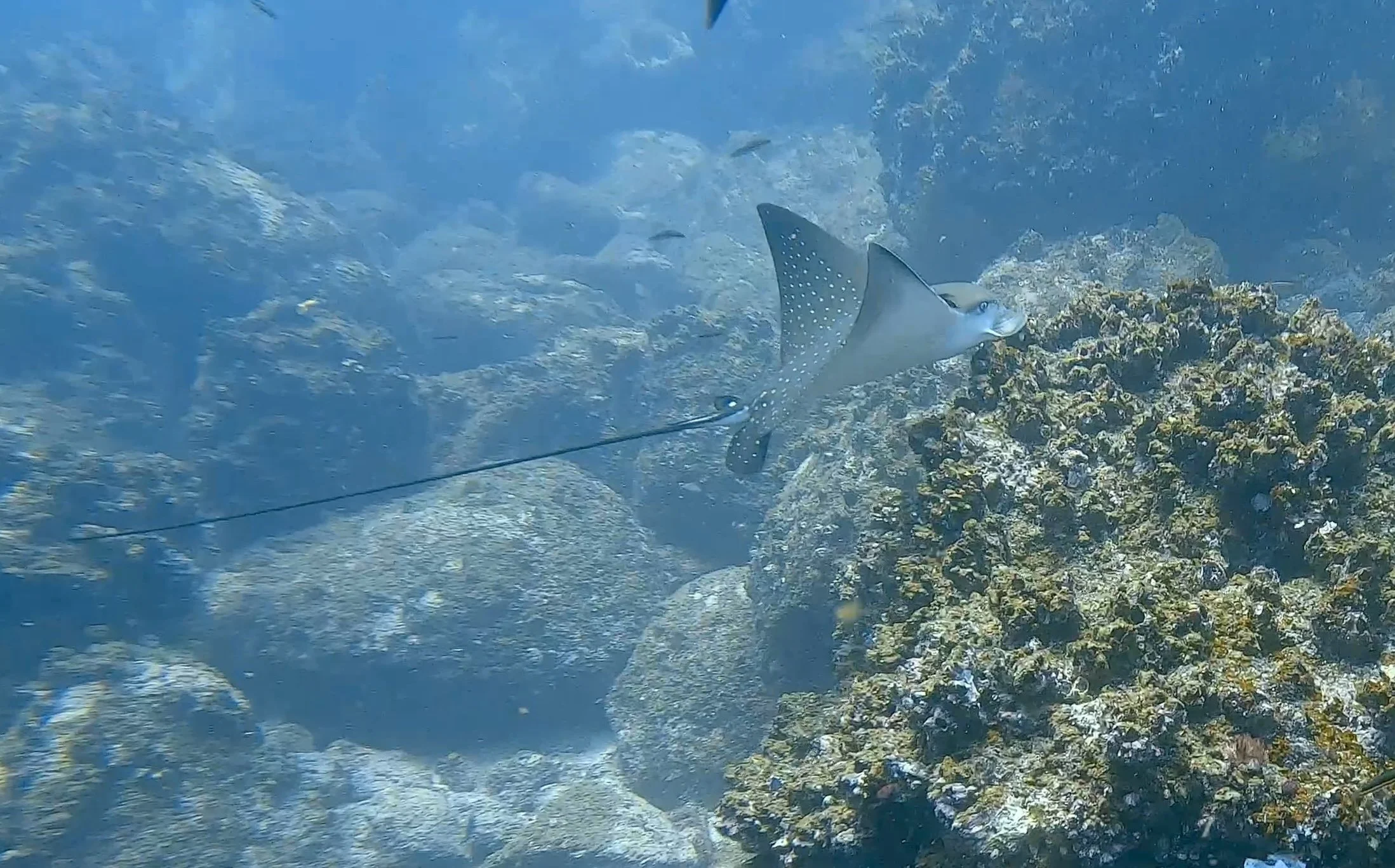
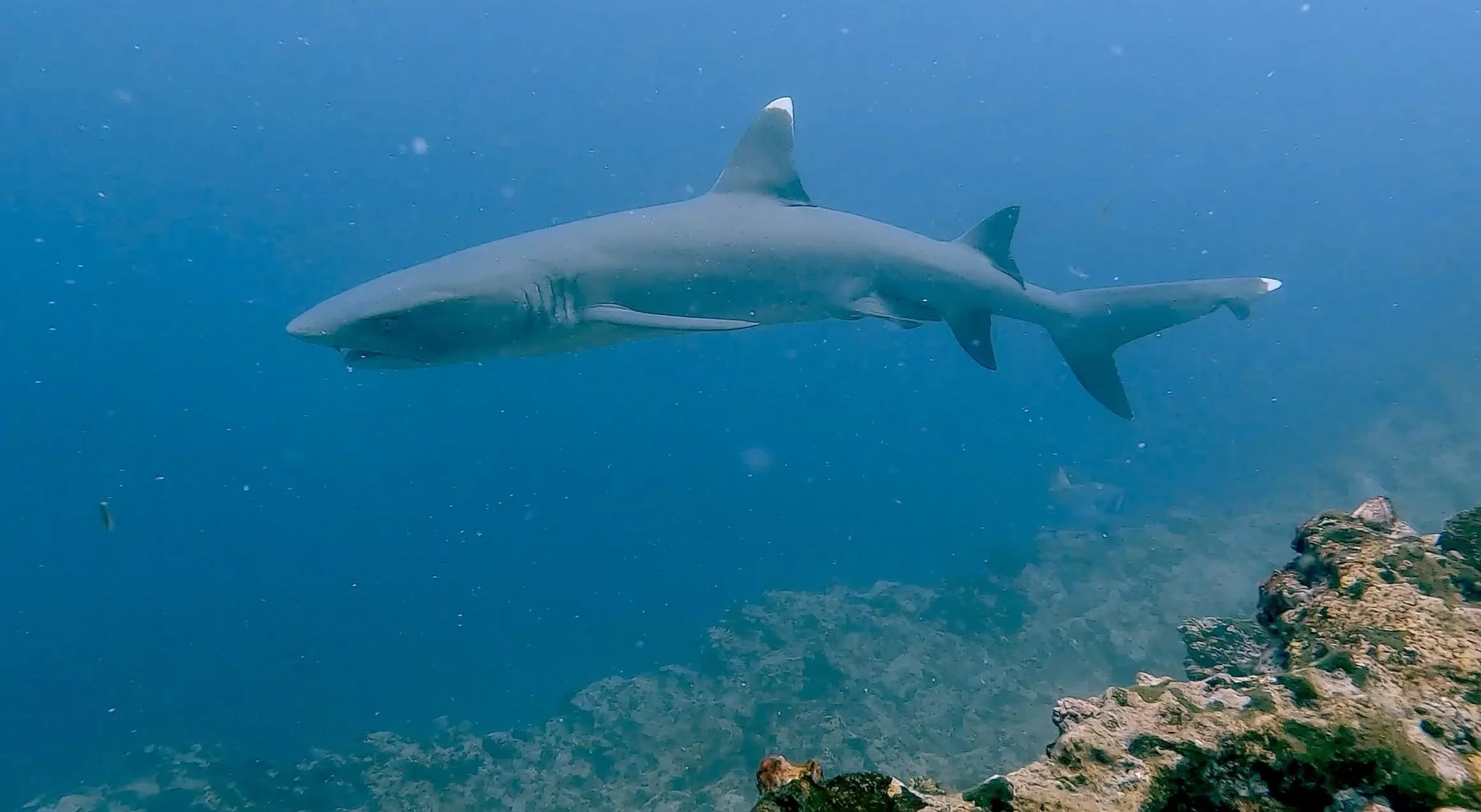
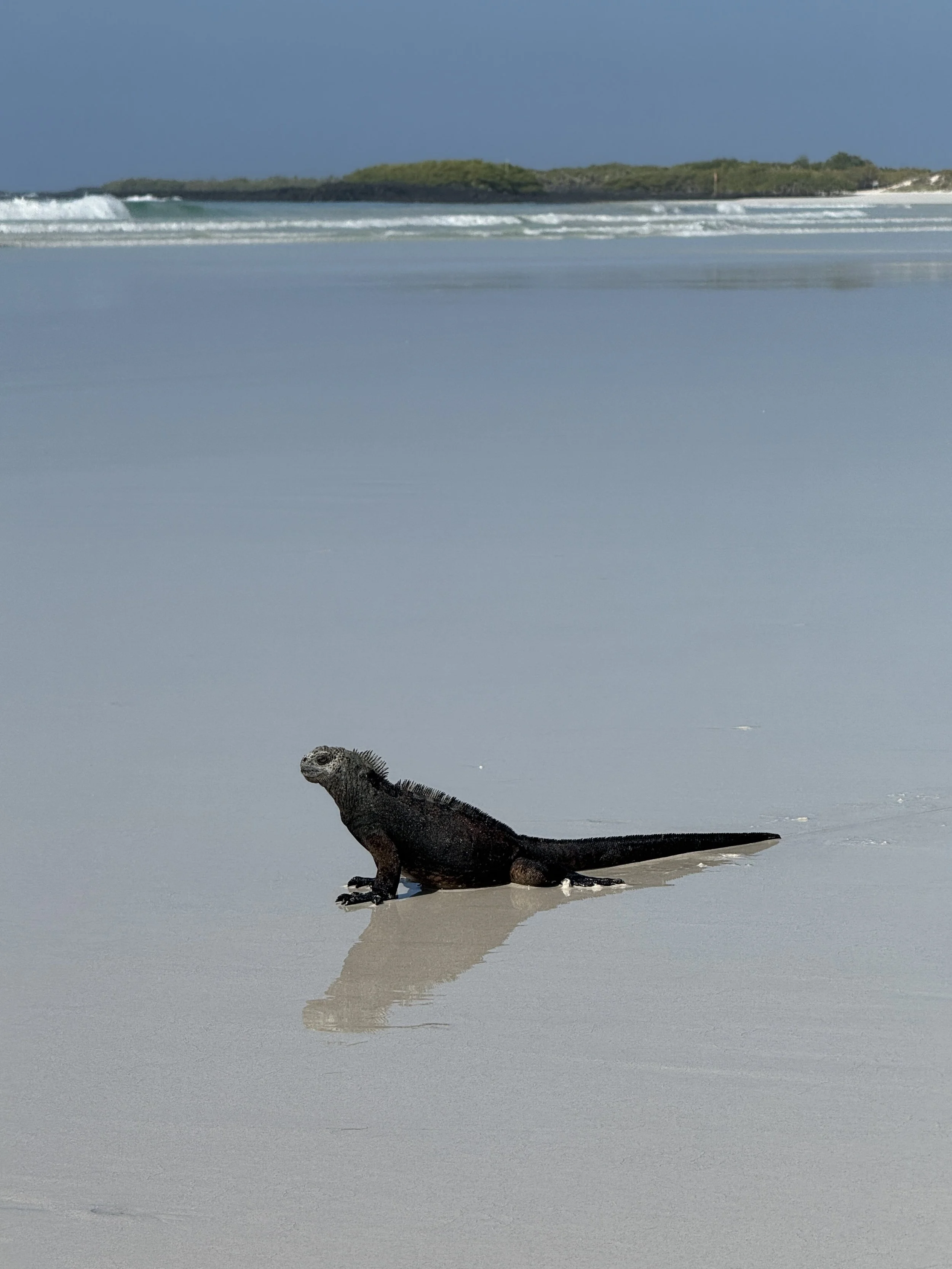
Despite the low visibility, we saw an incredible number of sharks (Hammerheads, Galapagos, White Tip Reef), sea lions, rays, a giant molamola (aka sun fish), marine iguanas, flightless cormorants, and countless fish.
From a diving perspective, we would definitely consider the Galapagos to be “Adventure Diving”. It is well advertised that diving here requires significant comfort underwater that usually comes with a minimum of 100-ish dives. Although we got lucky with very mild currents during our visit, they were still present. Combined with low visibility, it wouldn’t be hard to get separated from your group and need to surface (safely) on your own or with your buddy. We would definitely recommend the 100 dive rule to anyone considering the Galapagos, and having some experience diving in strong currents (and/or with 7mm wetsuits) would be a plus as well!
The Tiburon Explorer boat and crew were great. The cabins were very comfortable and the crew was exceptionally kind, funny and eager to help. The food was good though nothing exceptional - it was served as a buffet, there were always multiple options to choose from, and it always settled well. Booze was included in the prices of the cruise (as was Wifi), but given that dives begin at 7am each day and no drinking is allowed if you plan to dive again, there isn’t really much time to indulge.
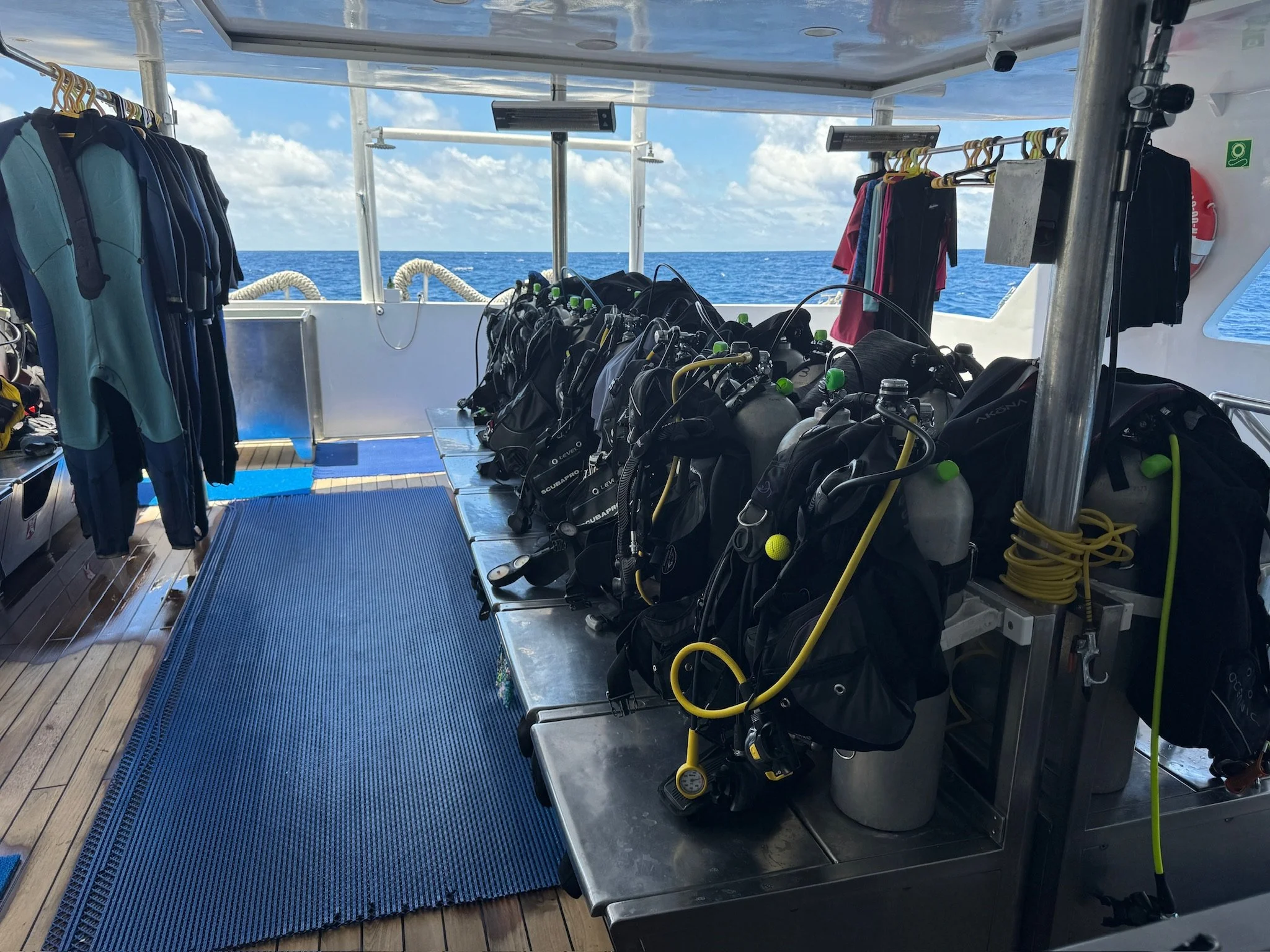
The dive deck was well organized and the process for getting everyone into and out of the water quickly and safely was excellent.
The process for each dive went as follows:
1) Dive Briefing (unless it was a repeat dive site and the dive plan was the same).
2) Divers each check Nitrox of their tank, and re-attach Regulator (could be done before briefing as well).
3) Divers get geared up - staff on-hand to help pull on and zip up wetsuits, adjust gear, etc.
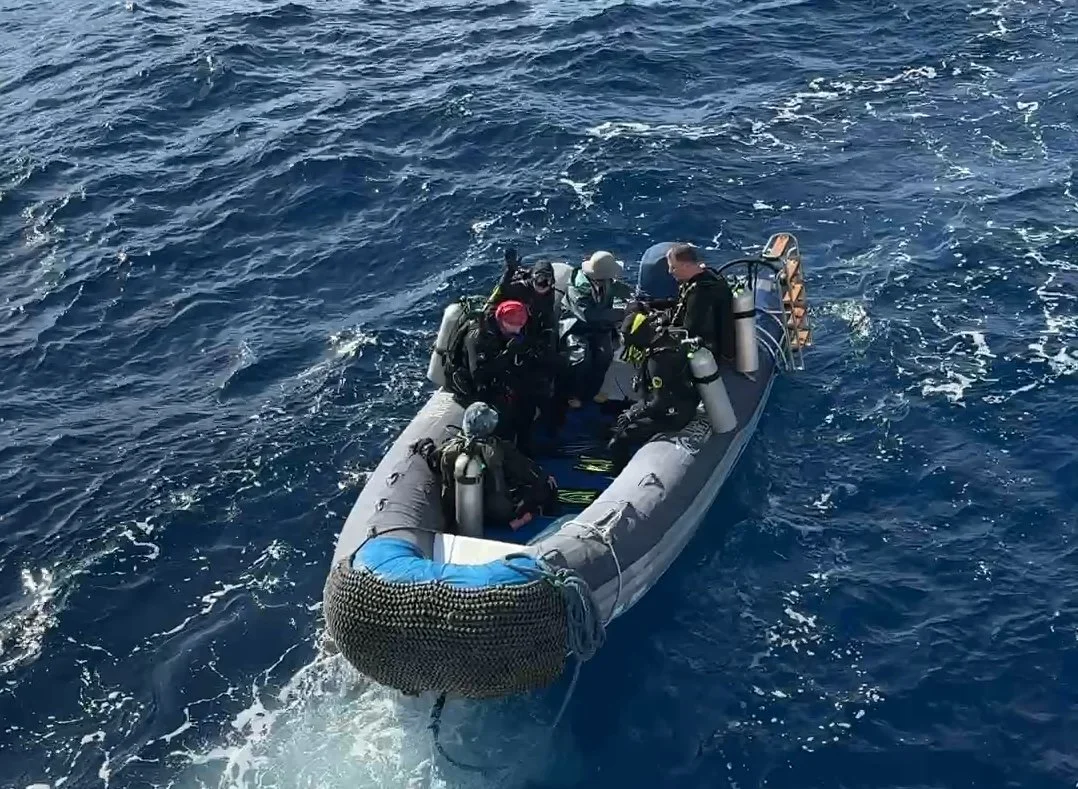
4) Group 1 (8 people) head down the stairs to the awaiting zodiak boat, where fins are put on by staff and cameras handed down.
5) Group 2 (8 people) follow the same process.
6) For our dives, we always did positive entries (backward roll off the zodiac with air in our BCDs so everyone floated at the top together, even if it was just for a moment before descending), however we’re guessing there are times in the Galapagos where negative entries are needed due to the currents.
After a dive, the process went as follows:
1) With all divers on the surface and the zodiac having arrived, divers take turns handing up cameras, fins, weights, and BCD’s to the zodiac driver and dive guide who is first into the boat.
2) Divers climb up the ladder into the zodiac for the return trip to the Tiburon Explorer (usually 2-5 minutes away).
3) Divers get out of wetsuits, rinse off and have free time while staff brings all gear back onboard and sets it up for the next dive.
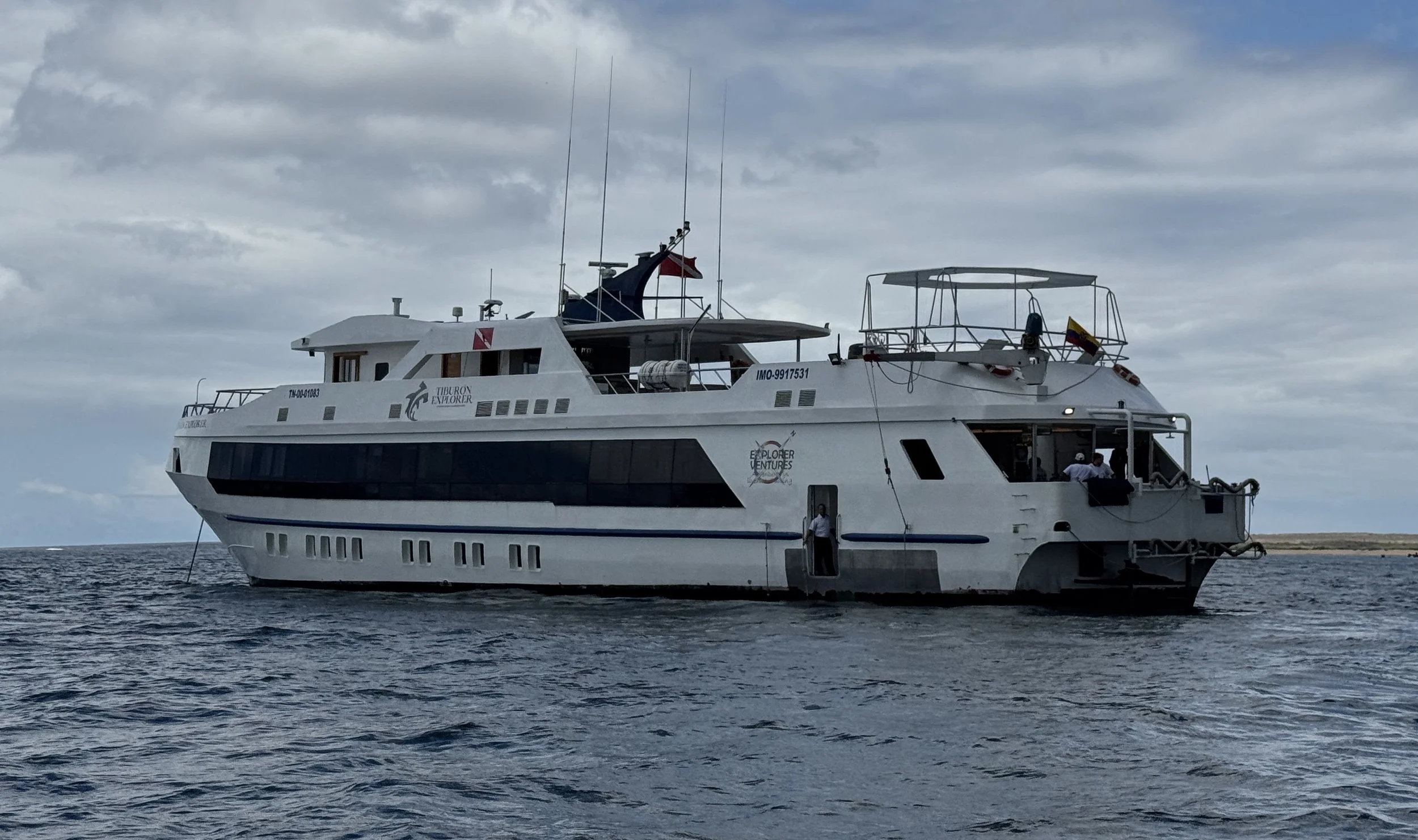
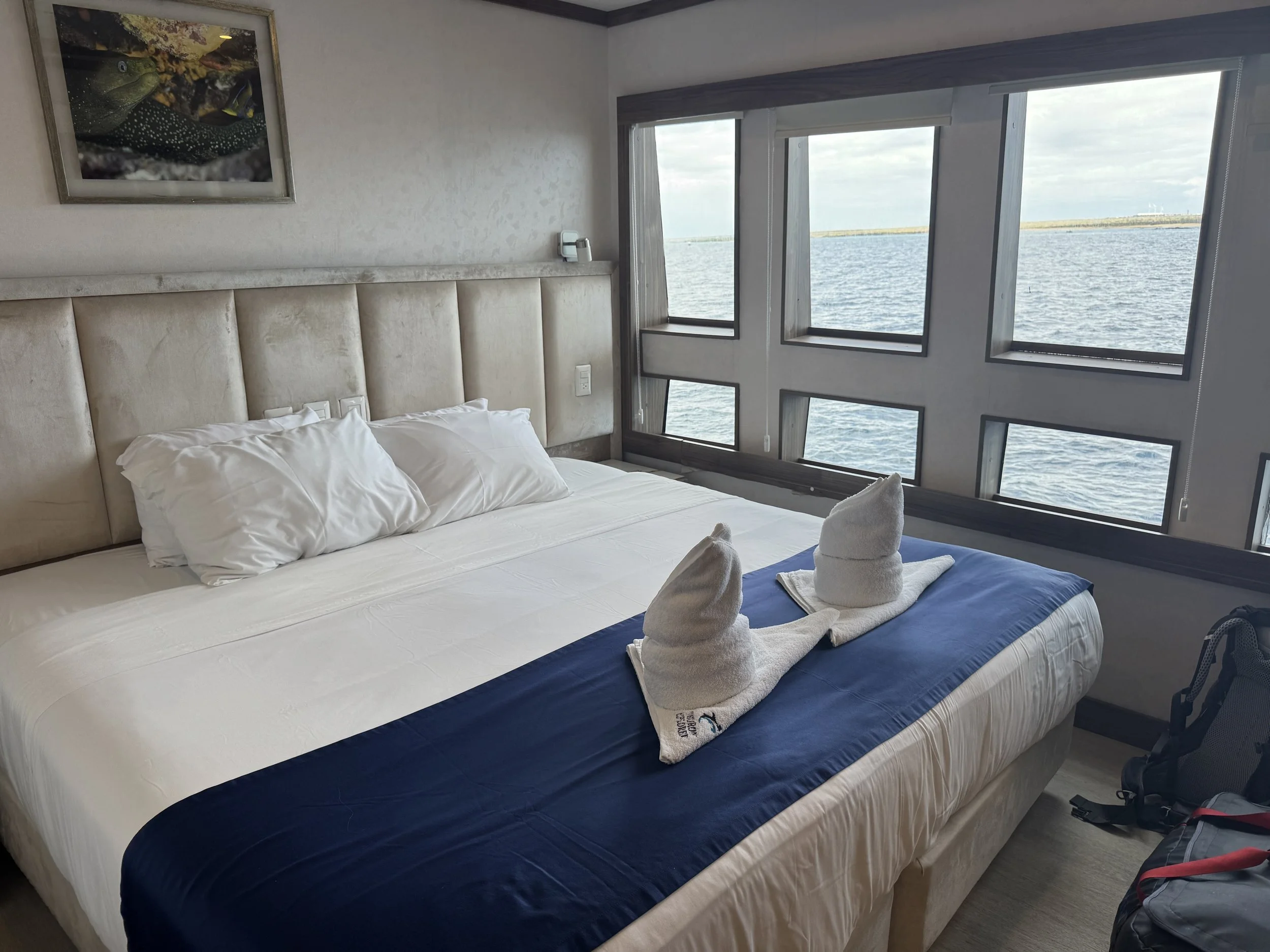
During our time on land before the Liveaboard, and also during the two shore excursions with the Liveaboard, we got to see some great land-based animals: blue footed boobies, land iguanas, frigate birds, sea lion pups, and giant tortoises. During the week, we also had some great views of the local islands!
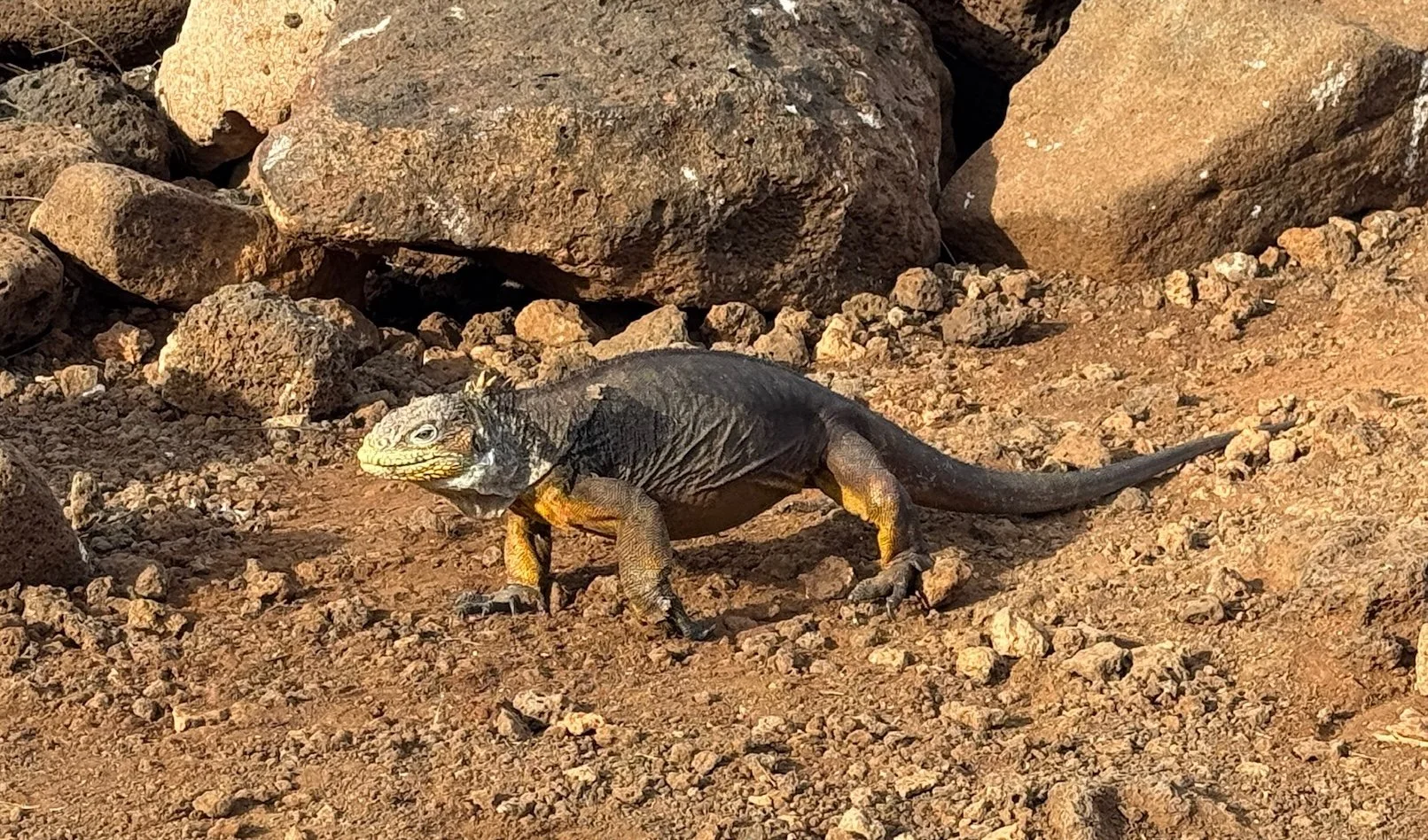
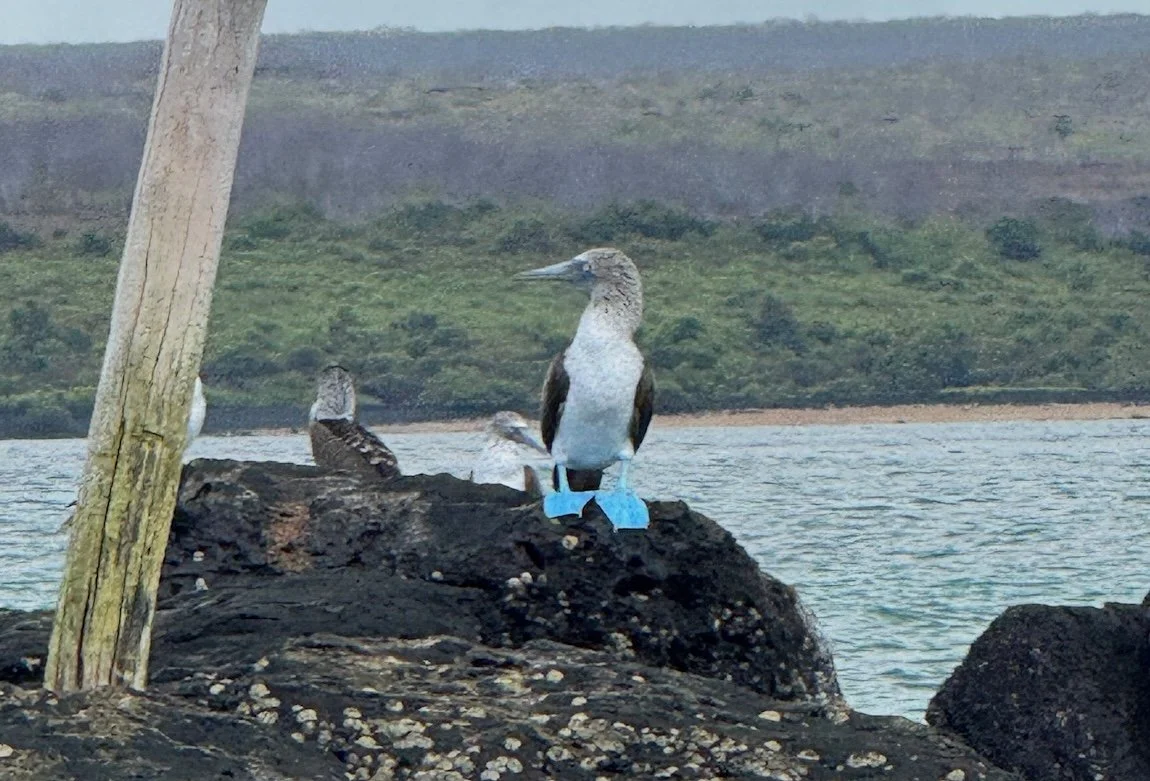
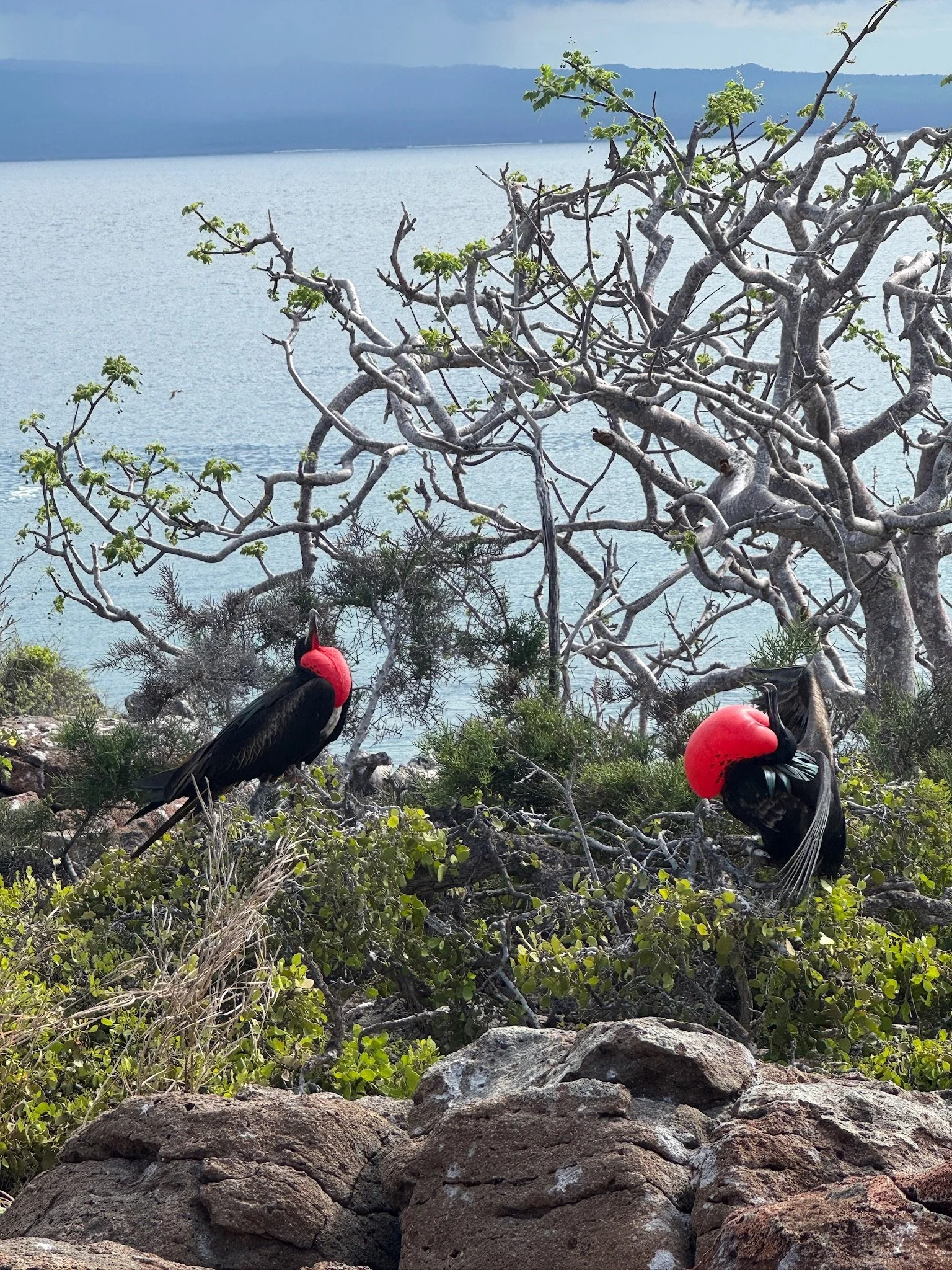
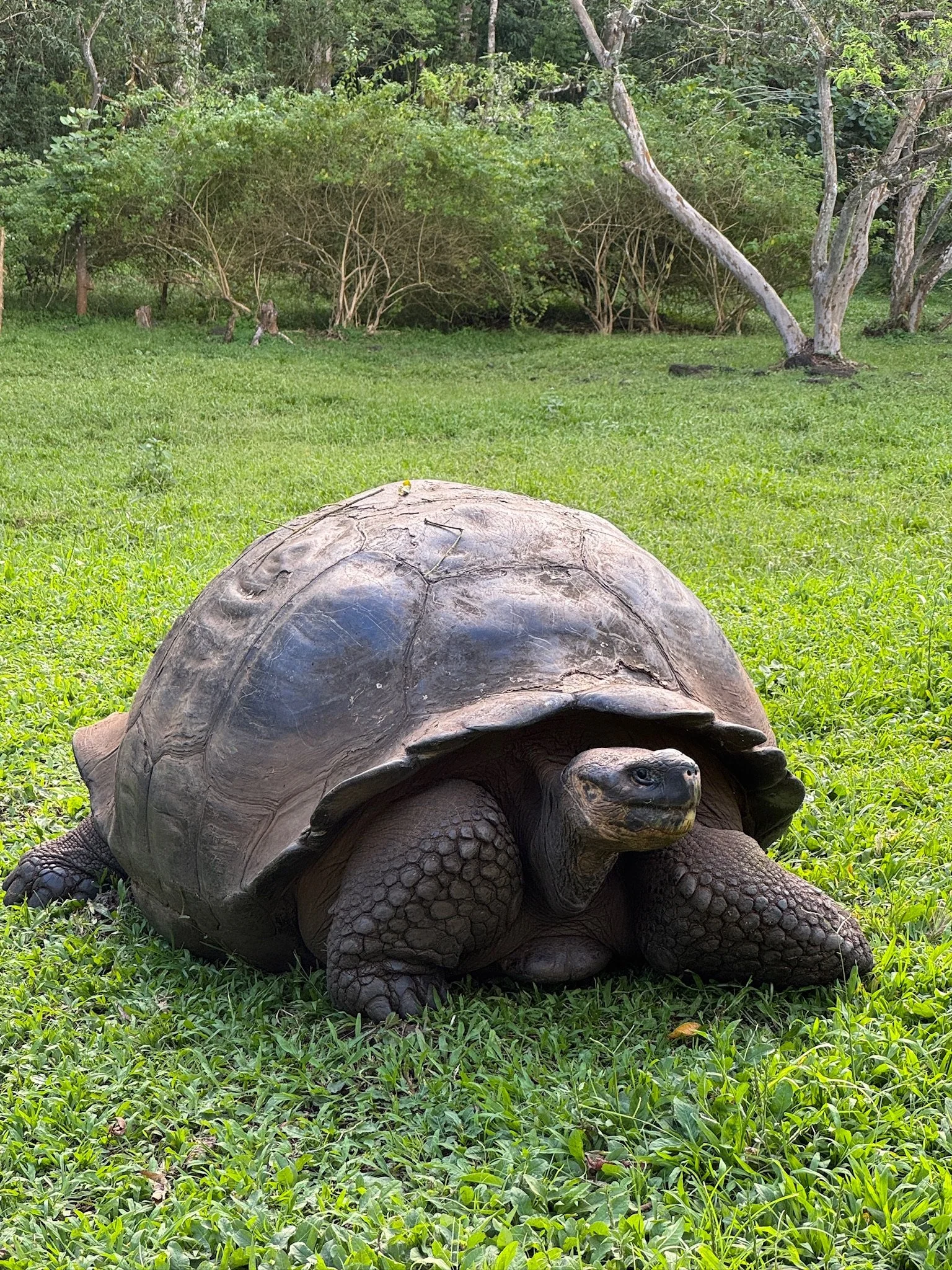
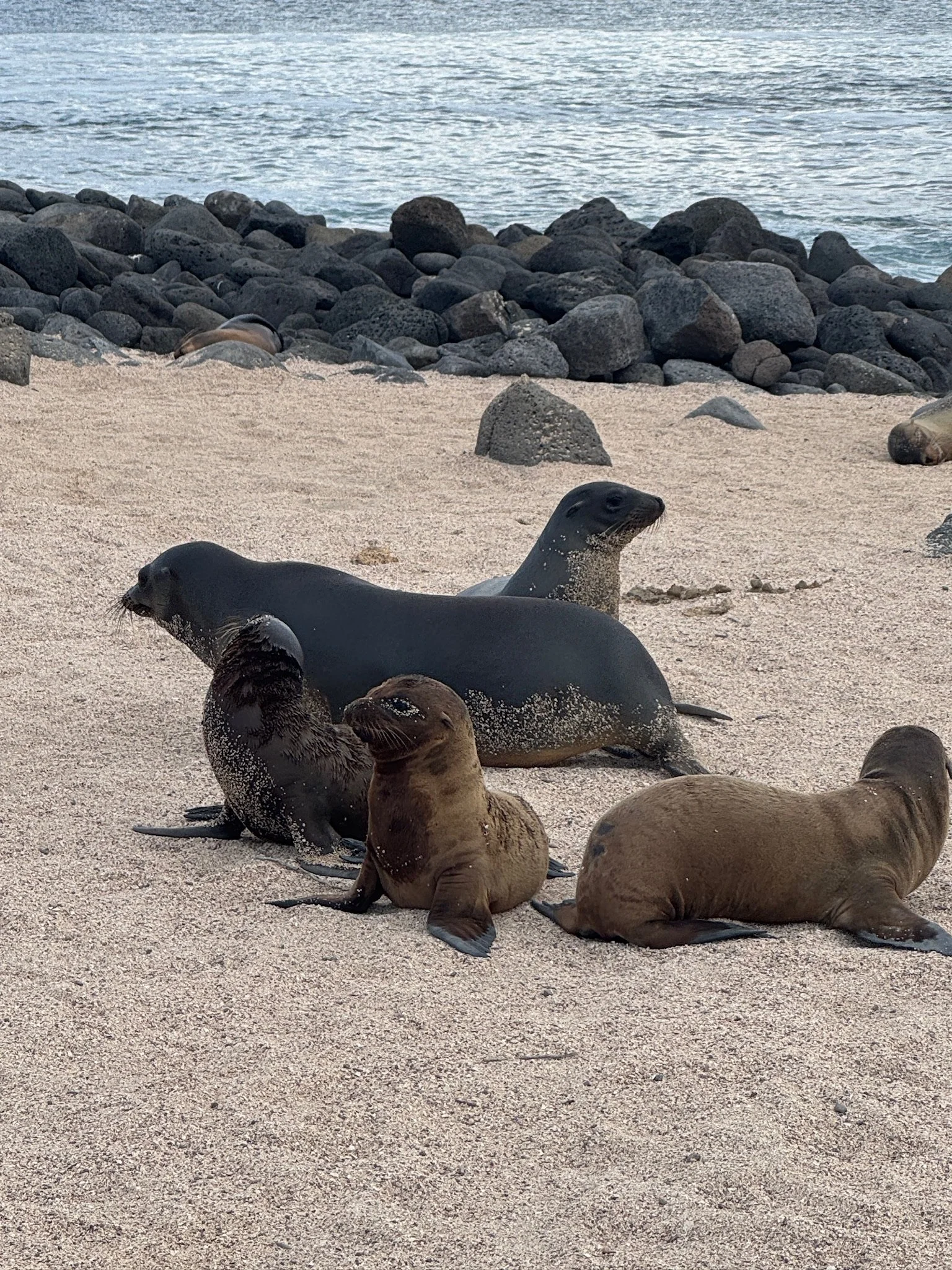
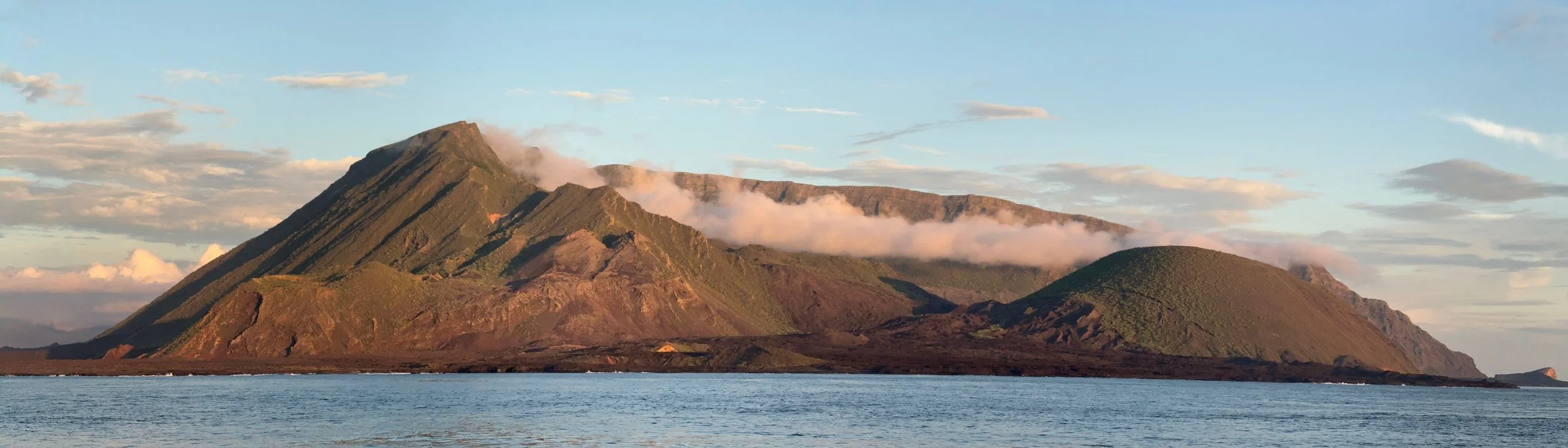
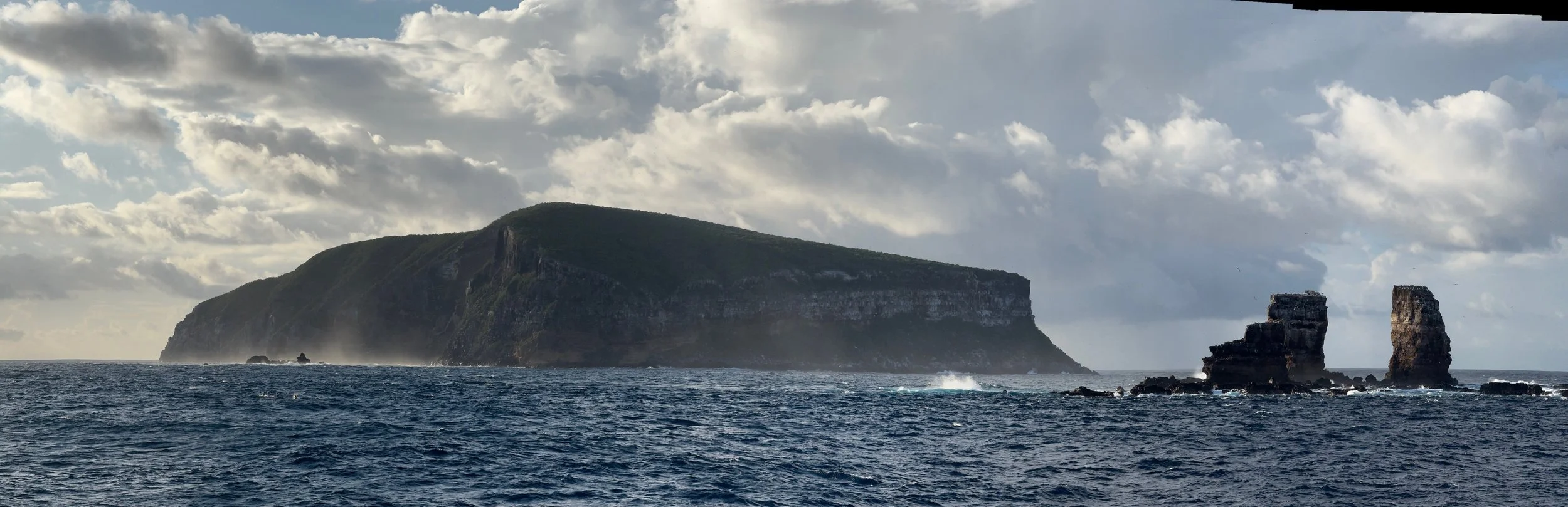
Getting to/from the Galapagos isn’t easy. Flights to the islands all go through Guayaquil or Quito, and unfortunately there are lots of hoops to jump through (Transit Control Card, Galapagos National Park Entrance Fee, Digital Customs Declaration Form, etc.).
If your flight lands in Baltra (Santa Cruz Island), you’ll have to take a quick 5-7 minute bus ride from the airport to the Ferry. Tickets are cheap and obvious for the bus, and you shouldn’t need help with this process (we got suckered into paying in advance for assistance here). There are NO CARS or TAXI'S at the airport terminal so once you collect your checked bags, just head outside, pay for the bus ticket, and get on-board. It only goes to one place.
At the Ferry terminal, you can buy tickets via cash with everyone else from the bus to take you about 5 minutes across the water to the main island, where Taxi’s or Tour Busses often wait. Alternatively, some Liveaboards might pick up right at the Ferry Terminal before you even cross to the main island.
Given all the moving pieces, and not wanting to risk somehow missing our Liveaboard departure, we opted to arrive in the Galapagos 4 days early, and to explore Puerto Ayora (the main town in Santa Cruz). In retrospect, we wish we had only spent 1-2 nights here, as there wasn’t much to do. Alternatively, some of our scuba companions had taken another cruise (with snorkeling/land-based activities), the week prior to the scuba Liveaboard, so they were also already on-island leading up to our week of diving.
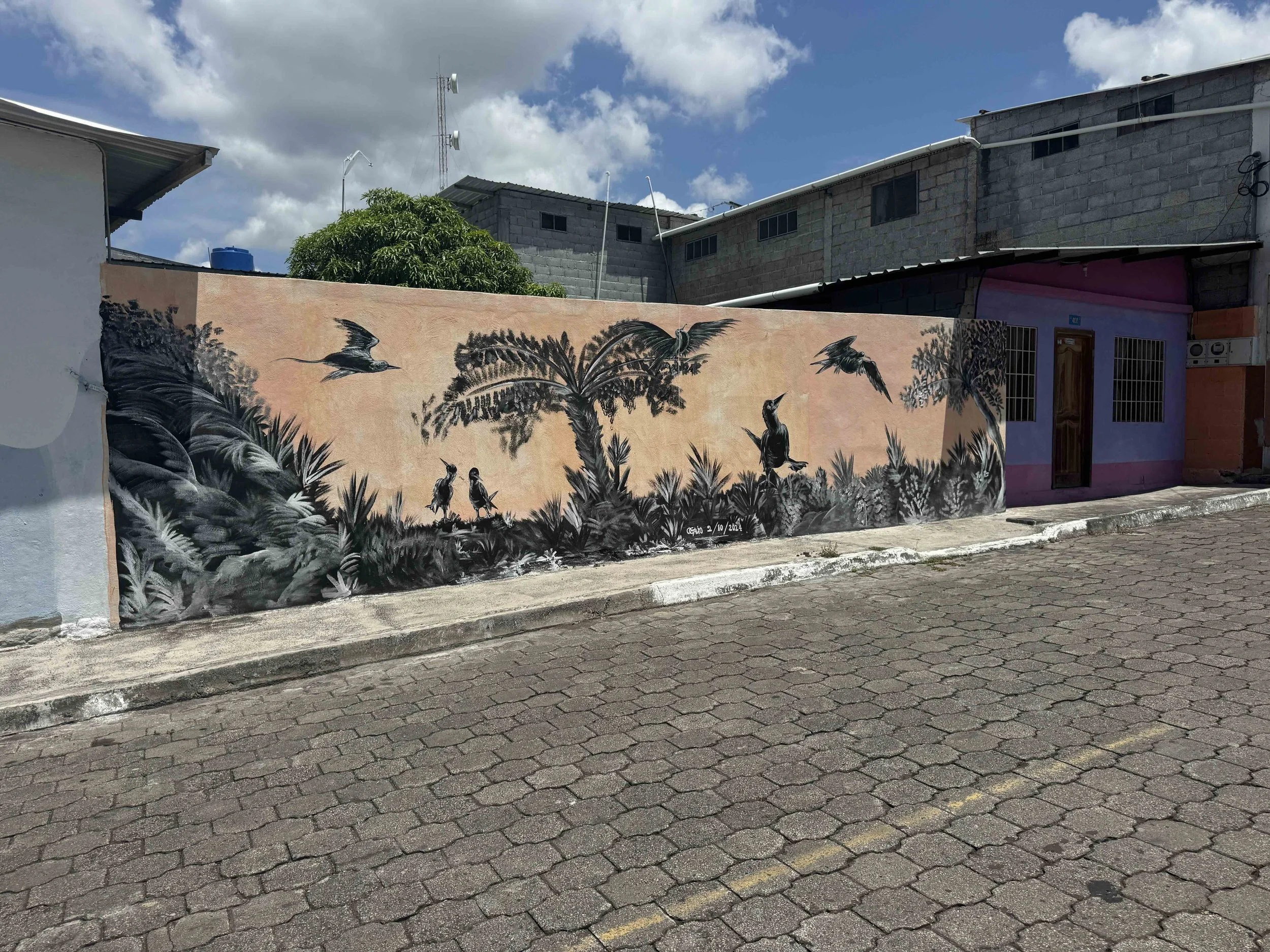
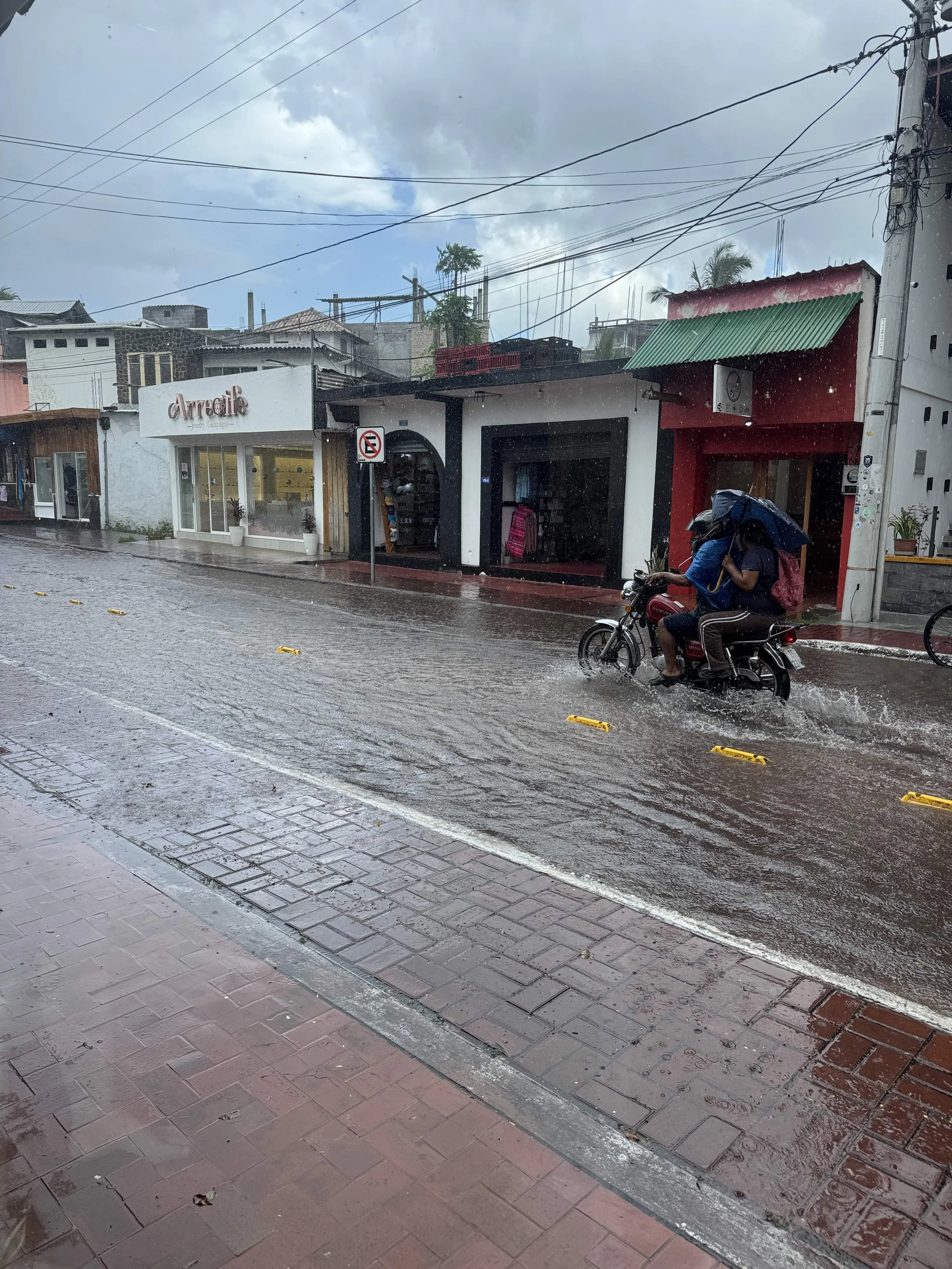
Downtown Puerto Ayora had 1 cute street with lots of shopping and restaurants. There is one popular white sand beach (Playa Tortuga) and it is possible to walk (2.3 miles each way) or take a water taxi there. There are many tour companies offering trips to the Giant Tortoise sanctuary, and also some day-trips via boat for snorkeling/wildlife viewing to nearby islands and beaches. Finally, there is the Charles Darwin Research Station which is open to the public (don’t fall for the people telling you a guide is needed to walk to our through it!). This “research station” may be home to scientists/interns doing certain project, but the tourist facilities are actually rather limited, and it doesn’t actually focus much on Darwin himself. Anyway, we were largely unimpressed with Santa Cruz but as a night or two on either end of a cruise, it’s fine.
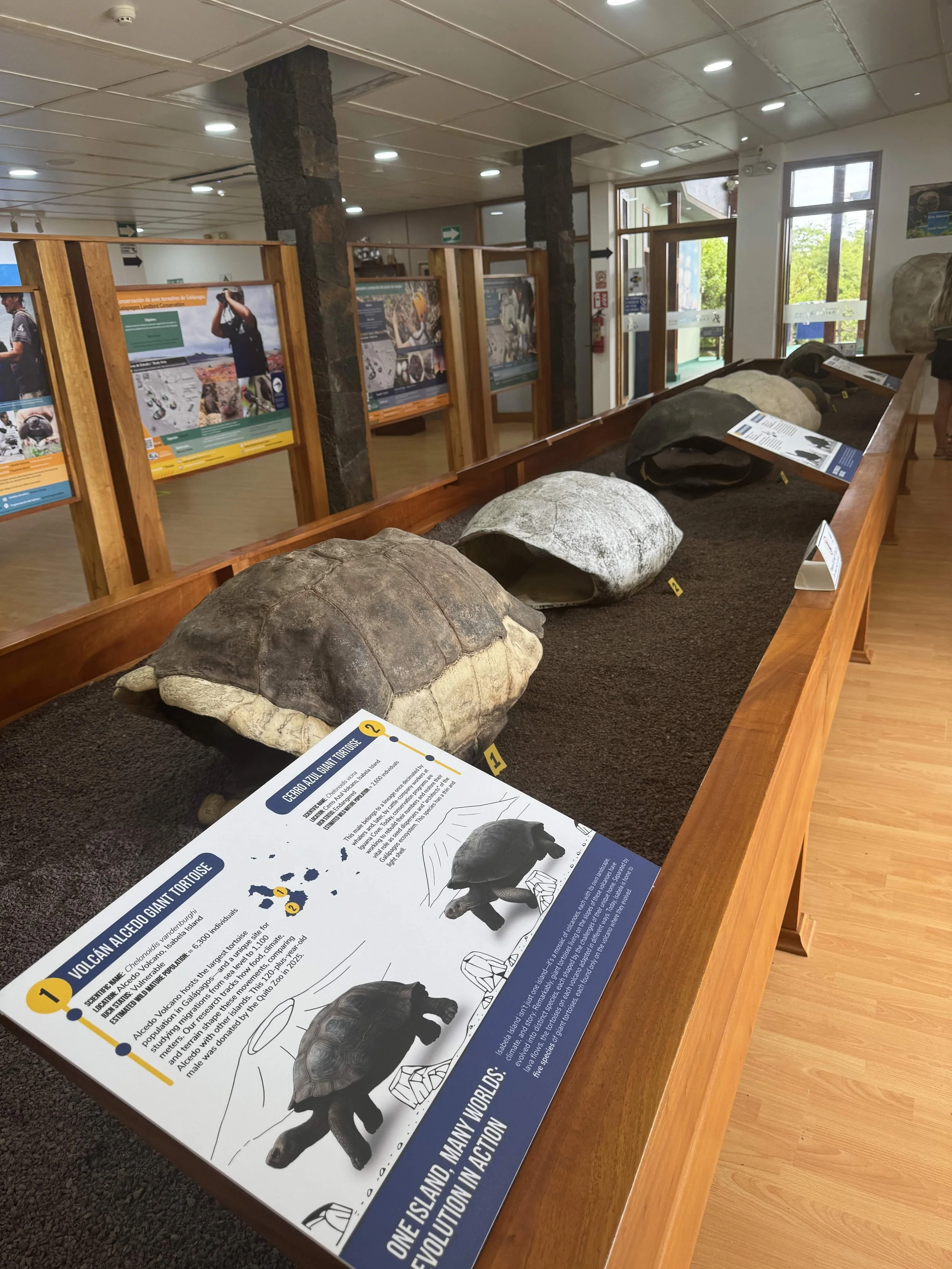
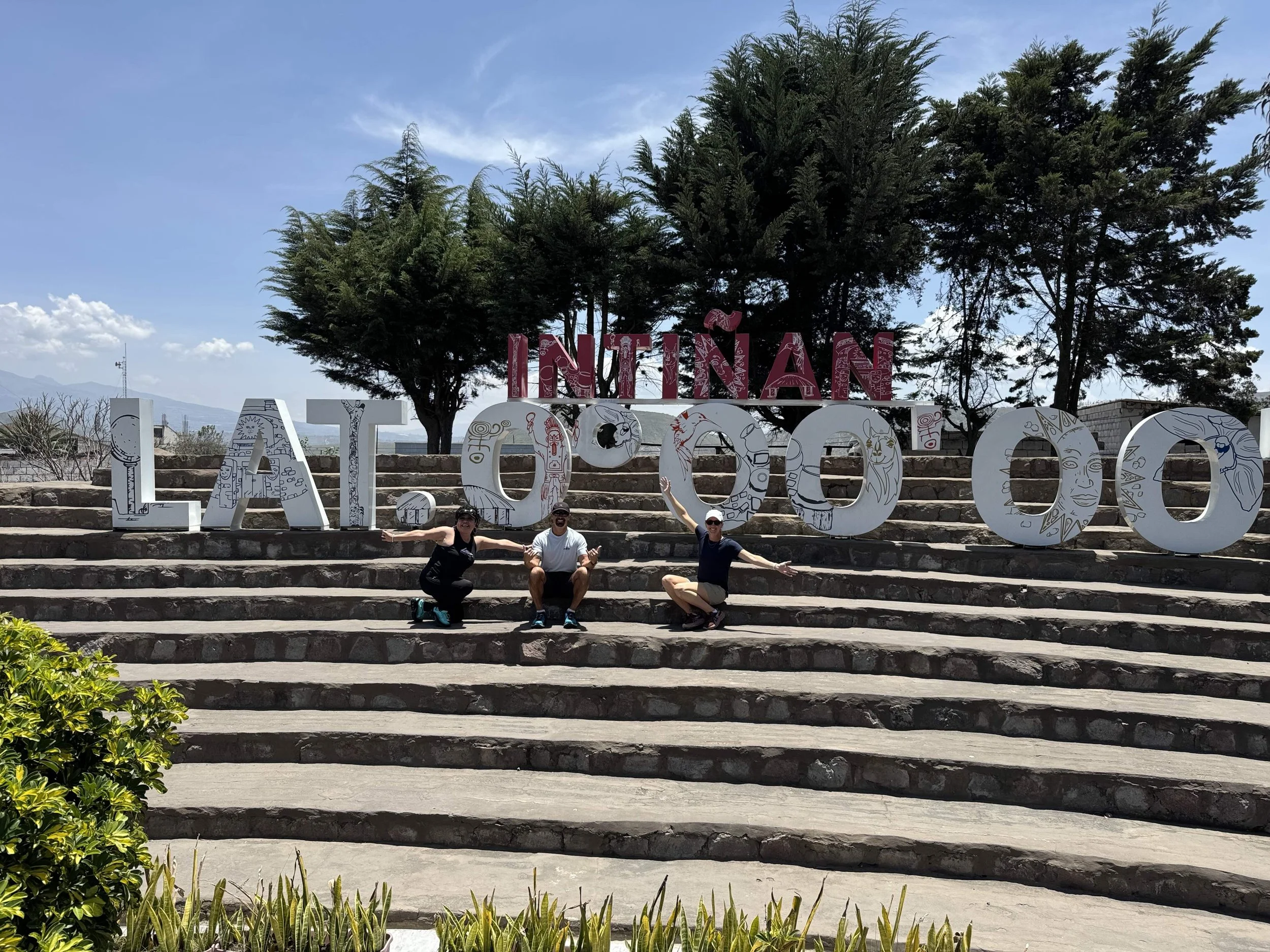
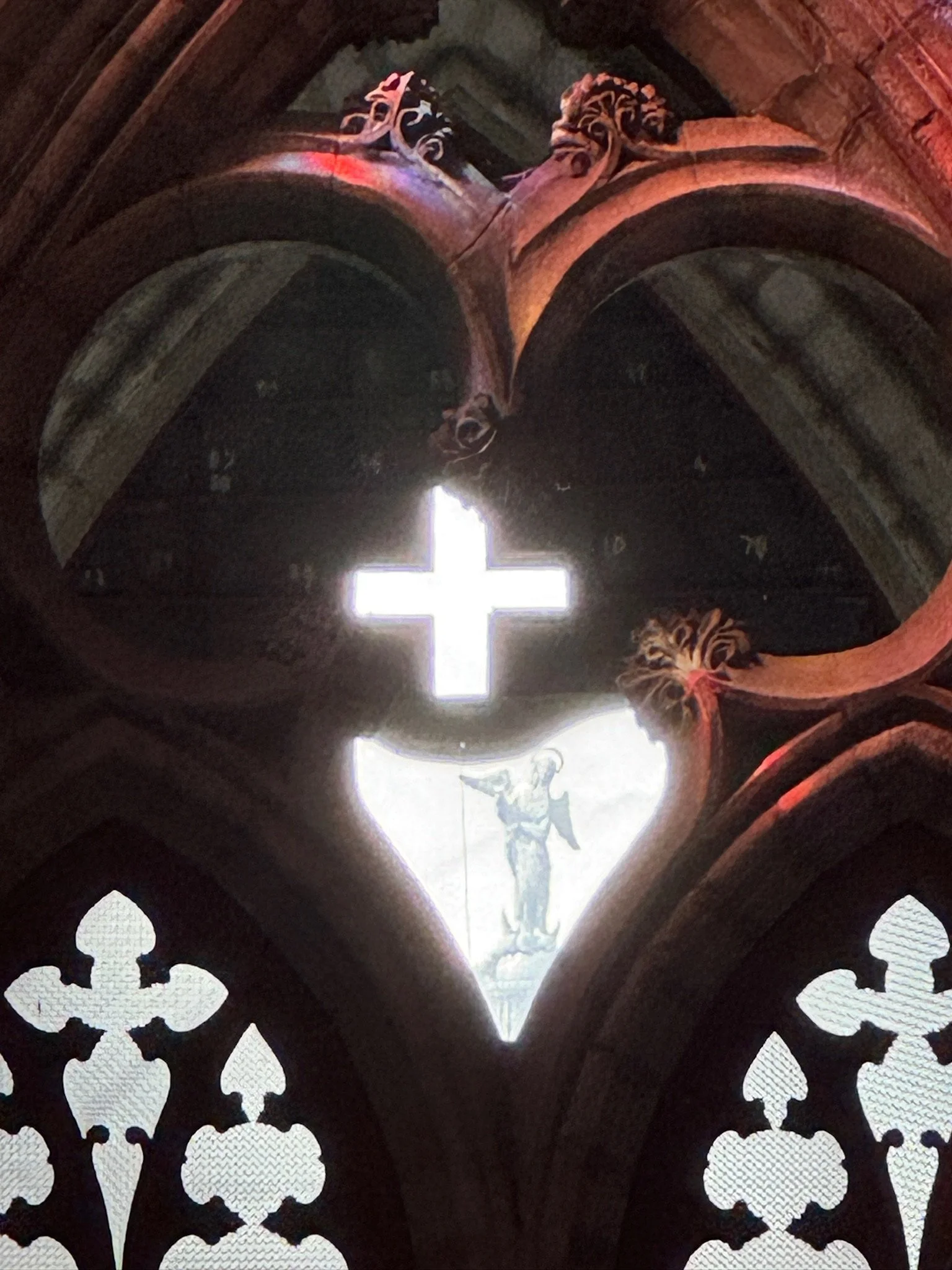
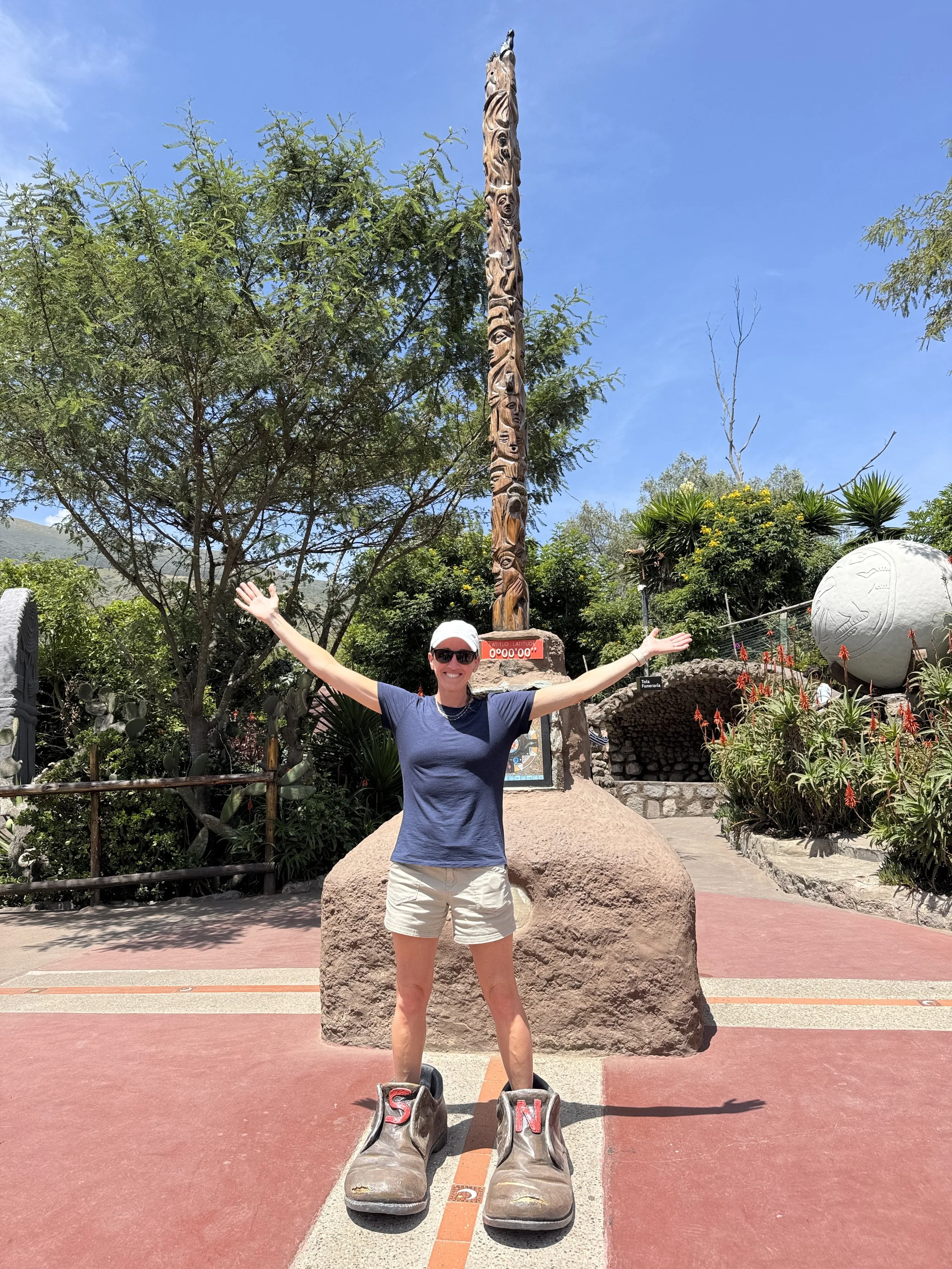
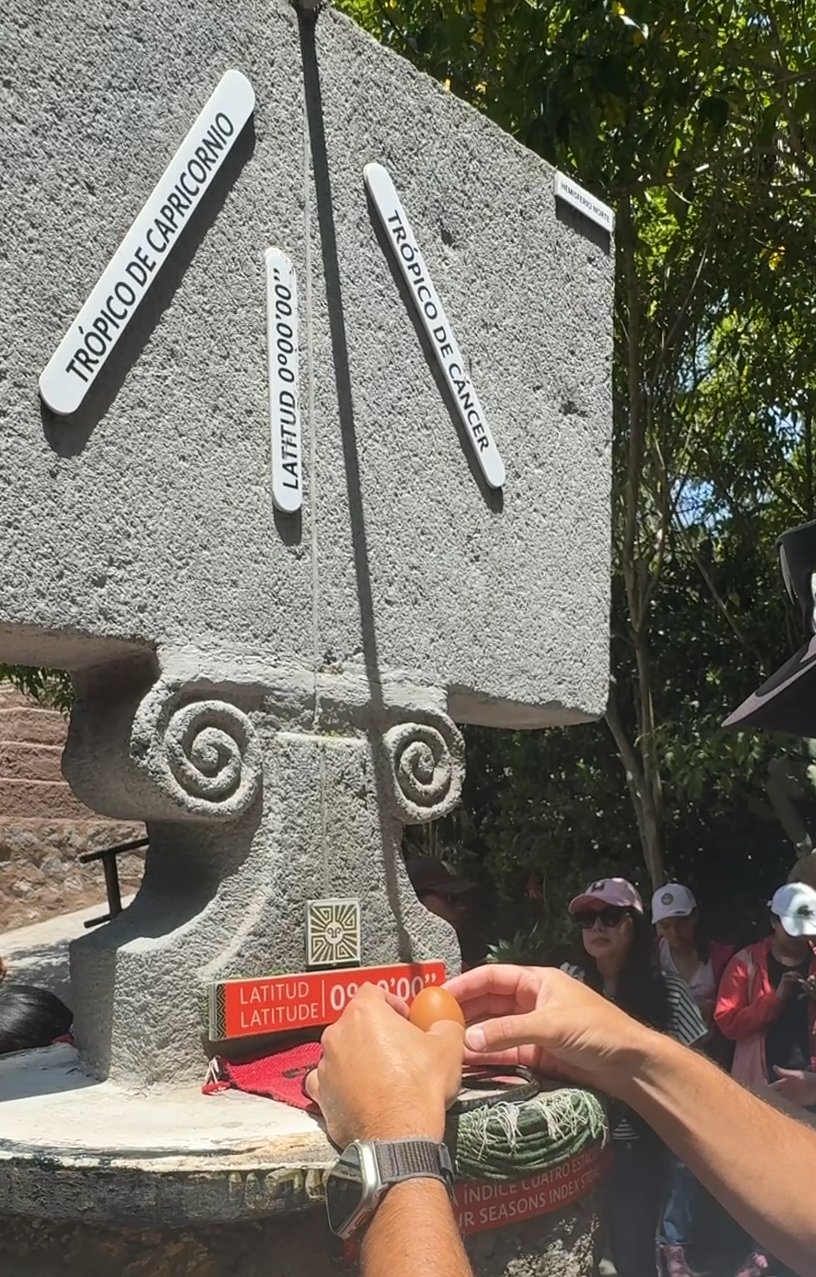
Our favorite activity though, was visiting the “Mitad del Mundo” museum called “Intiñan Equator Museum”. We paid for an English tour which was excellent - the tour guide was very well informed and passionate about the history of Ecuador, as well as the modern day indigenous lifestyles. The tour even included multiple fun science experiments that highlighted the effects of the equator. We would definitely recommend this museum as opposed to the nearby government funded “Mitad del Mundo” monument and plaza, which is NOT actually located on the true Equatorial line (turns out it’s a couple hundred yards off)!
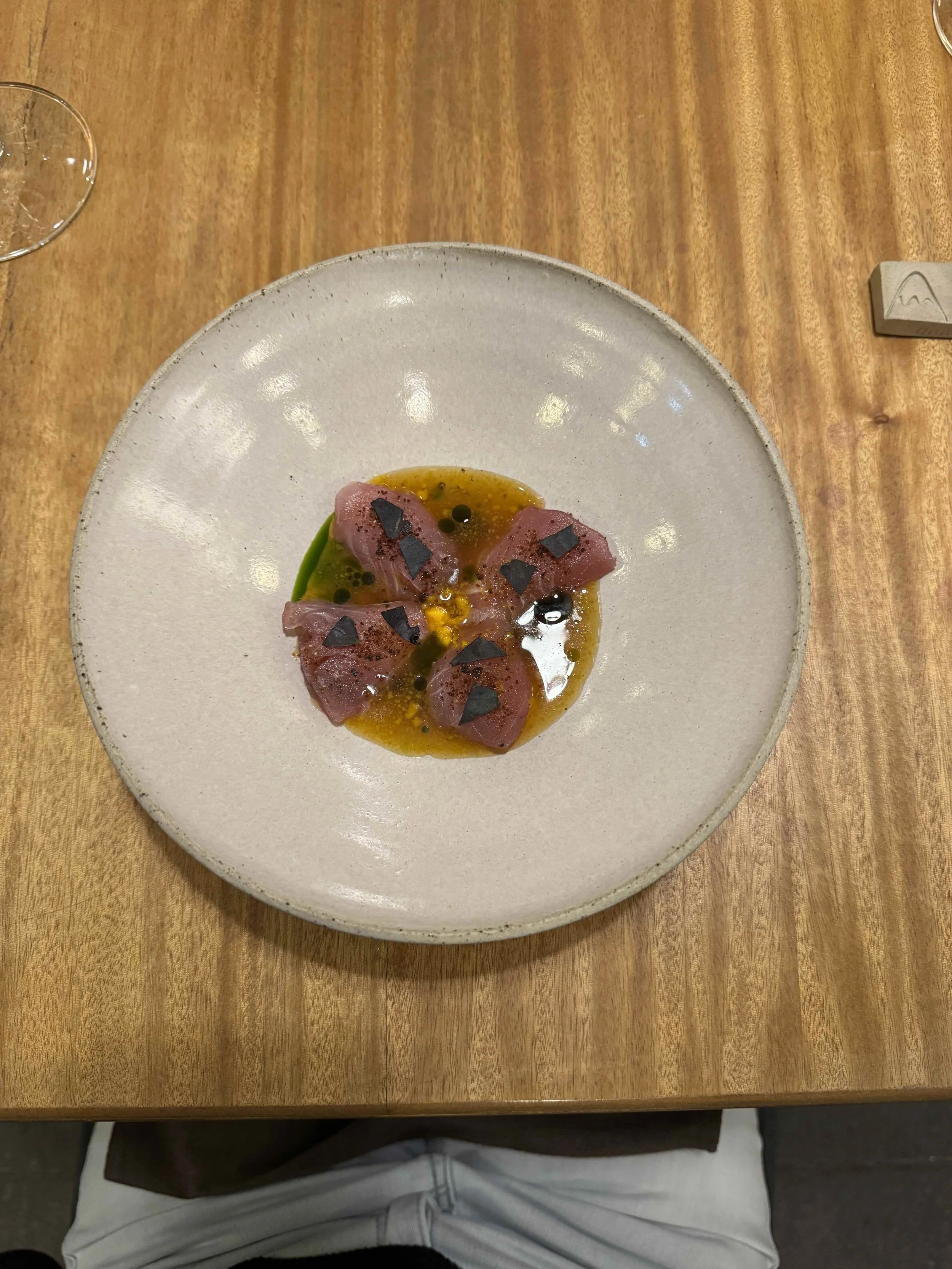
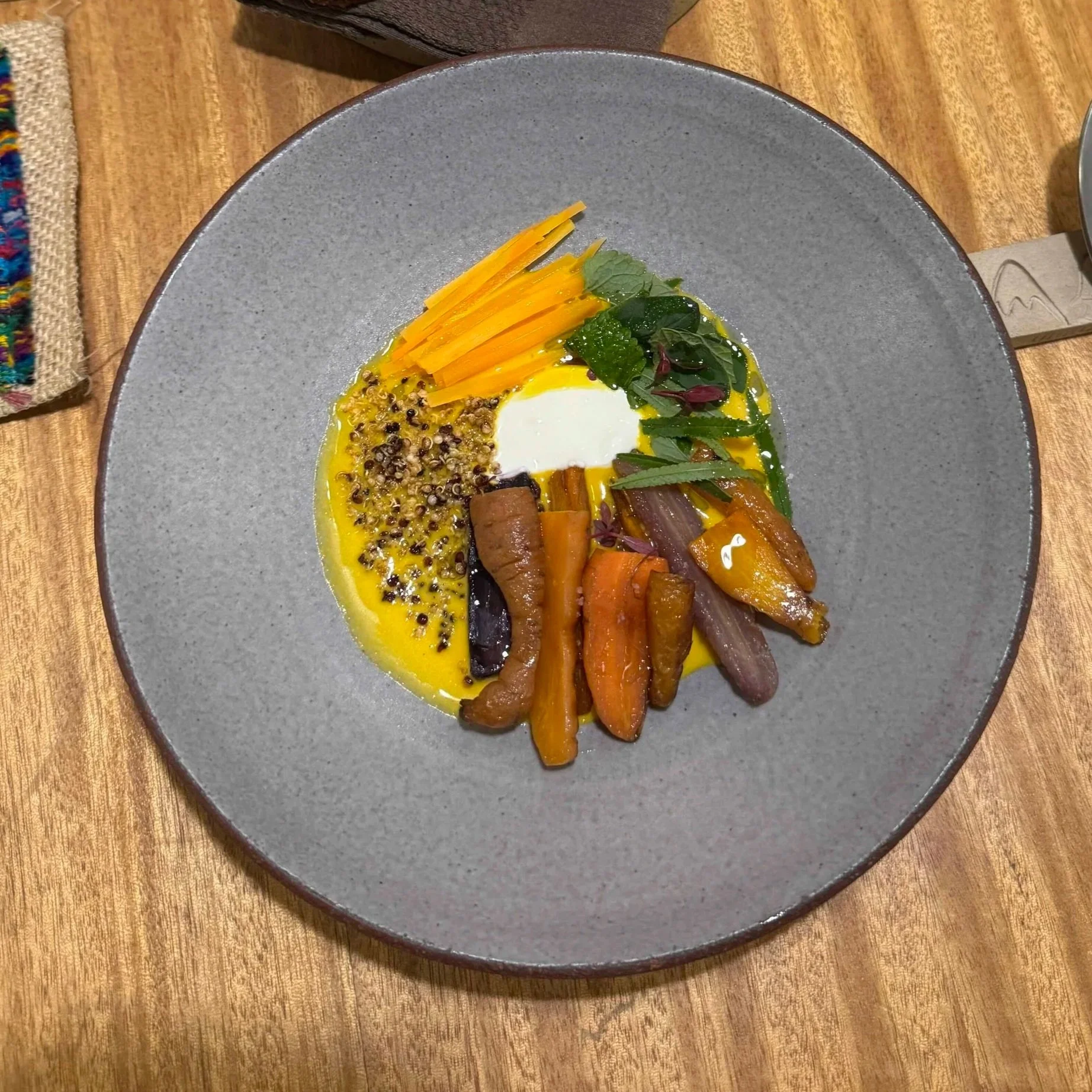
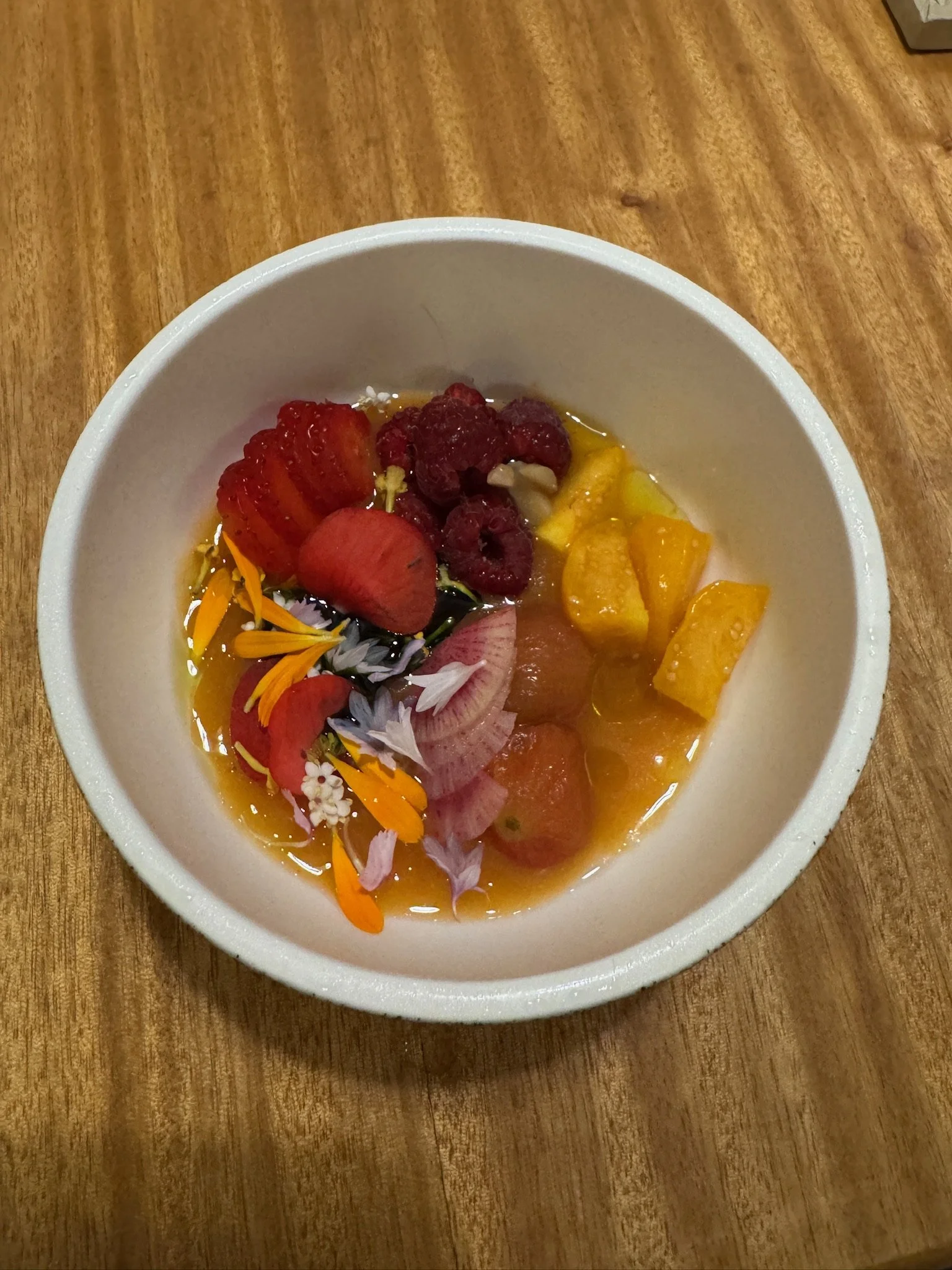
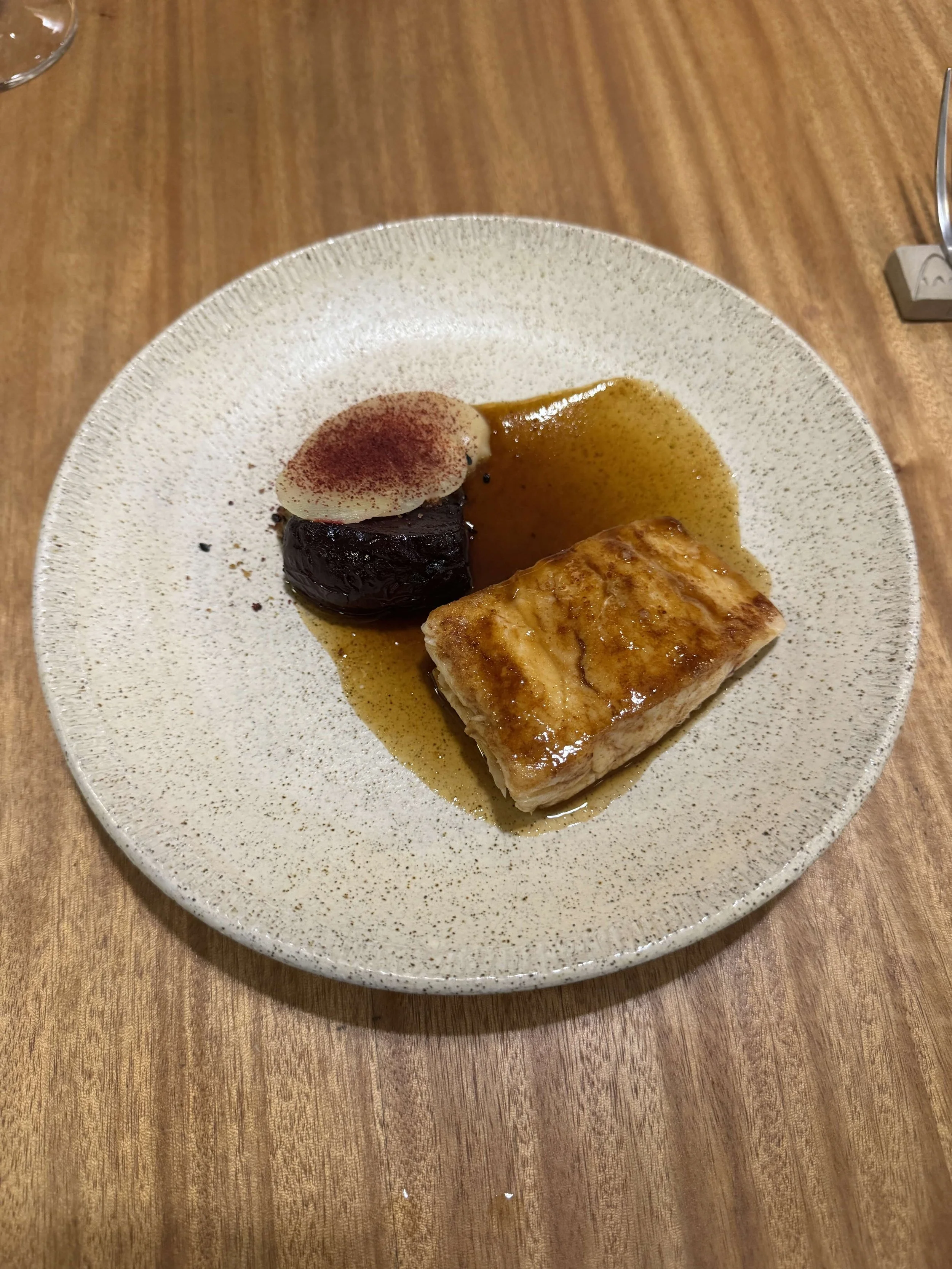
Finally, we enjoyed two exceptional dinners that are worth a mention. Urko was our favorite (photos below), and felt Michelin Star worthy. Its seasonally rotating menu had our eyebrows raising and taste buds watering with every bite. Somos is also a highly regarded, larger restaurant which is also worth a visit!
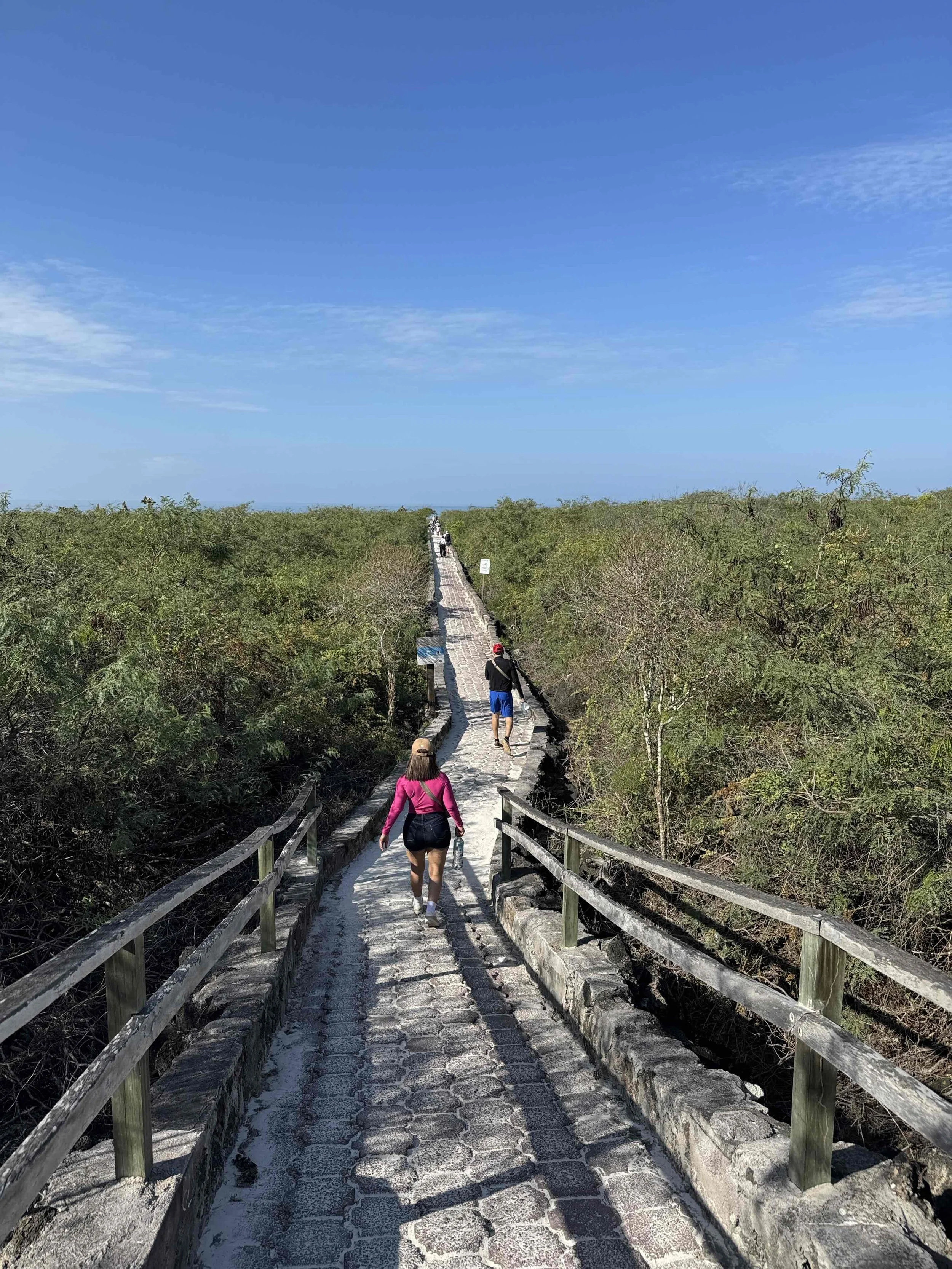
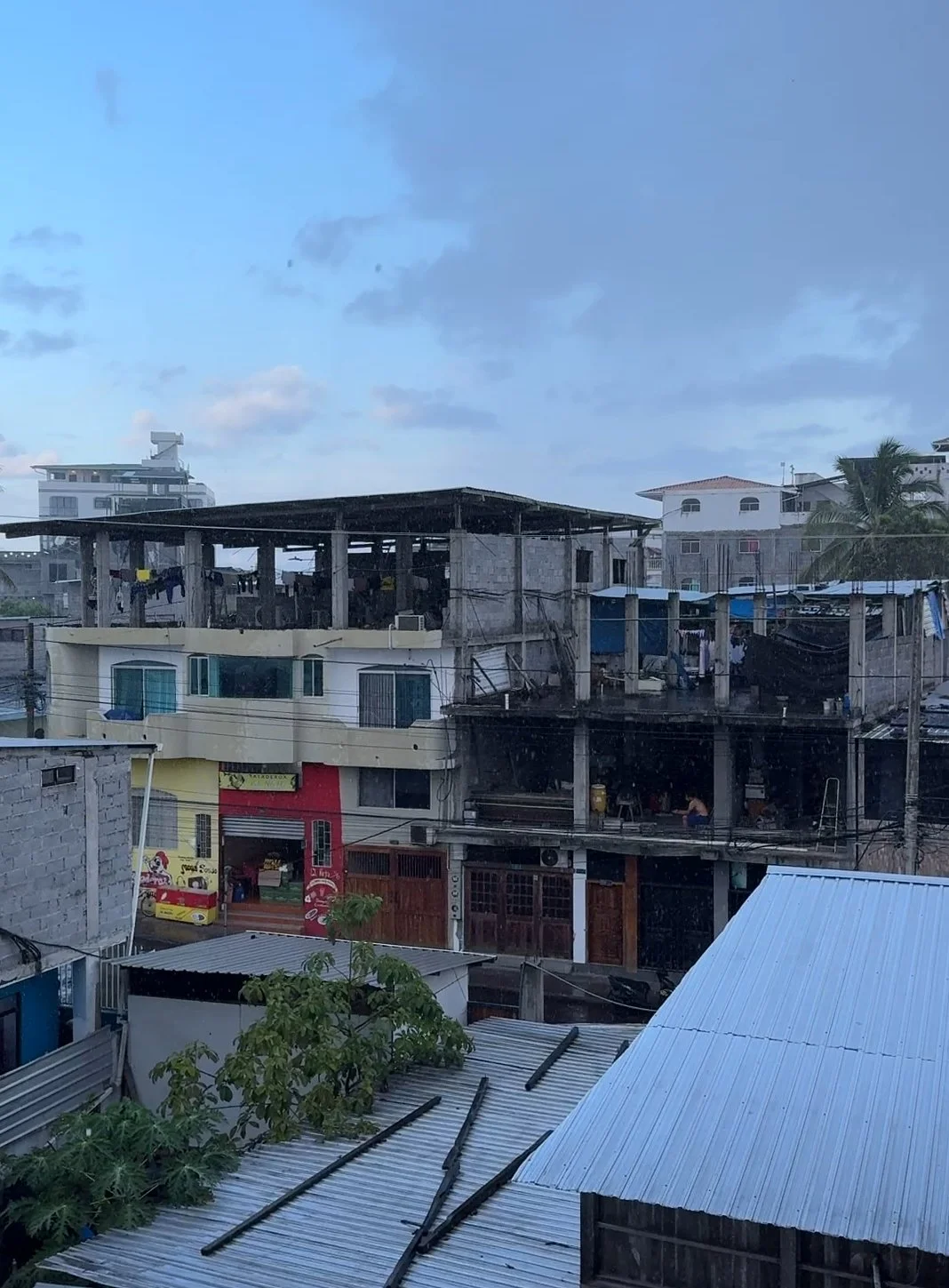
Ultimately, though we enjoyed the Galapagos as a whole, we felt the experience was overpriced. The Puerto Ayora infrastructure is poor, buildings behind the main street are crumbling/unfinished, many stores and restaurants don’t have air conditioning, and yet we paid nearly United States prices for food and basic travel essentials. We selected a very high-end Liveaboard, thus our costs for that experience were high, however I’m not sure how much cheaper the Liveaboard options there get. So while we saw lots of animals and got some great dives in, this isn’t a place we’ll be returning to any time soon - and we would caution friends to be ready for the hassle, fees and high costs before going.
Quito
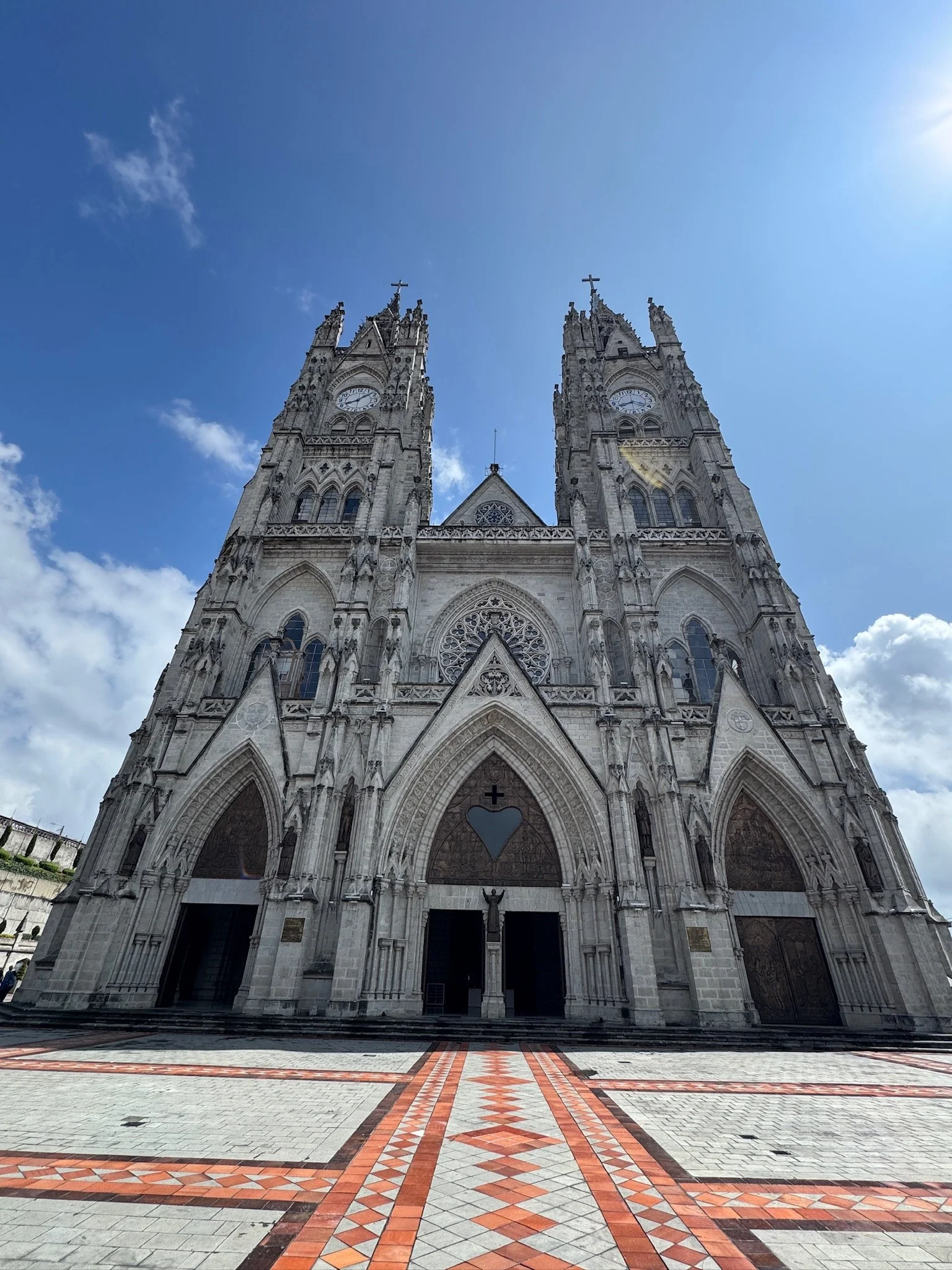
As the worlds 2nd highest capital city (the highest is La Paz, Bolivia) sitting at 9,350 feet, Quito is home to approximately 1.8 million people within the city proper. We had been warned that safety in Quito is a real issue for tourists, so we booked ourselves at the JW Marriott in the La Mariscal neighborhood - just south of the La Carolina park. We were absolutely delighted with this hotel…for less than $200/night we had access to a resort-style pool, multiple restaurants, and an exceptional gym. Due to Spencer’s Marriott status, we also had access to the executive lounge which provided an incredible breakfast and happy hour snacks daily. There isn’t much within walking distance of the hotel as far as food goes, so if you’re a breakfast eater and don’t want to worry about Uber-ing every morning, it might be worth paying for the executive lounge access.
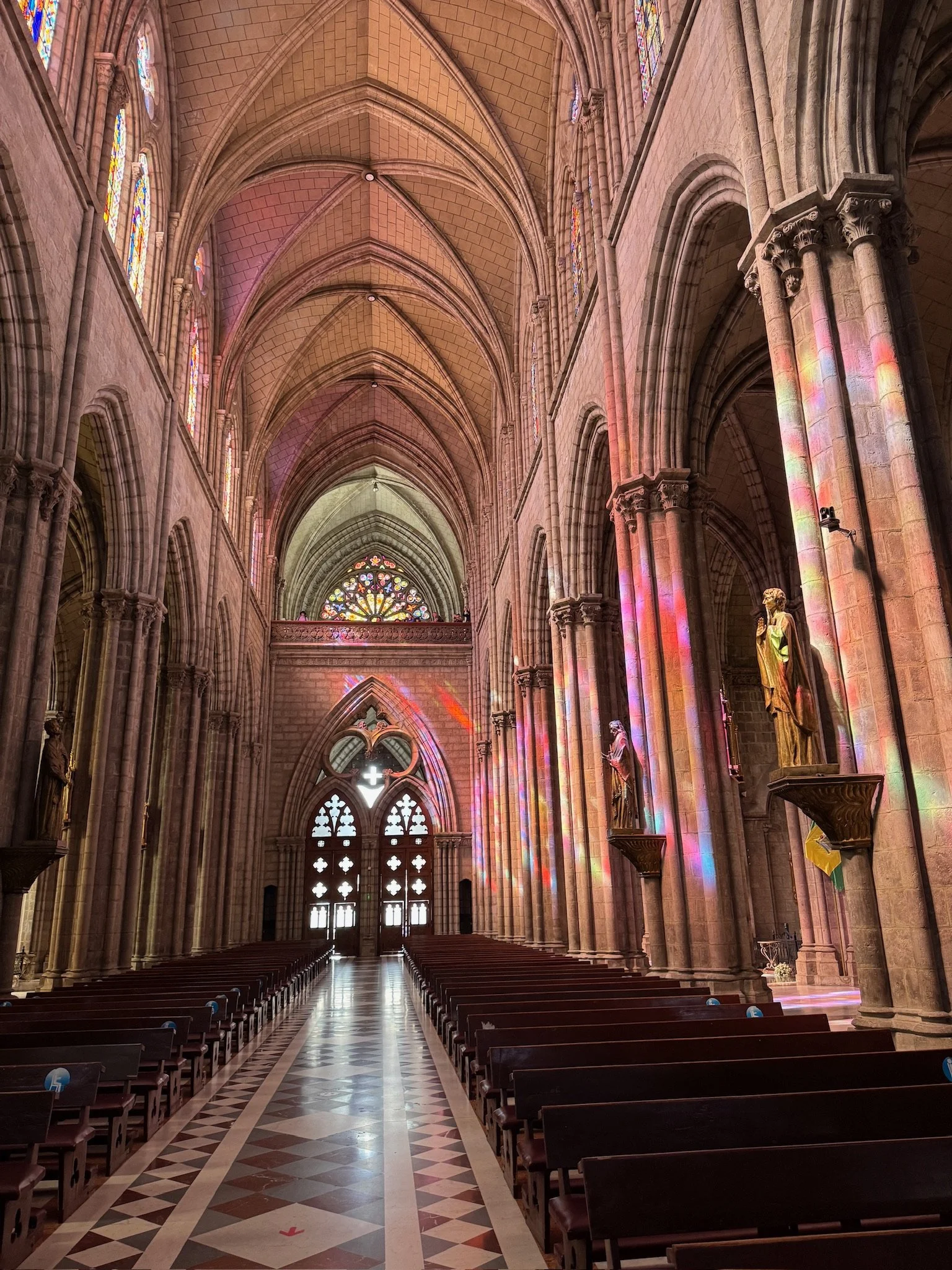
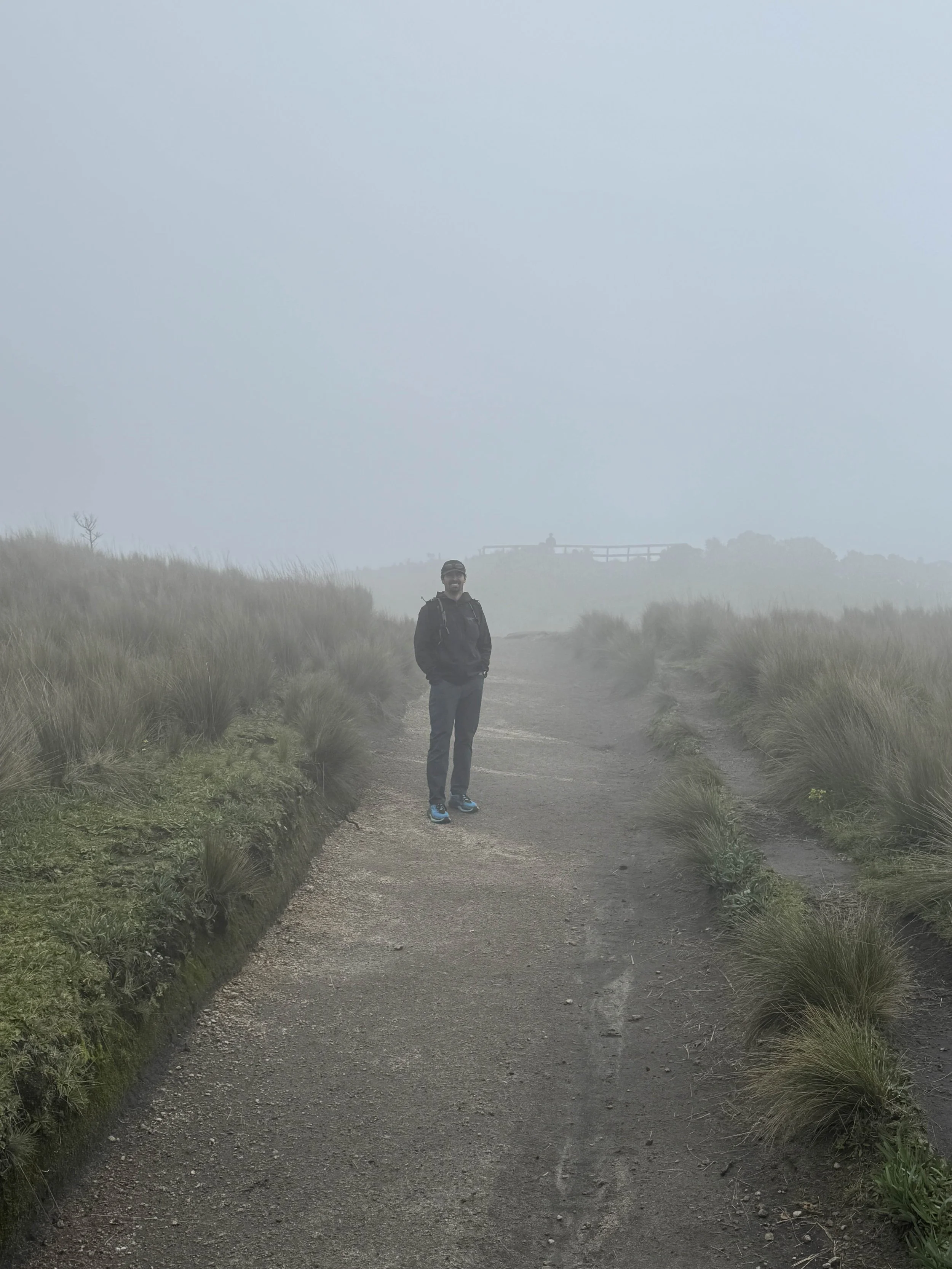
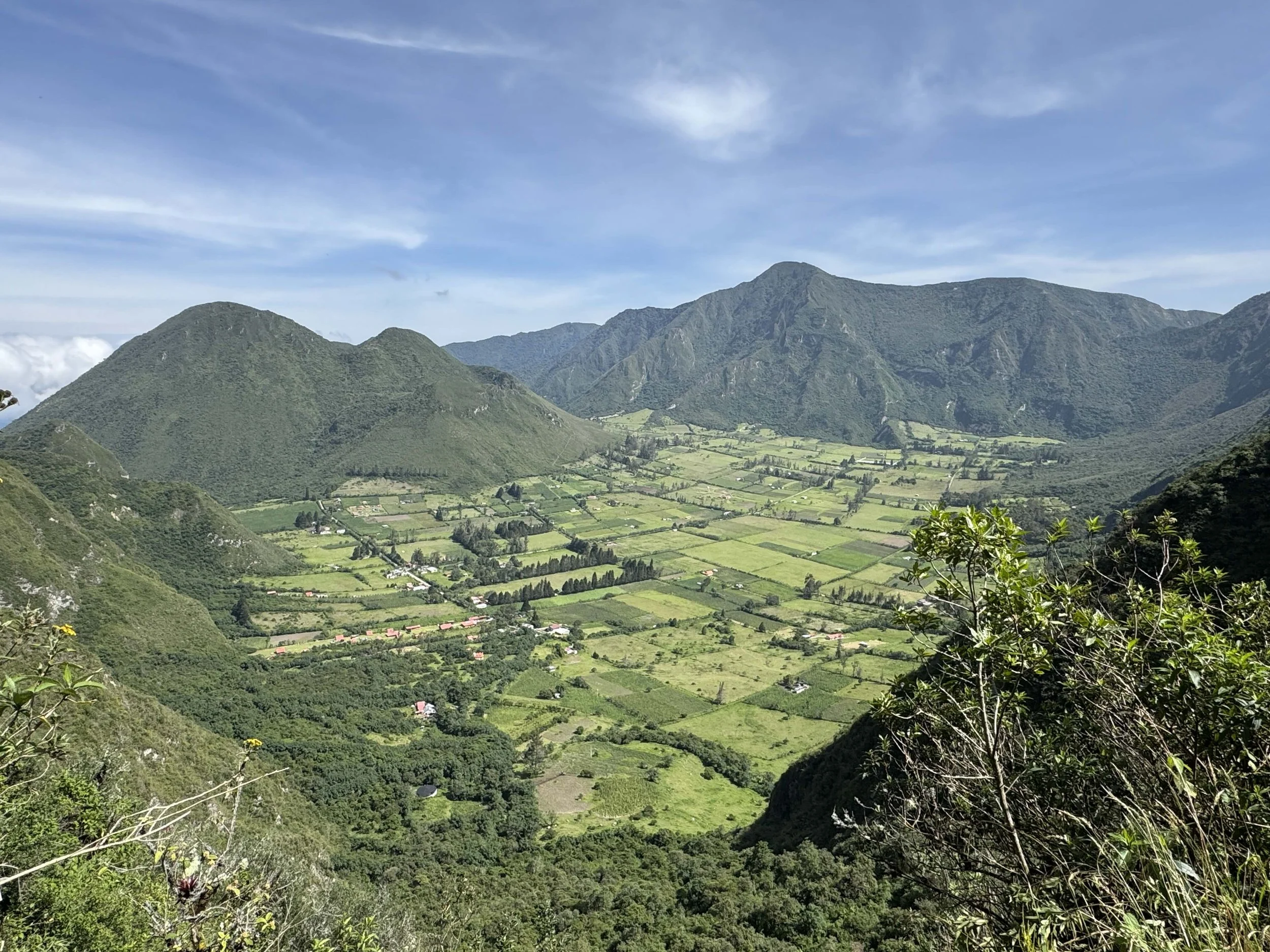
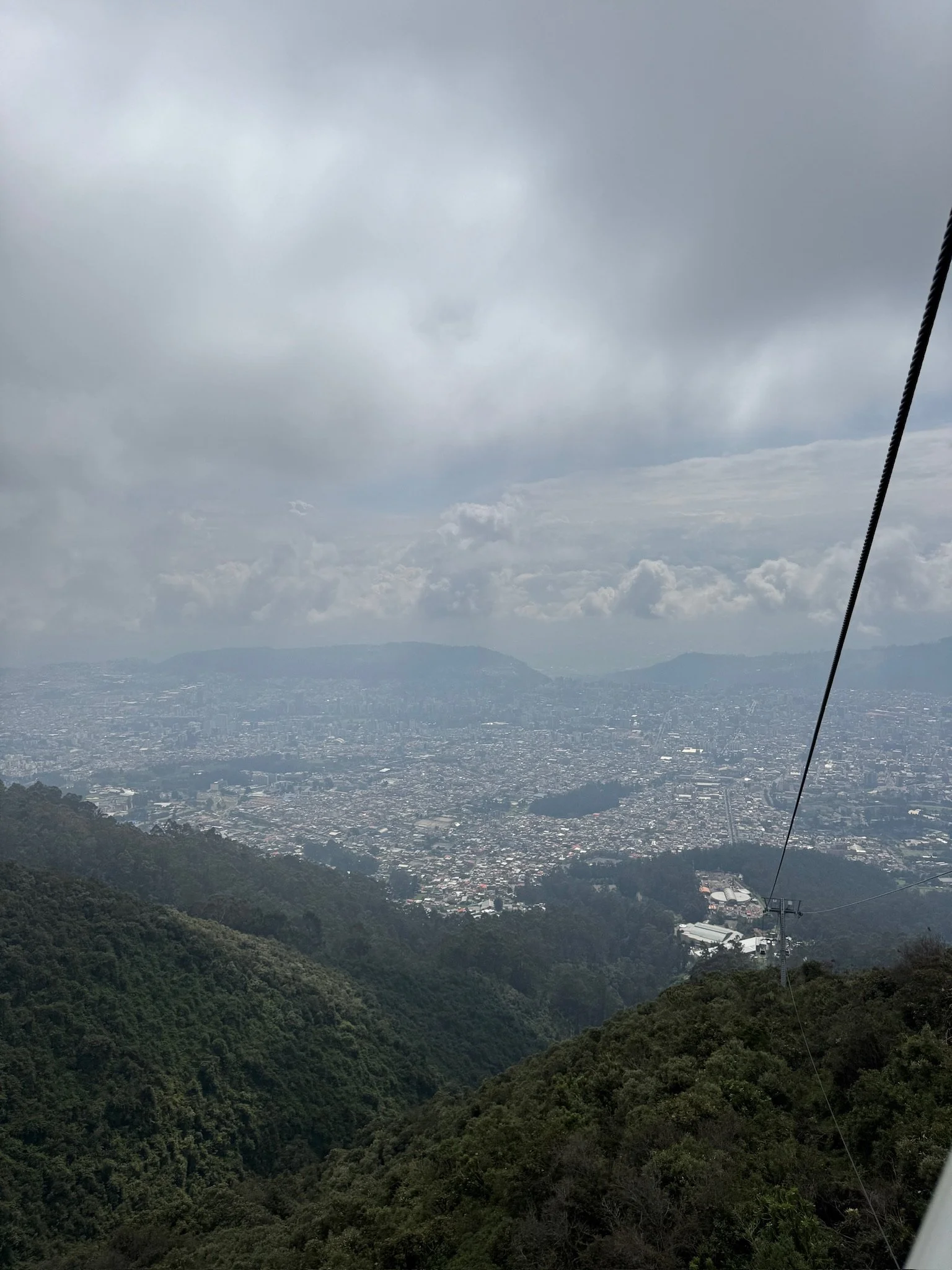
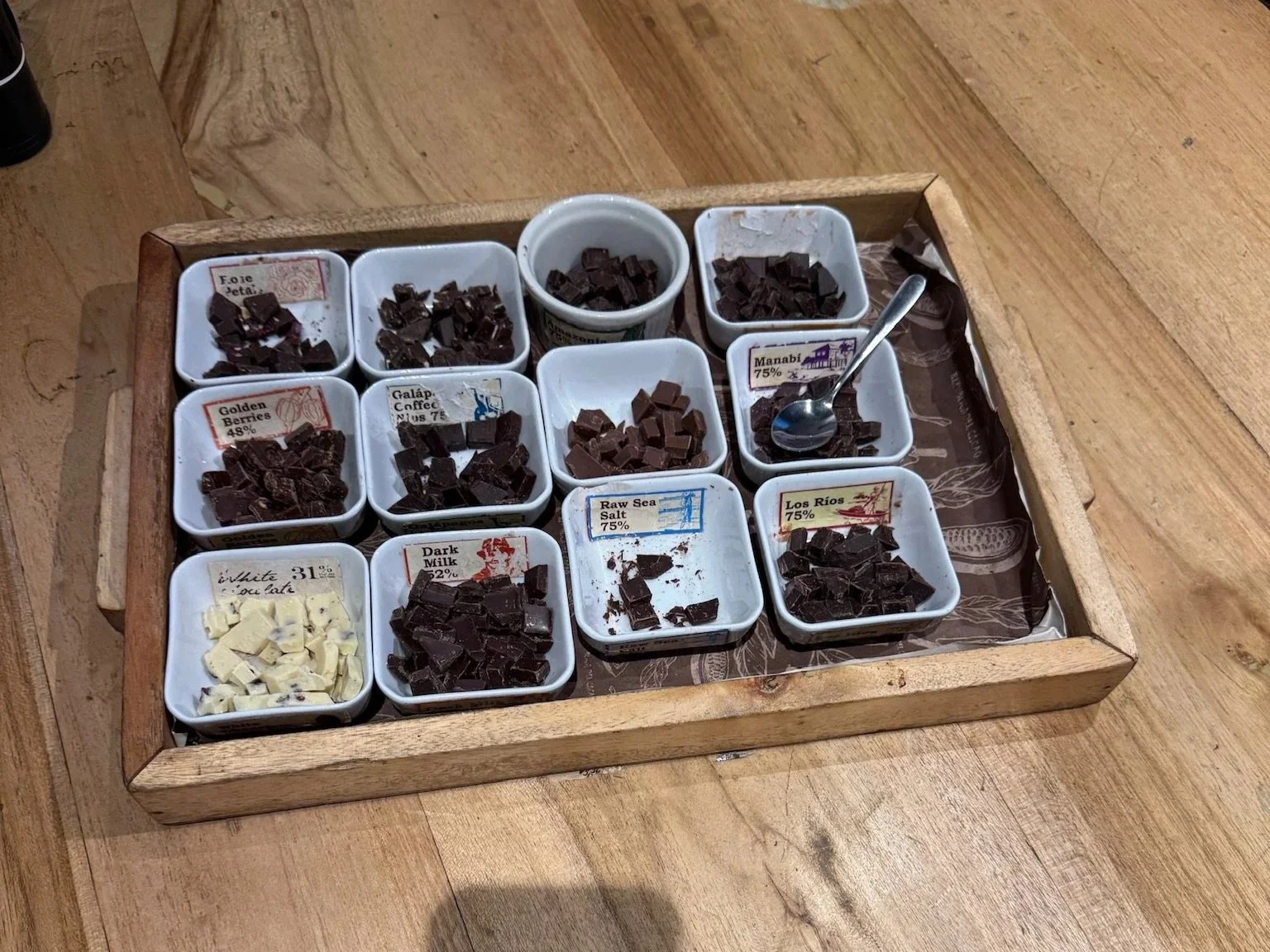
Given the safety concerns, we really didn’t walk anywhere (other than with our Guide on the Walking Tour!), but Ubers were fast and reliable, and CHEAP - like $3 for a 15-20 minute ride. During our time in Quito, we did this great “Free” (i.e. tip-based) walking tour of the Centro Historico which included a cacao tasting. We also took the Teleferico Cable Car to the top of the mountain for a mini-hike at 13k feet with some cloud/city views, and marveled at the village in the Pululahua Geobotanical Reserve - one of only 2 inhabited volcanic craters in the world.
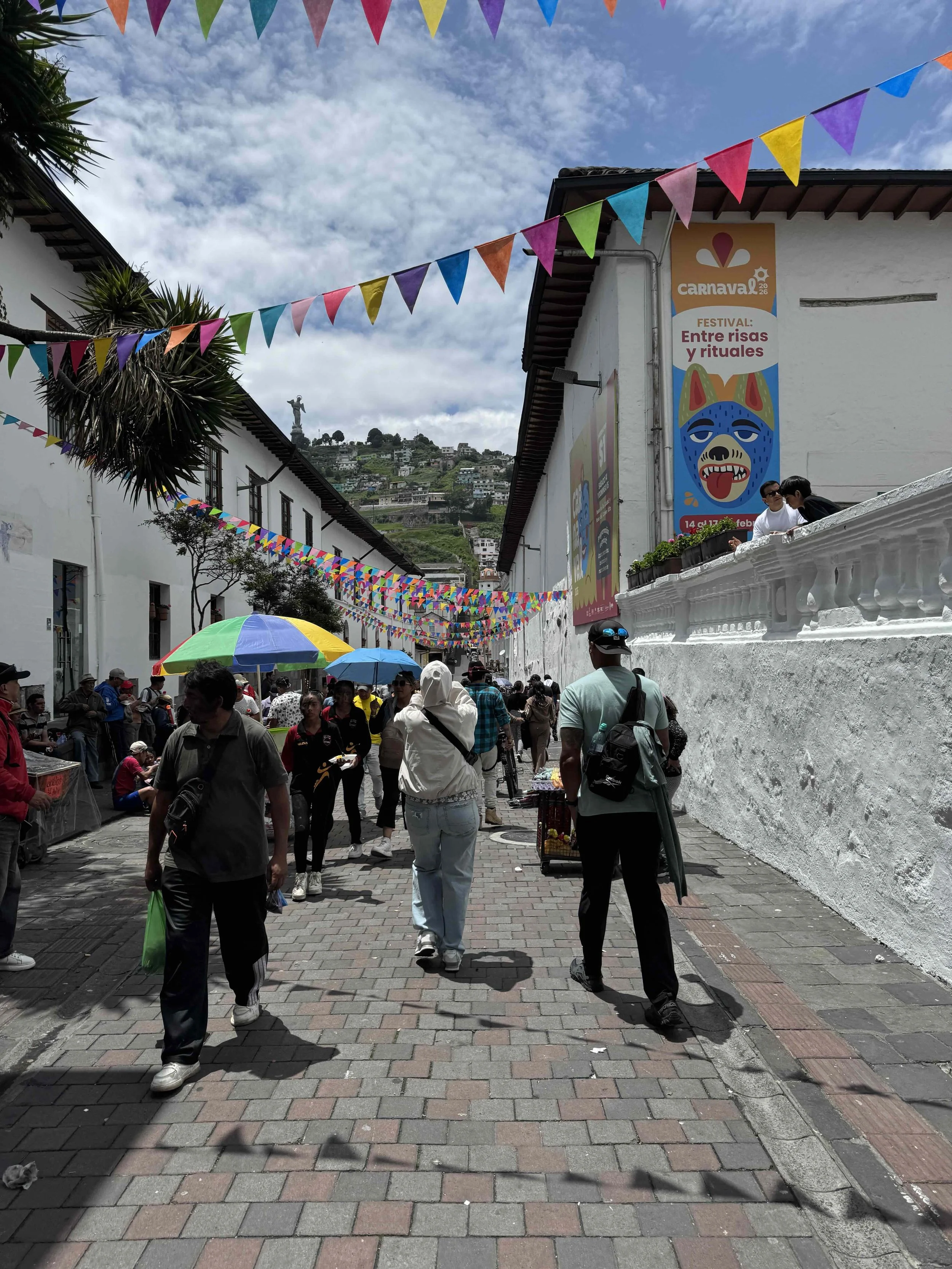
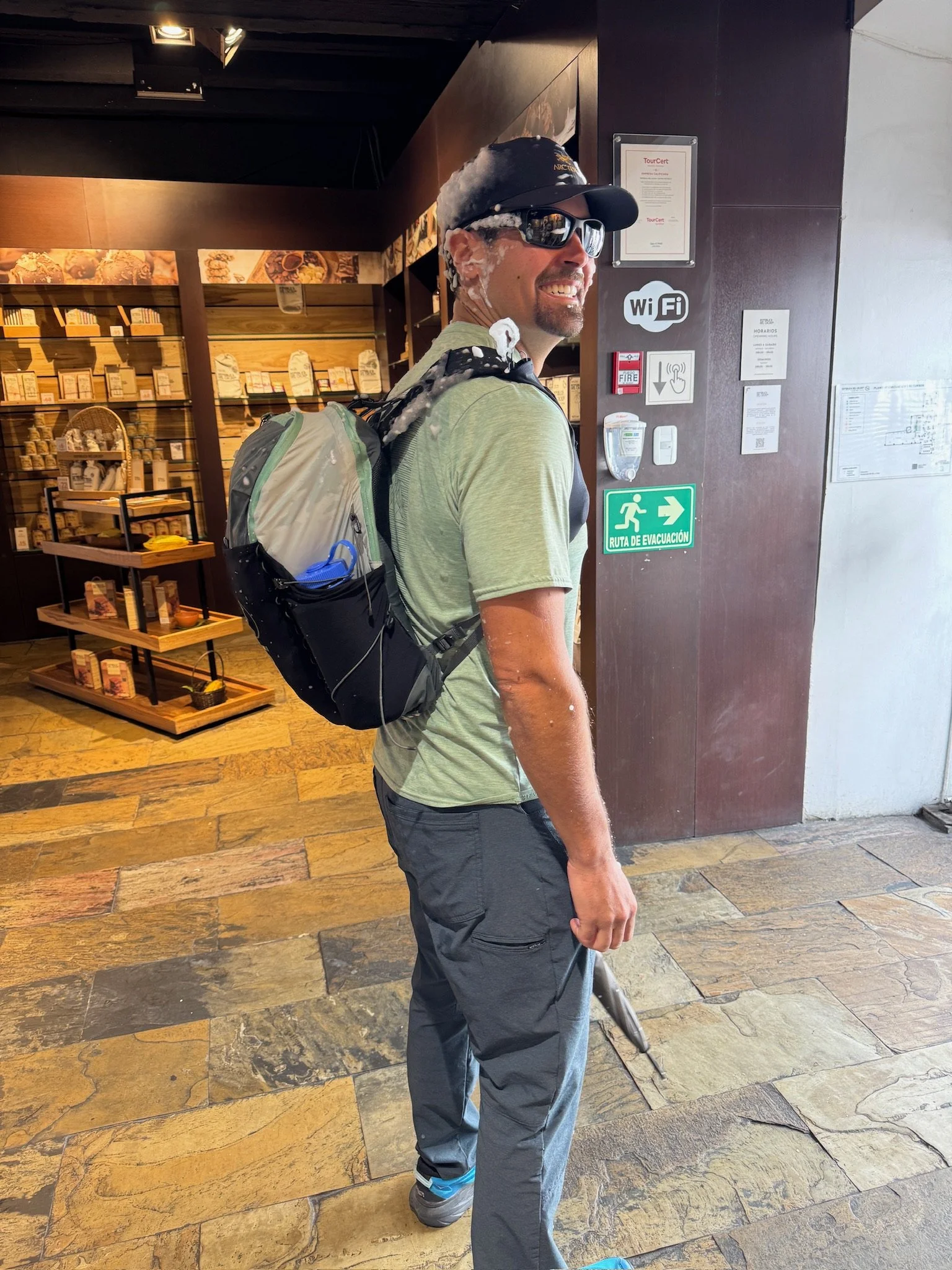
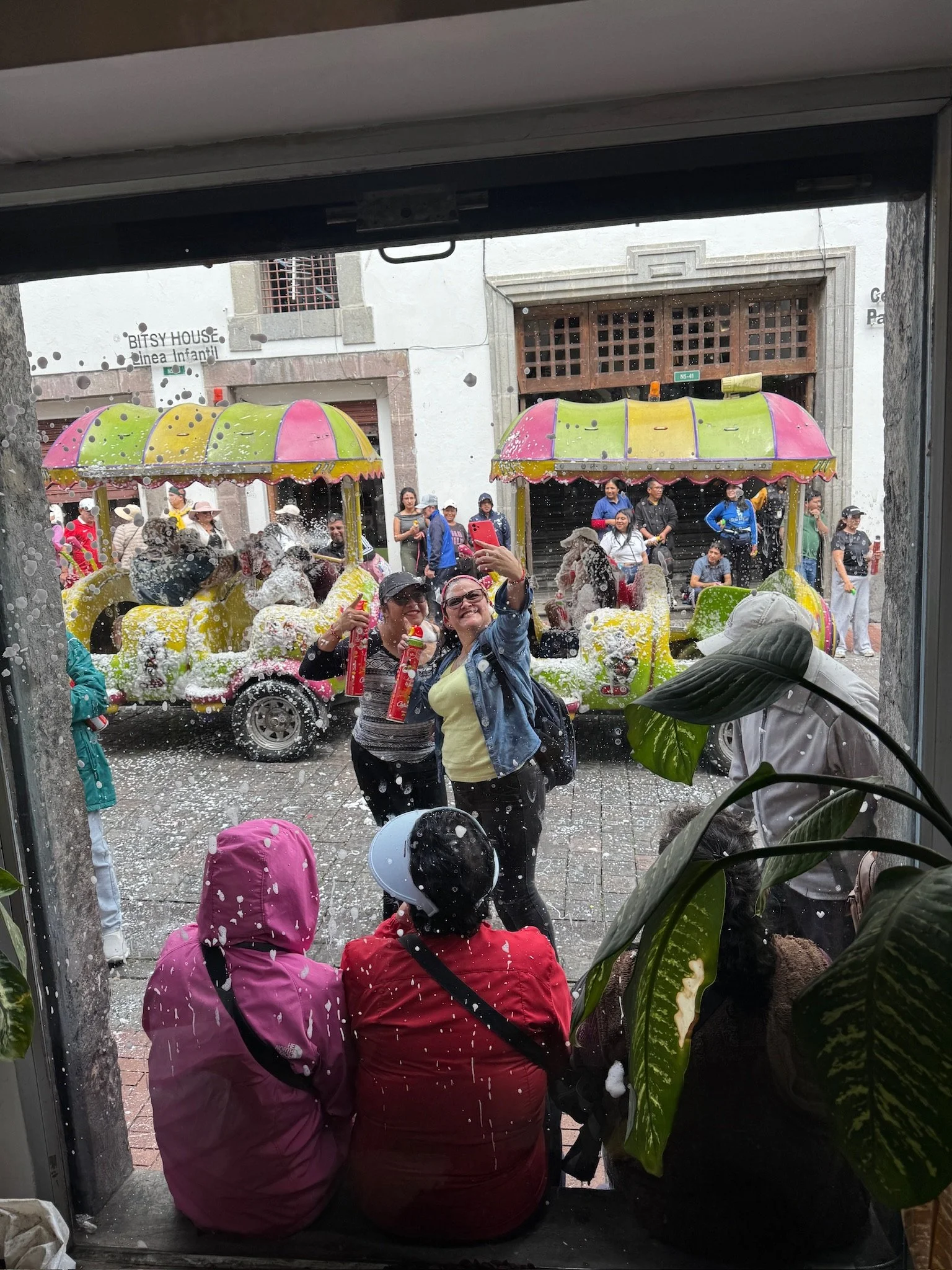
You’ll notice on our photos from the city tour, we happened to be there during Carnival, so we got the “full” experience and were sprayed with foam along with the rest of the spectators!
Summary
In total, we spent 23 days in Ecuador: 8 in Quito, 4 on land in Puerto Ayora (Galapagos), 7 on a cruise throughout the Galapagos, and 4 in the Amazon Rainforest outside of Quito. It’s a shame Quito has such a security problem, because it’s actually a very cool city “in the clouds” with great access to activities nearby and of course acts as a hub for accessing the Galapagos, Amazon, and Volcano regions. The people are exceptionally nice & want to be helpful. Ultimately we wouldn’t recommend planning a whole trip around Quito, but if you find yourself going to one (or more) of Ecuador’s beautiful natural environments, it is definitely worth a 2-3 day stopover!
“Travel is fatal to prejudice, bigotry, and narrow-mindedness.”
– Mark Twain