Torres Del Paine - W Trek Planning & Logistics
There are a couple ways to experience the beautiful Torres del Paine National Park:
First, you could book one of several hotels in the park (Hotel Las Torres, Ecocamp Patagonia, Explora Patagonia, etc.) and plan on doing day hikes to/from that hotel.
Second, you can contact Las Torres (www.lastorres.com) and have them secure all of your accommodations for you in the Refugios, either in shared bunk rooms or Campsites. They will arrange it so you are able to hike the official W Trek (or O Trek if you’re feeling adventurous) circuit, but of course you will pay more for this option.
Finally, you can book all of the Refugios on your own which is the most economical, but requires some planning and patience as you navigate the websites of the 2 companies who own and operate the Refugios along the W or O circuit. The 2 companies are Las Torres & Vertice.
Both times we visited Torres del Paine National Park to hike the 45-50 mile “W Trek”, we planned and booked it ourselves. If you’re looking at the various websites for the first time, it might feel confusing. We hope this post will help make the process easier for you.
The two companies (Las Torres and Vertice) open their websites at different times for the following “season”, but it was around April/May for both of them, for their Summer season (Winter for the Northern Hemisphere). We believe that companies like Las Torres suck up much of the Refugio availability before it’s ever open to the Public. So, if you’re booking on your own, you’ll need to book your lodging first, and adjust the rest of your travel dates around it.
It’s possible that you wanted to arrive in the park, say, on a Monday, but there’s no lodging available that day for the Refugio you’re going to start at, so you’ll have to plan to arrive on Tuesday instead (for example). Be aware that beds do open up at the Refugios as people cancel, so it’s possible you could check their respective websites and snag an open bed or two, much closer to your trip date if you don’t have the extended timeframe to plan!
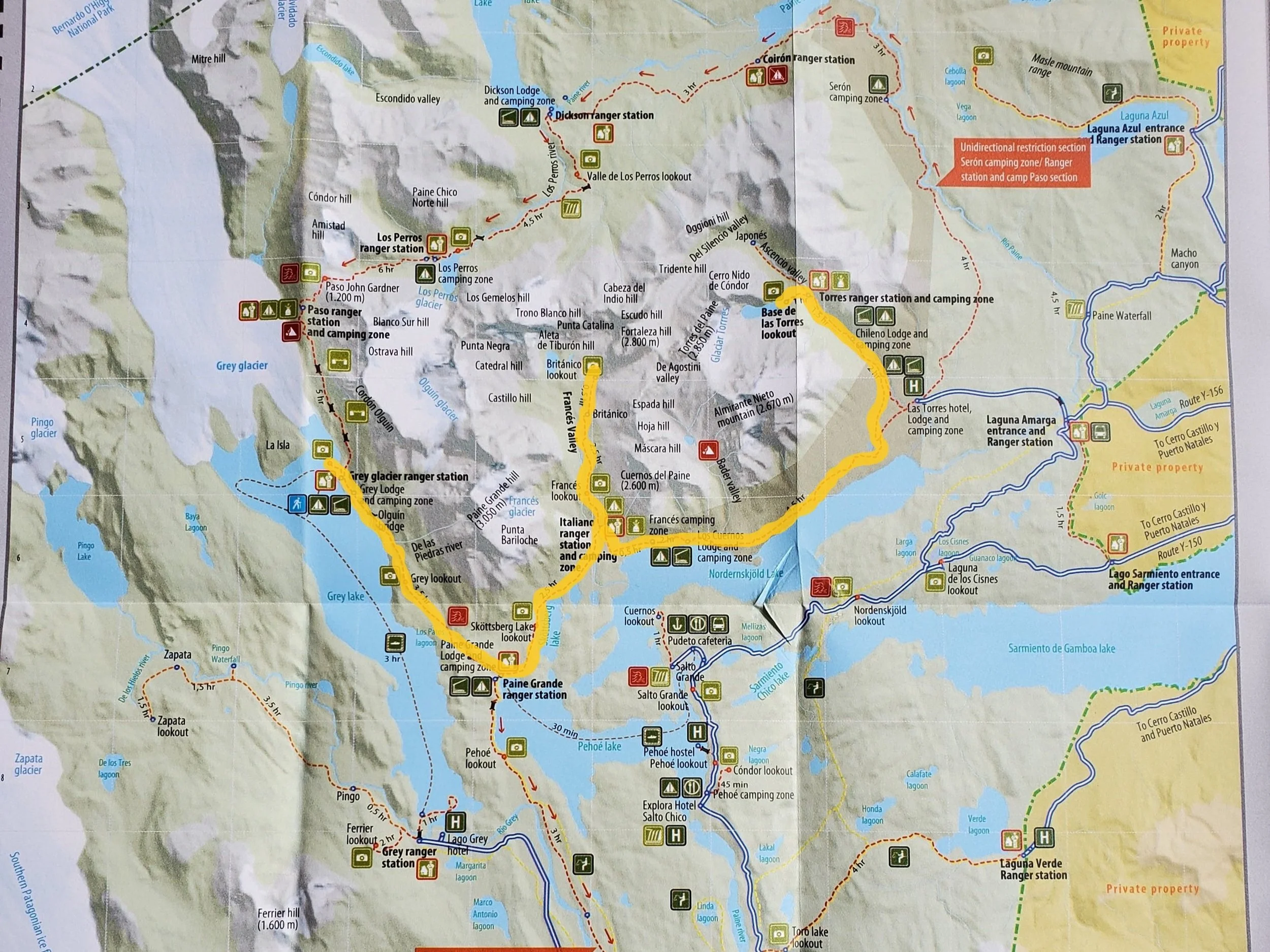
Map of Torres Del Paine with W Trek Highlighted
If you’re doing the true W Trek, you will be hiking between Refugios and carrying a backpack with your most necessary gear/clothing. You’ll be spending the night at a different Refugio each night (except possibly your first and last nights where you might end up staying in the same location). You are not allowed to simply show up and camp wherever you like, and there are generally not free beds at the Refugios, so a reservation is REQUIRED for each night you intend to be in the park.
The first decision will be whether you want to stay indoors, in a shared bunk room which is anywhere from 4-8 bunk beds - co-ed, vs camping outdoors. And if you want to camp outdoors, do you plan to carry your own tent/sleeping bags/etc? Or do you want to rent those items from the Refugio? Regardless of which sleeping arrangement you pick, you are able to also select a meal plan (full board, half board, or no meal plan). More to come on food…
Note that in 2026, Refugio Chileno has ONLY camping (no indoor lodging for guests) but there are ways to schedule your hike so you can avoid this particular Refugio if you wish. Bathrooms/Showers and Meal Plans are both still available here! Below are some photos of sample campsites, shared bunk rooms, and dining halls. We would recommend spending at least 5-7 nights in the park if you plan to hike the W Trek.
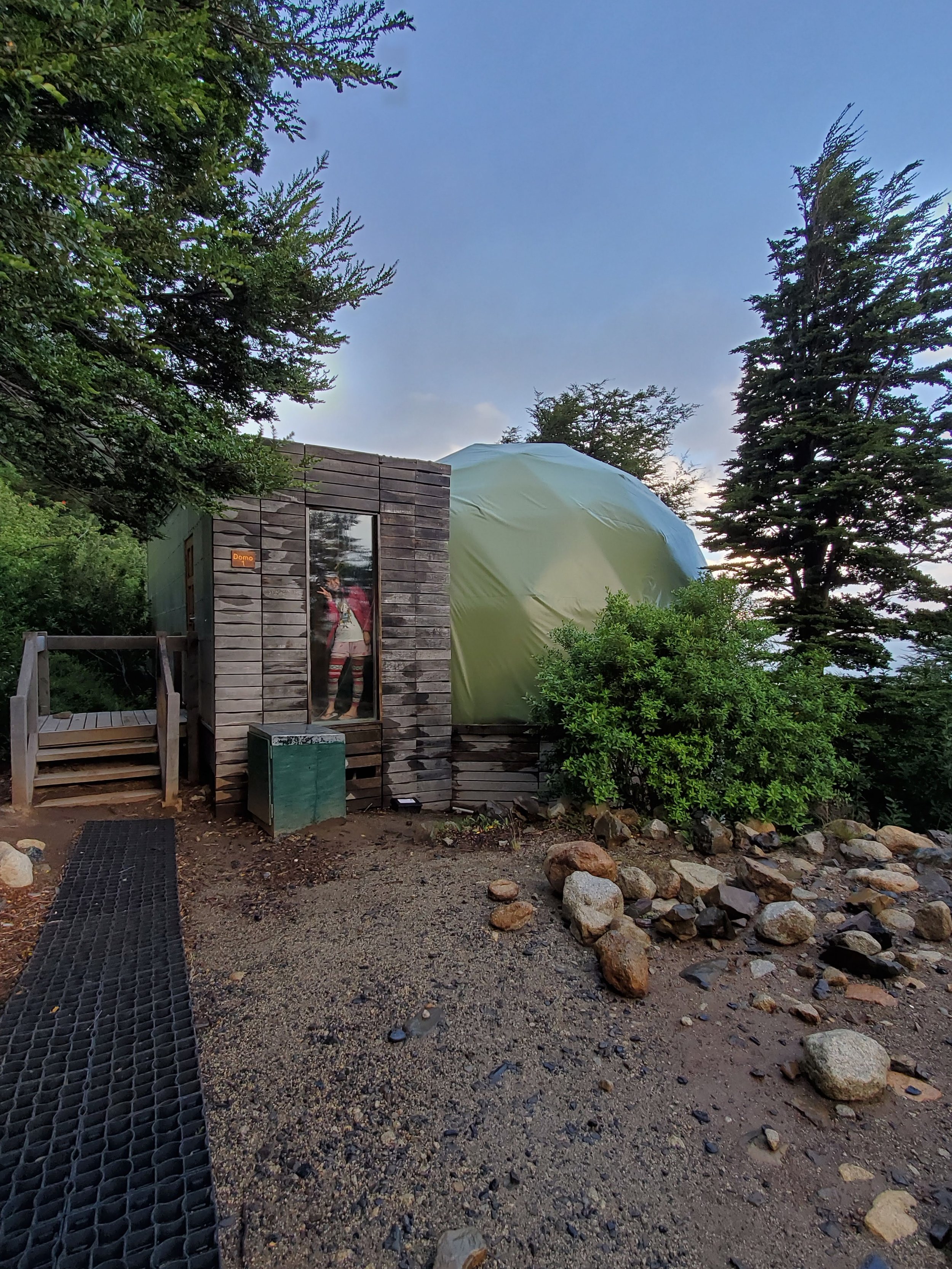
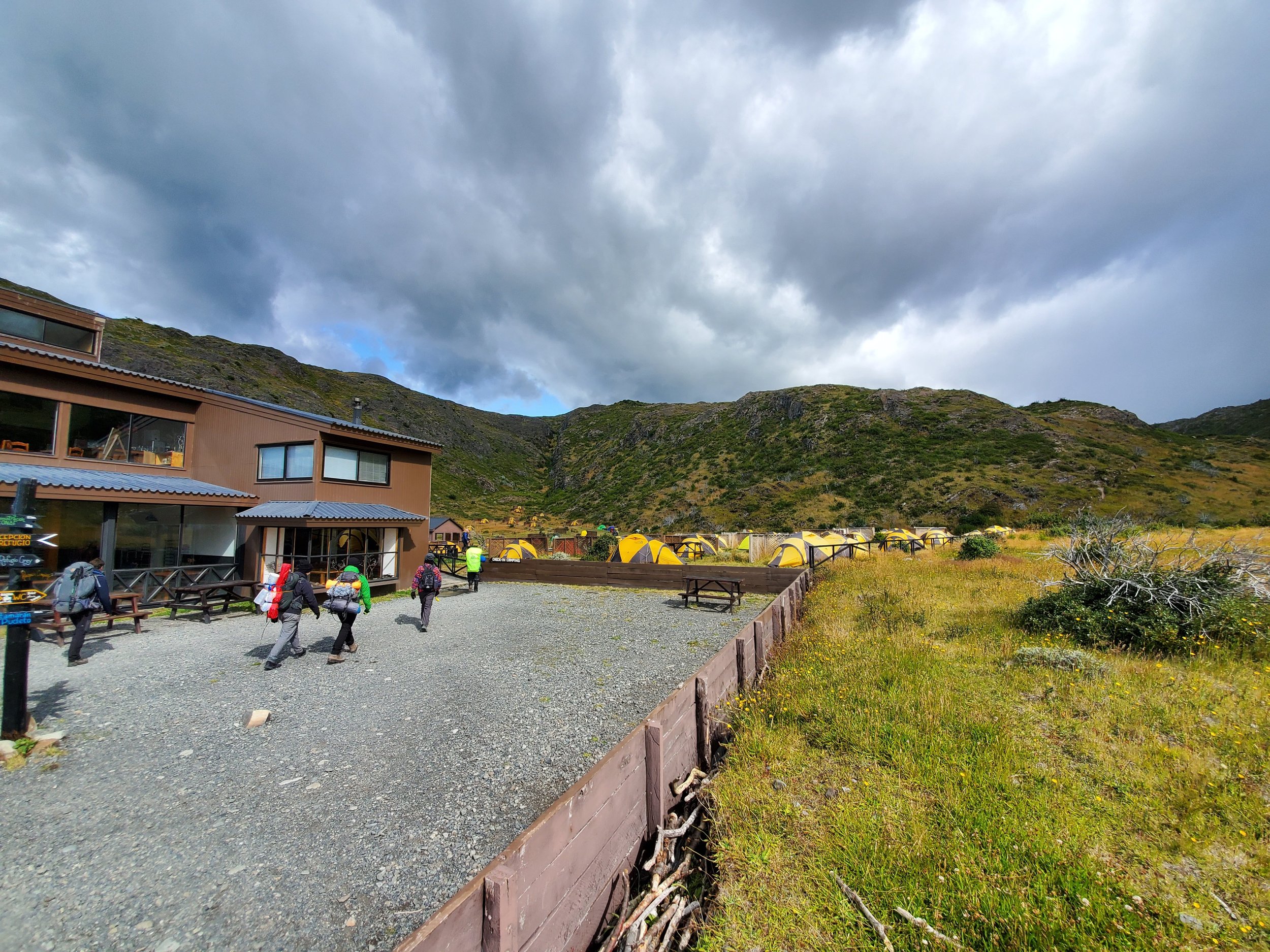
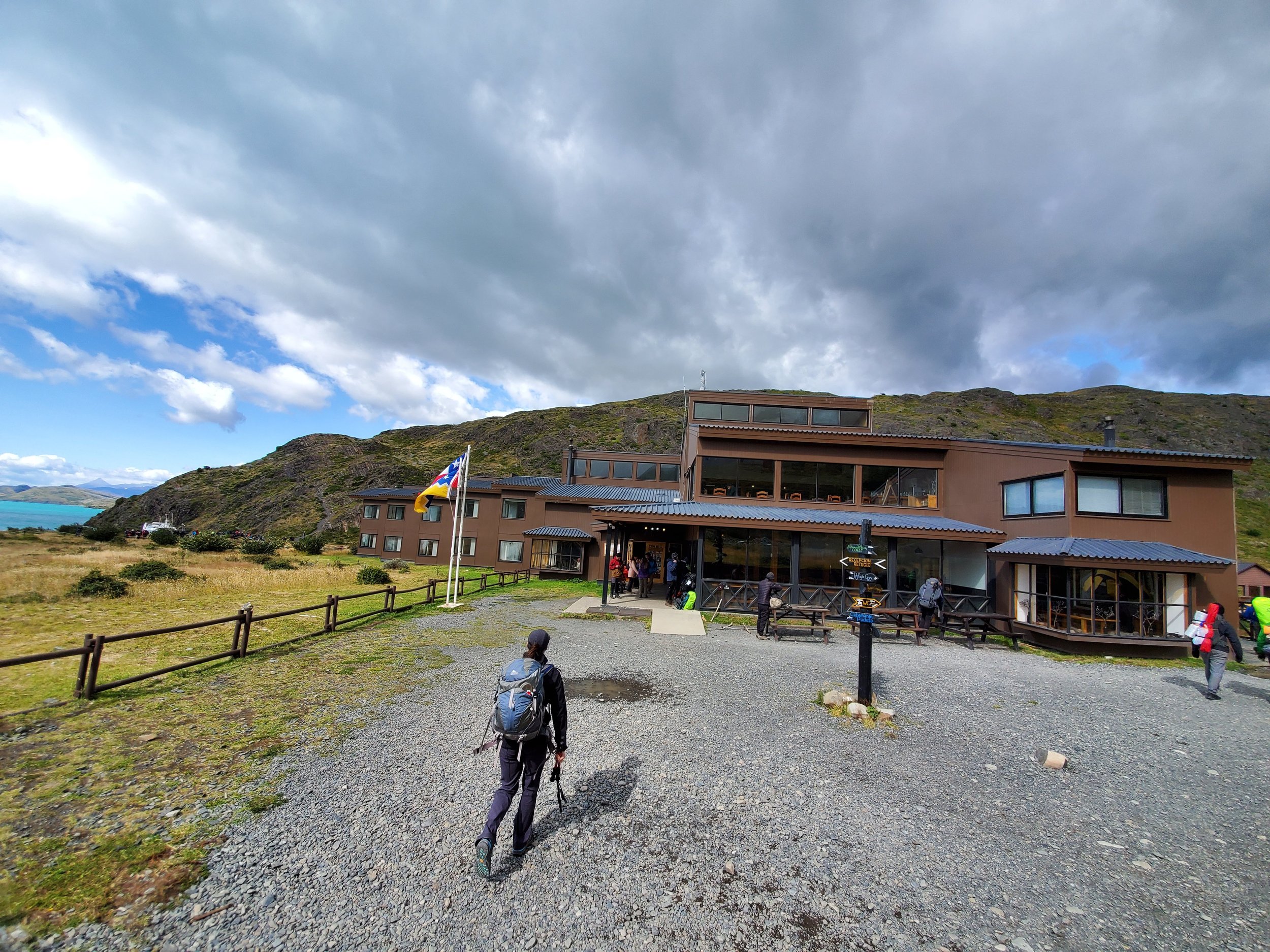
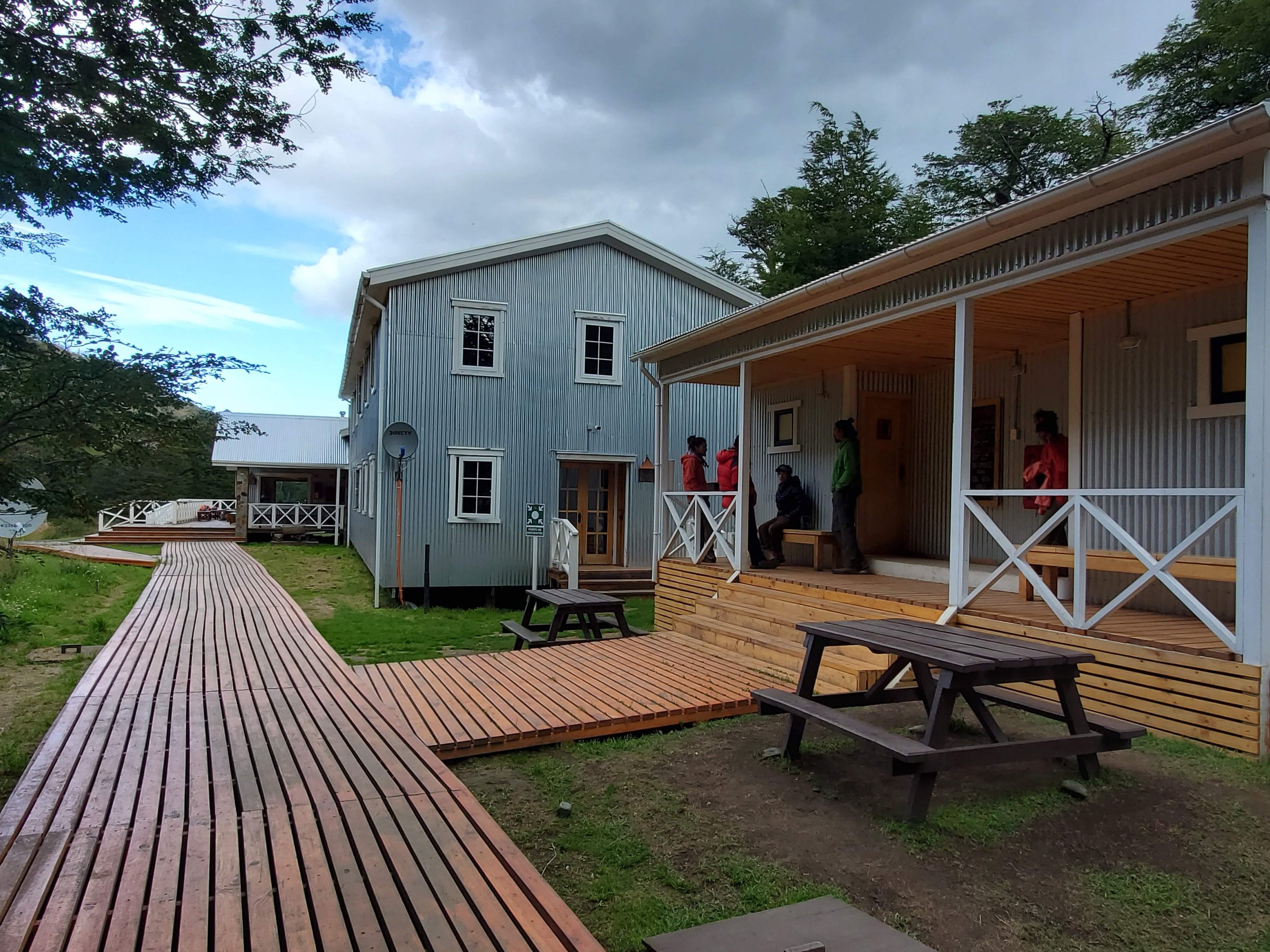

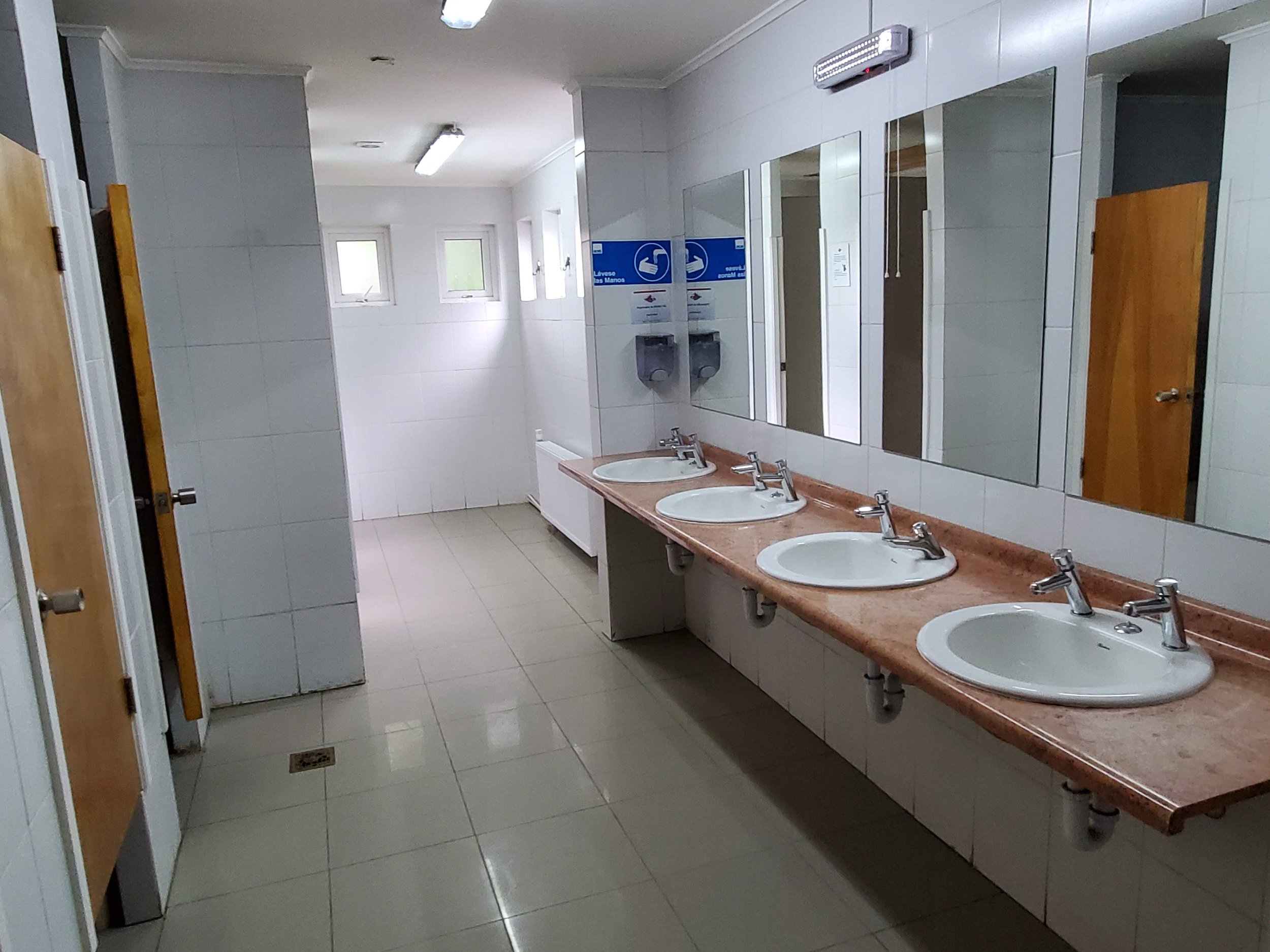
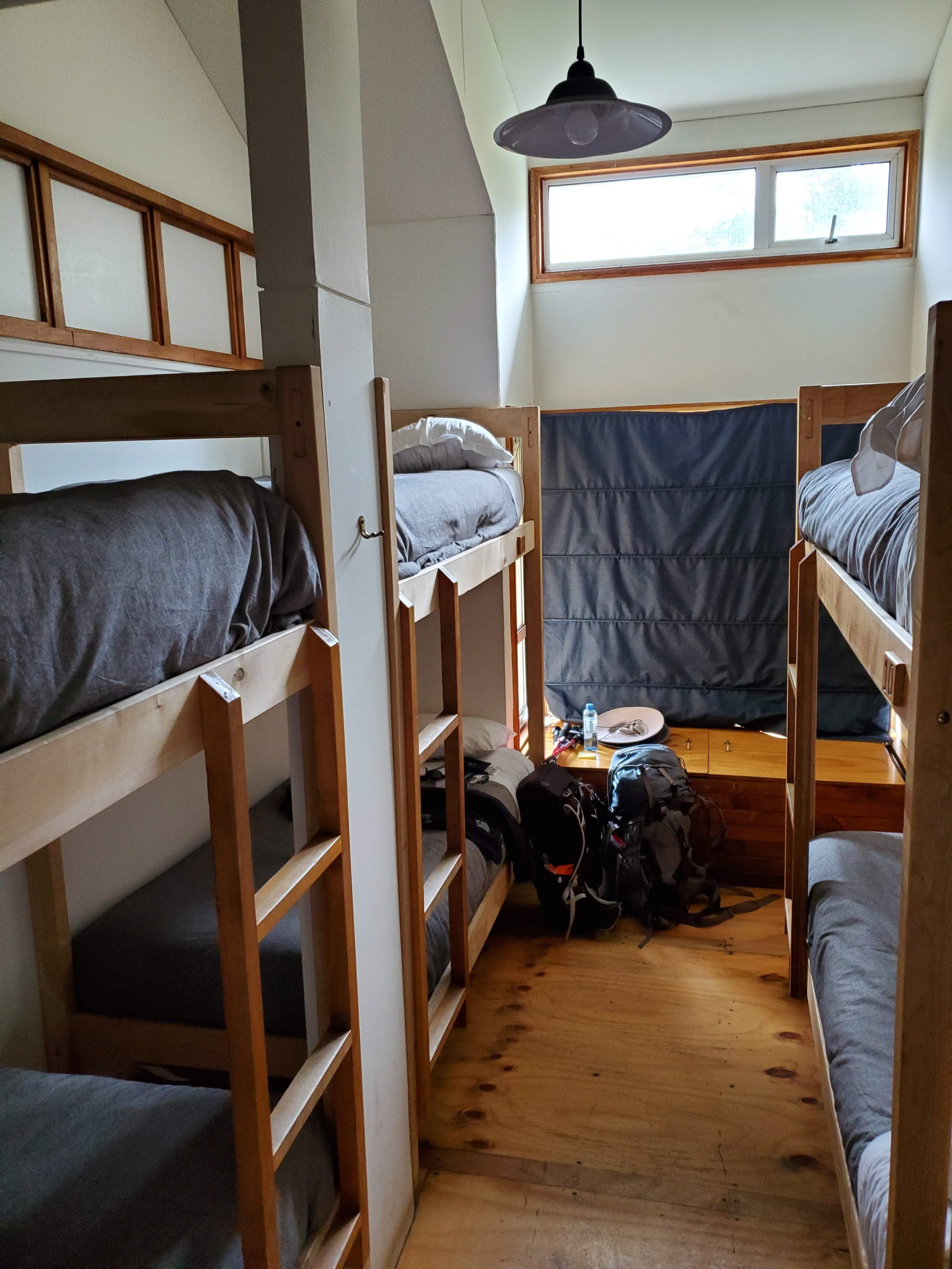
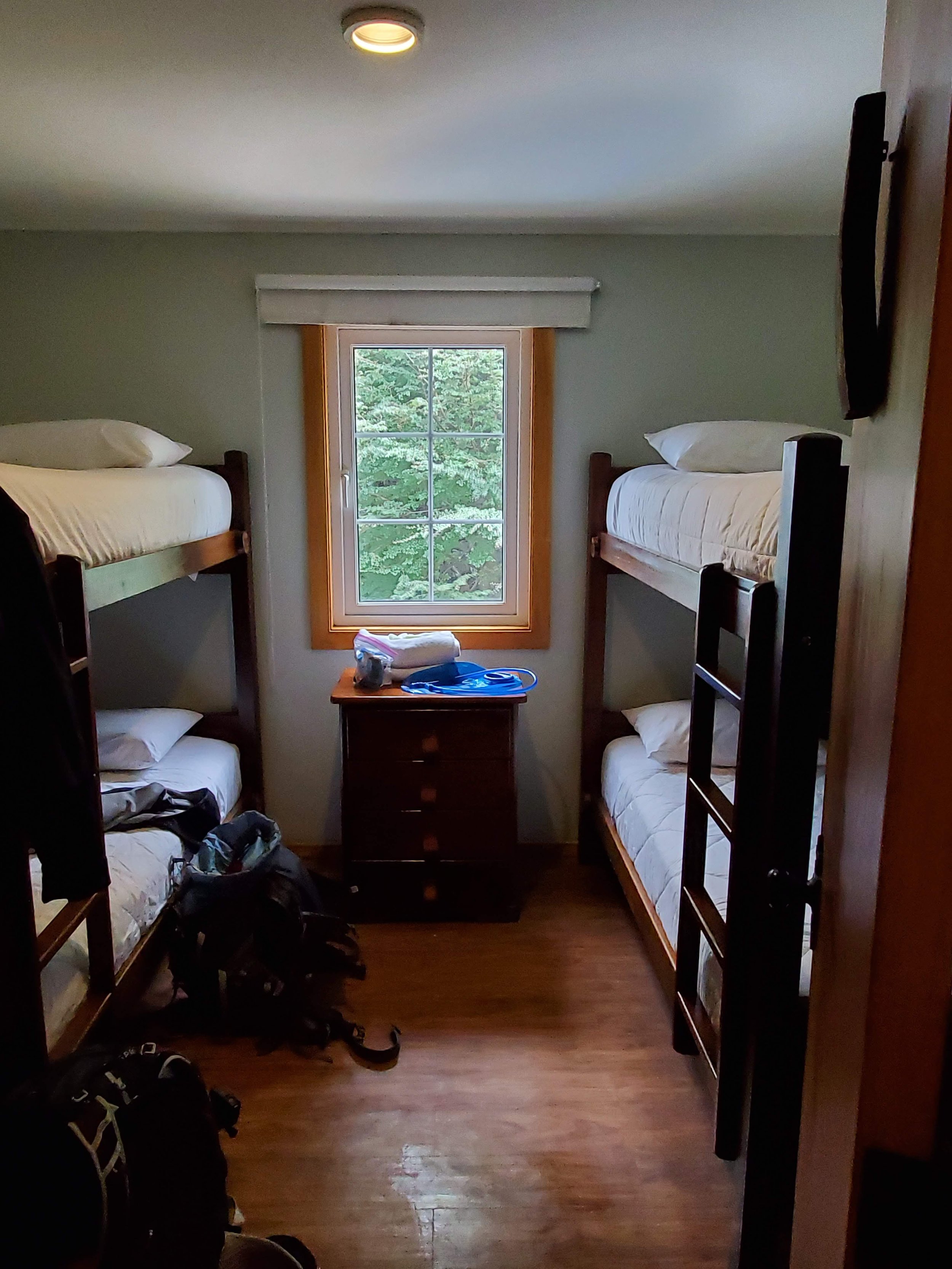
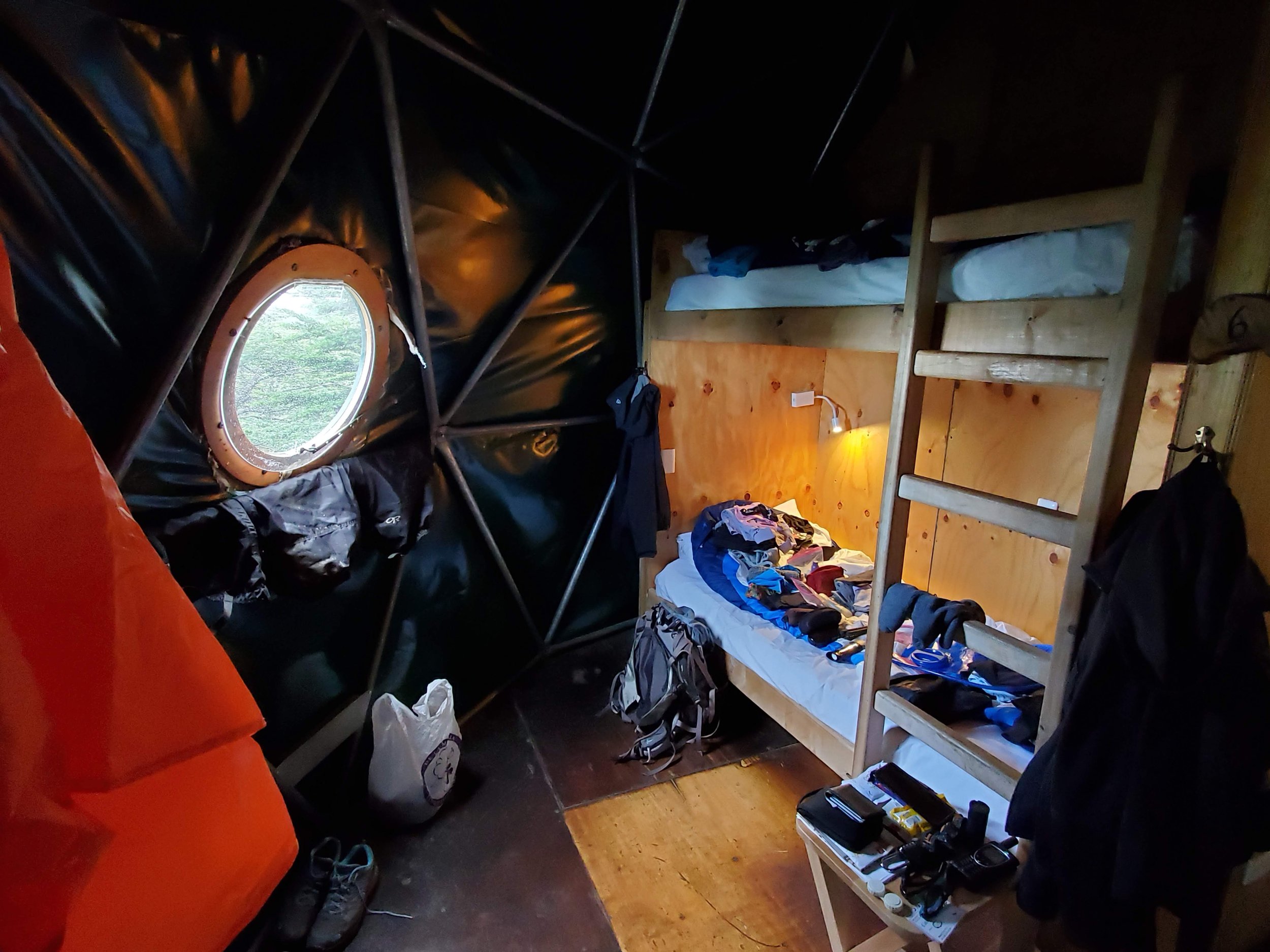
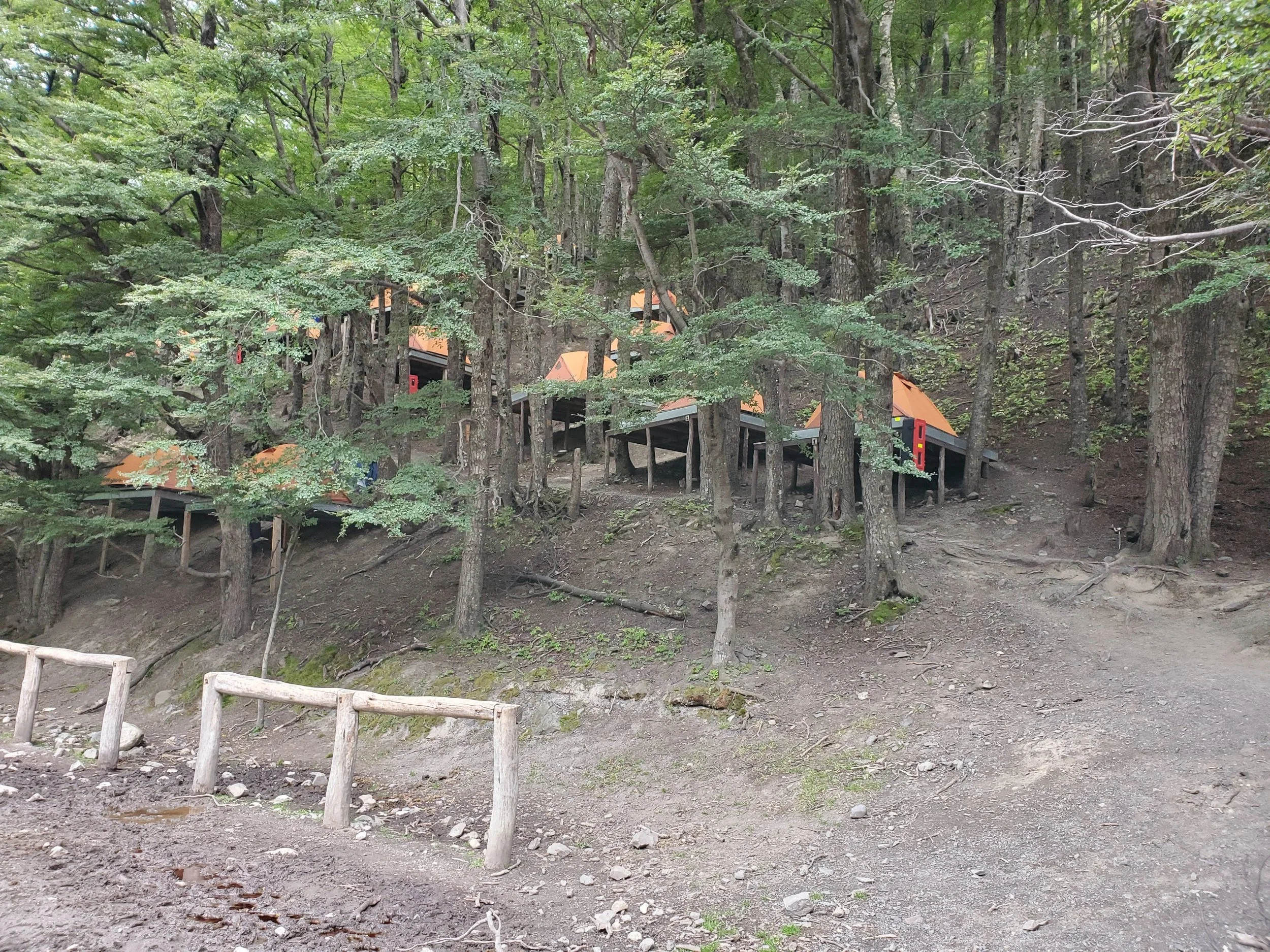


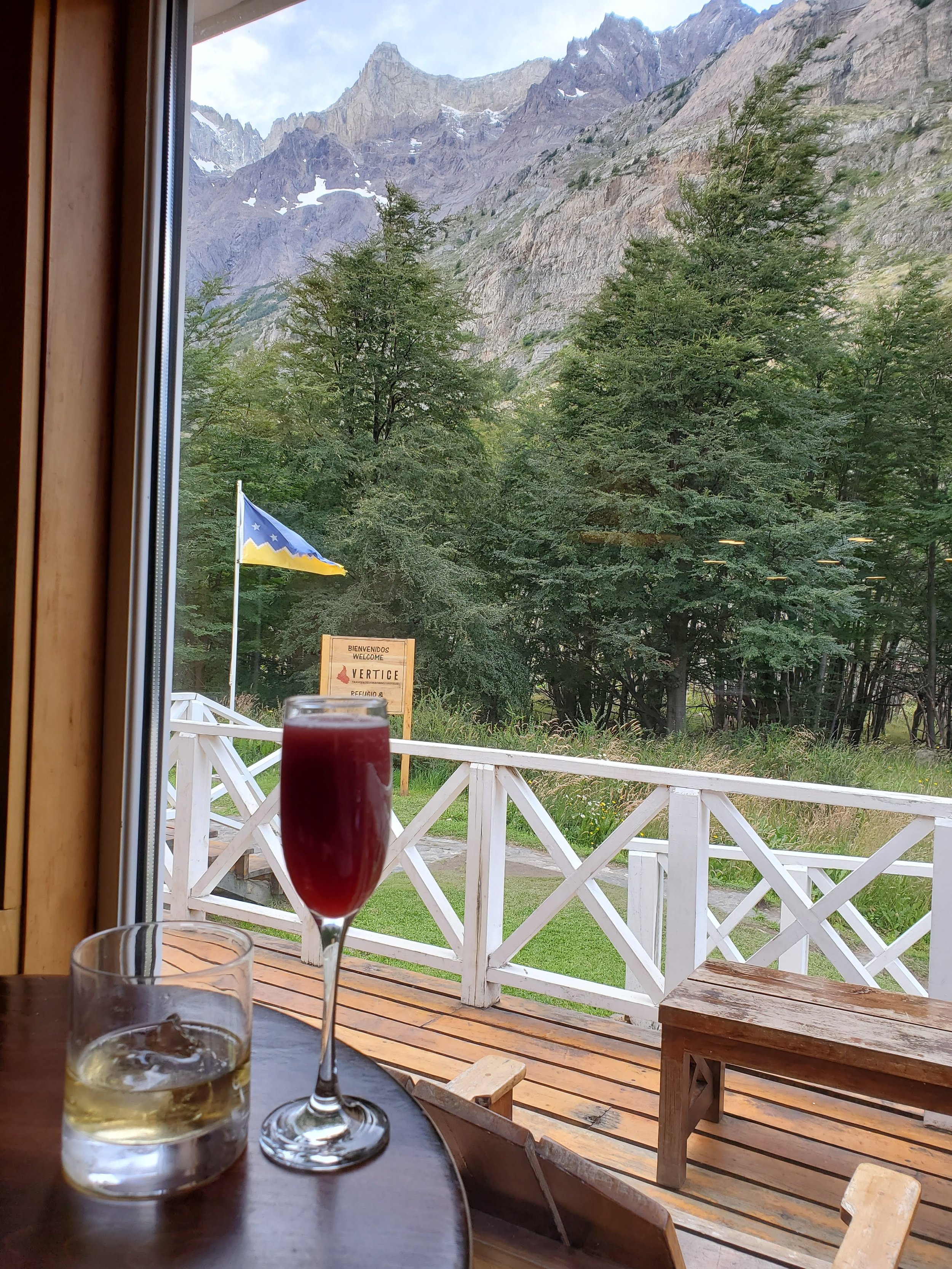

It’s possible to complete the W Trek either East-to-West or West-to-East (whereas the upper section of the O Trek can only be completed from East to West). As you begin looking at booking your trip, you’ll want to think about how far you want to hike each day. Each of these questions will dictate which Refugios you’re going to stay at, and on which days.
Note that for the W Trek, you will likely end up taking the Pudeto Ferry either at the beginning or the end of your trek. As of 2026, you can pre-purchase tickets for the ferry online for the date/time of your choosing.
For example, if you’re hiking West-to-East, you’d start by taking the ferry from Pudeto to Paine Grande and begin your hiking there. If you’re hiking East-to-West, you’d finish your trekking at Paine Grande and hop on the ferry back to Pudeto, where you’d catch a bus (for which you need to purchase tickets in advance).
Here is a sample itinerary, with estimated miles included:
Day 1 - Drive + Arrive at Torres Del Paine National Park. Check into Torre Central or Torre Norte and enjoy chatting with other hikers, check the weather, and prepare gear for the next day.
Day 2 - Hike to Las Torres (aka Mirador Las Torres), and then hike back down to Refugio Chileno for dinner and staying the night (8.5 miles). You can drop your pack there on the way up to the towers to lighten your load!
Day 3 - Hike from Chileno to Dome Francis Refugio using the shortcut (don’t go all the way down to Hotel Las Torres or Torre Central!) (13.5 miles)
Day 4 - Hike from Dome Francis up to Britanico Lookout, and then onward to Paine Grande Refugio. (12.5 miles)
Day 5 - Hike from Paine Grande Refugio to Refugio Grey for the night. (6.9 miles) If you’re feeling up to it, hike the extra mile or so (each way) to the Grey Glacier Lookout!
Day 6 - Hike from Refugio Grey back to Paine Grande (6.9 miles), to catch the Ferry to Pudeto. Once at Pudeto, you’ll need to catch a Bus. Once you’ve booked a ticket on a Bus (Bus Fernandez or Bus Sur are popular), it generally qualifies you for that seat all the way from Pudeto to Puerto Natales. However, if you have a car parked at Refugio Central, you can get off the bus at Amarga, and take the shuttle back to Refugio Central. Depart for Puerto Natales (if that is your destination) OR stay another night and leave in the morning if you have a longer drive ahead.
Once you’ve picked your path & where you want to stay for the night, it’s time to start looking at Refugio availability. A spreadsheet may be helpful…something like this:

In the sample spreadsheet above, arriving on Feb 1st wouldn’t work, because Dome Francis isn’t available for that 3rd night (February 3rd). Similarly, arriving on the 2nd wouldn’t work because multiple Refugios are unavailable on the nights you need them. If you arrived on Feb 3rd, however, you’d be good to book all of the nights you need, at the right Refugio.
Keep in mind that often availability does open back up for these Refugios. So it’s possible (we did this) you can check back daily, and another bed or two may open up on the night you need it.
As mentioned above, the Refugios in the Park are owned by 2 different companies. Here are the links. Depending on whether your browser is translating the website for you, the Refugios might also be called Mountain Hostels or Shelters:
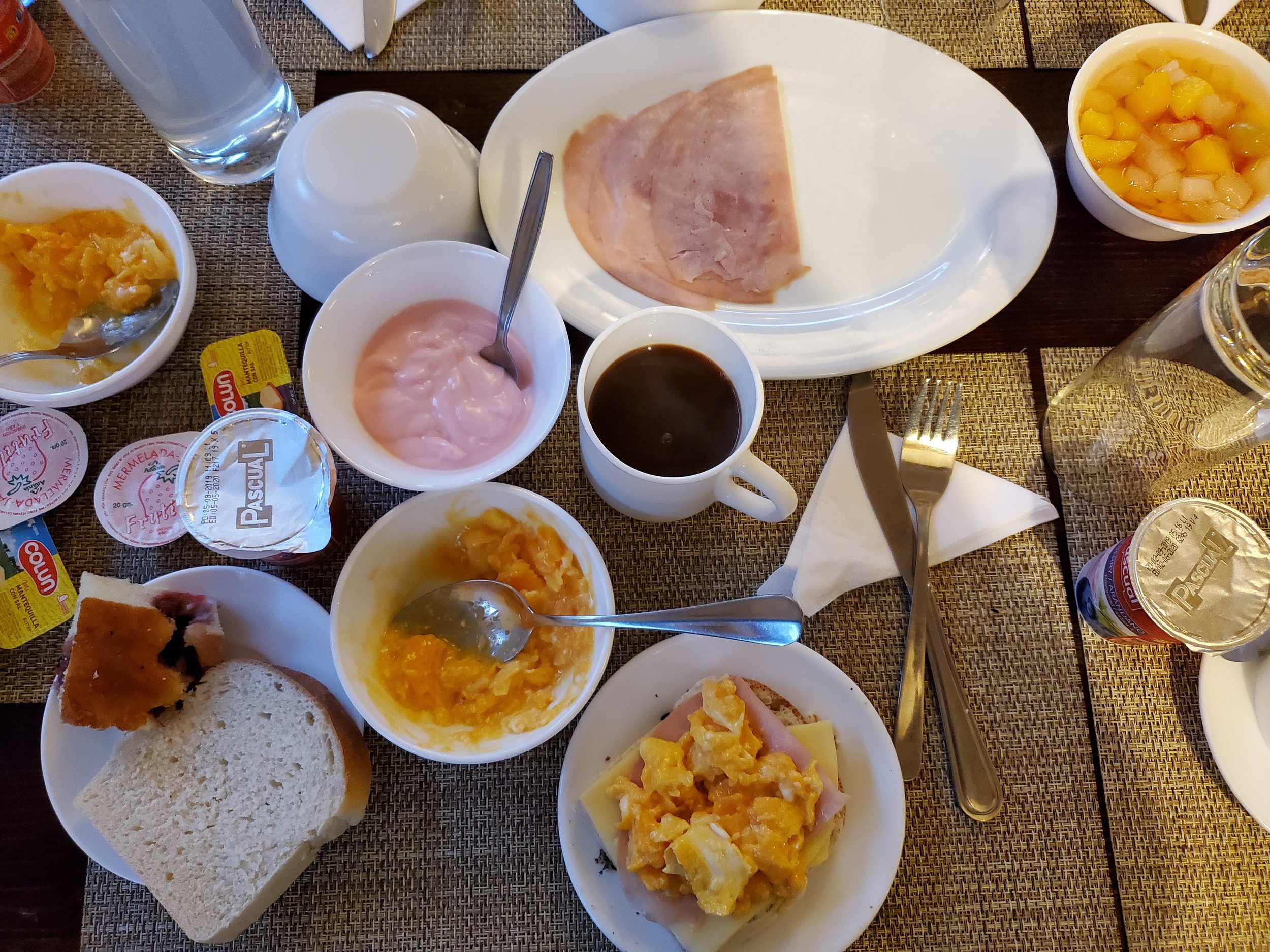
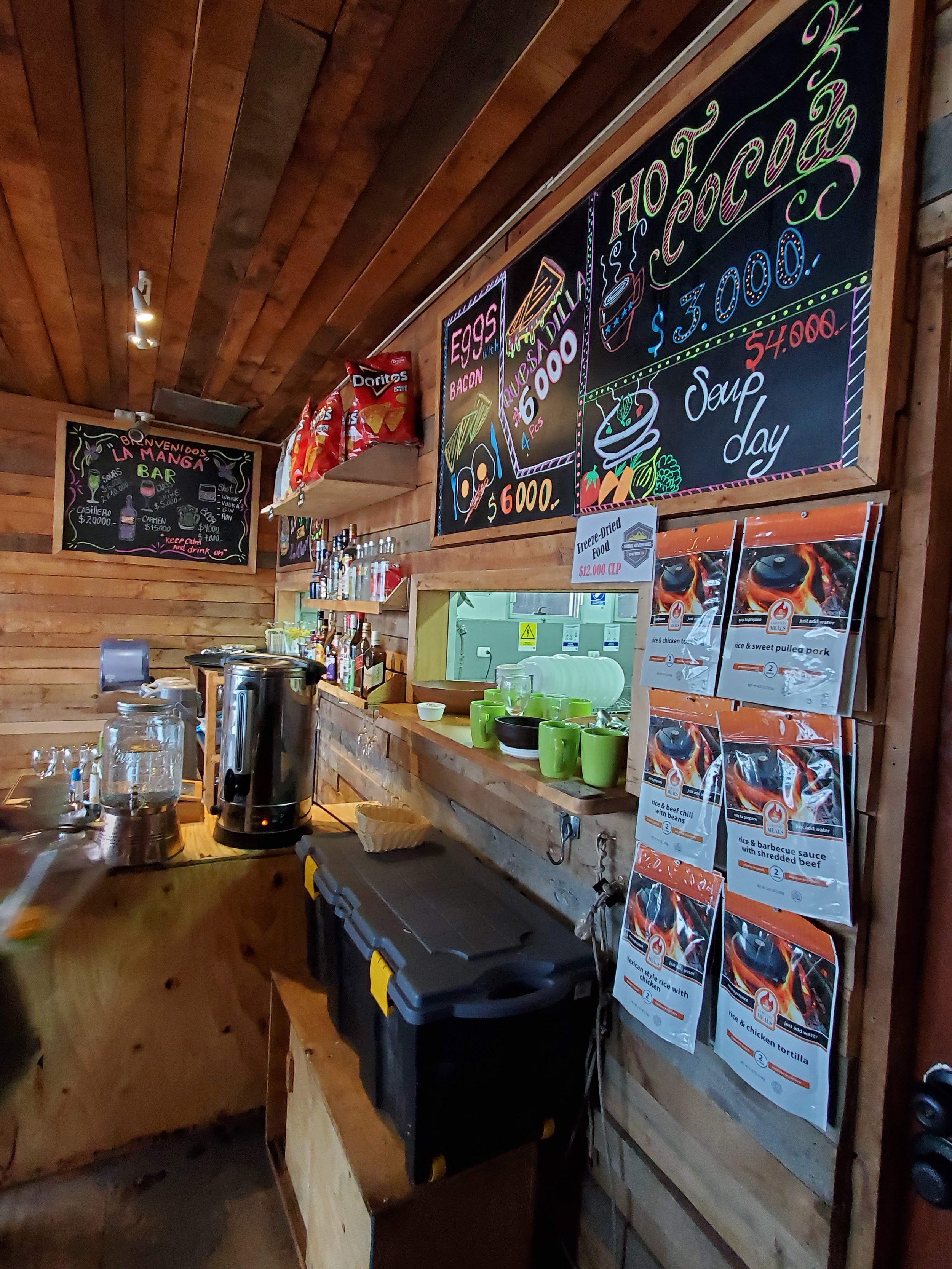
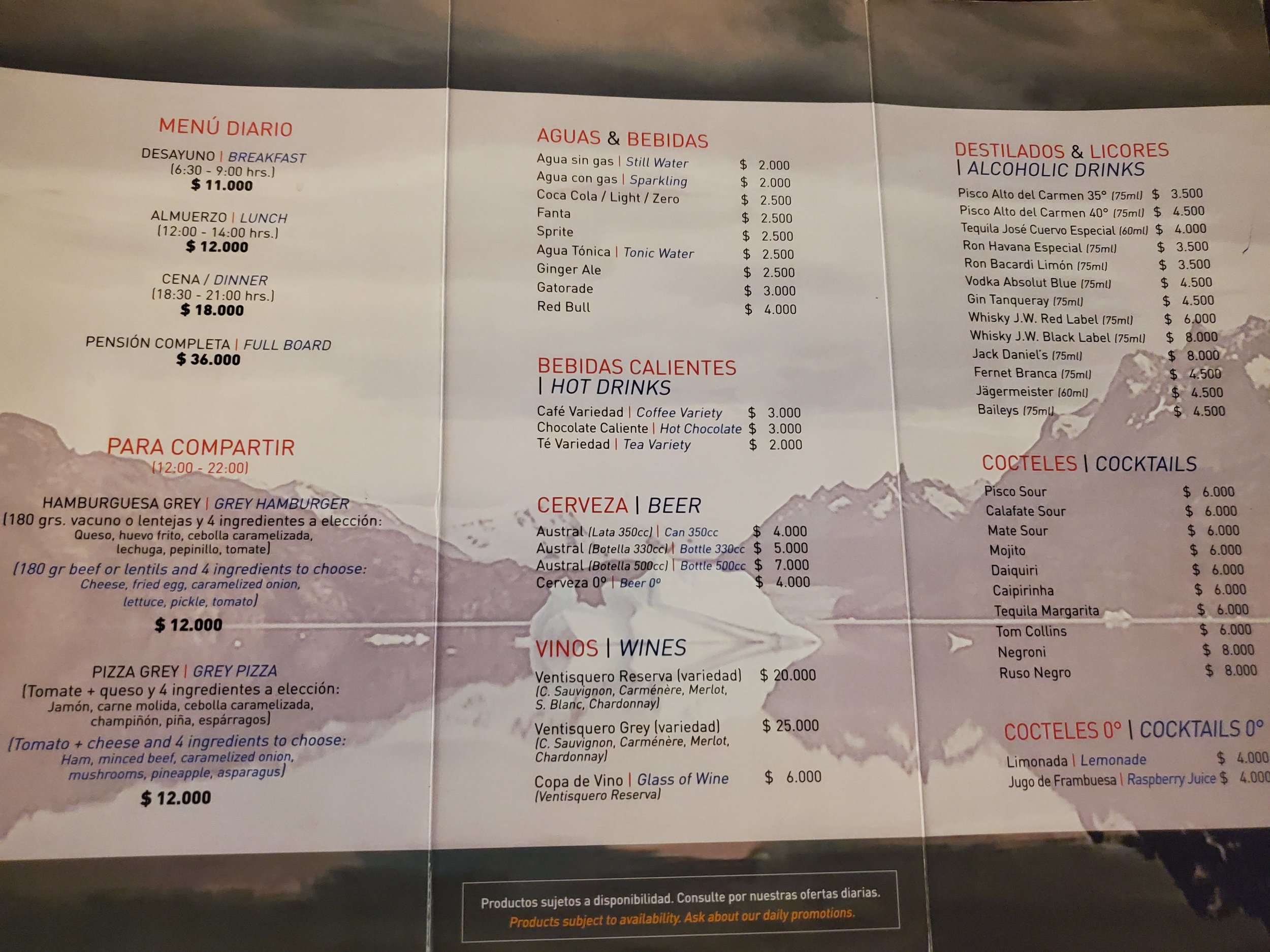
As we mentioned above, regardless of which sleeping option you choose, you can opt in or out for a meal plan. Due to a lack of information available to us the first time we went, we picked the “Full Board” plan, which included Breakfast and Dinner, plus a sack lunch for every full day we were there. The sack lunch included a chicken salad sandwich, chips, some health bars, and fruit every day. In 2026 when we visited, we opted for Half-Board (Breakfast and Dinner), and kept lunch flexible. We timed our hikes so that we were always near a Refugio around lunch time or had enough snacks/candy with us to hold us over. If passing by a Refugio, there was always a la carte food available for purchase (Empenadas, Sandwiches, Pizza, Burgers, etc.).
Below are some photos of the food, and menus available throughout the Trek. We must have been too hungry to take photos of dinner (oops!), but an example was chicken & rice, vegetable salad, and dessert. We had no complaints. There was some variety and it was always hearty enough to give us energy after a long day of hiking: