


Chile

Atacama Desert (San Pedro de Atacama)
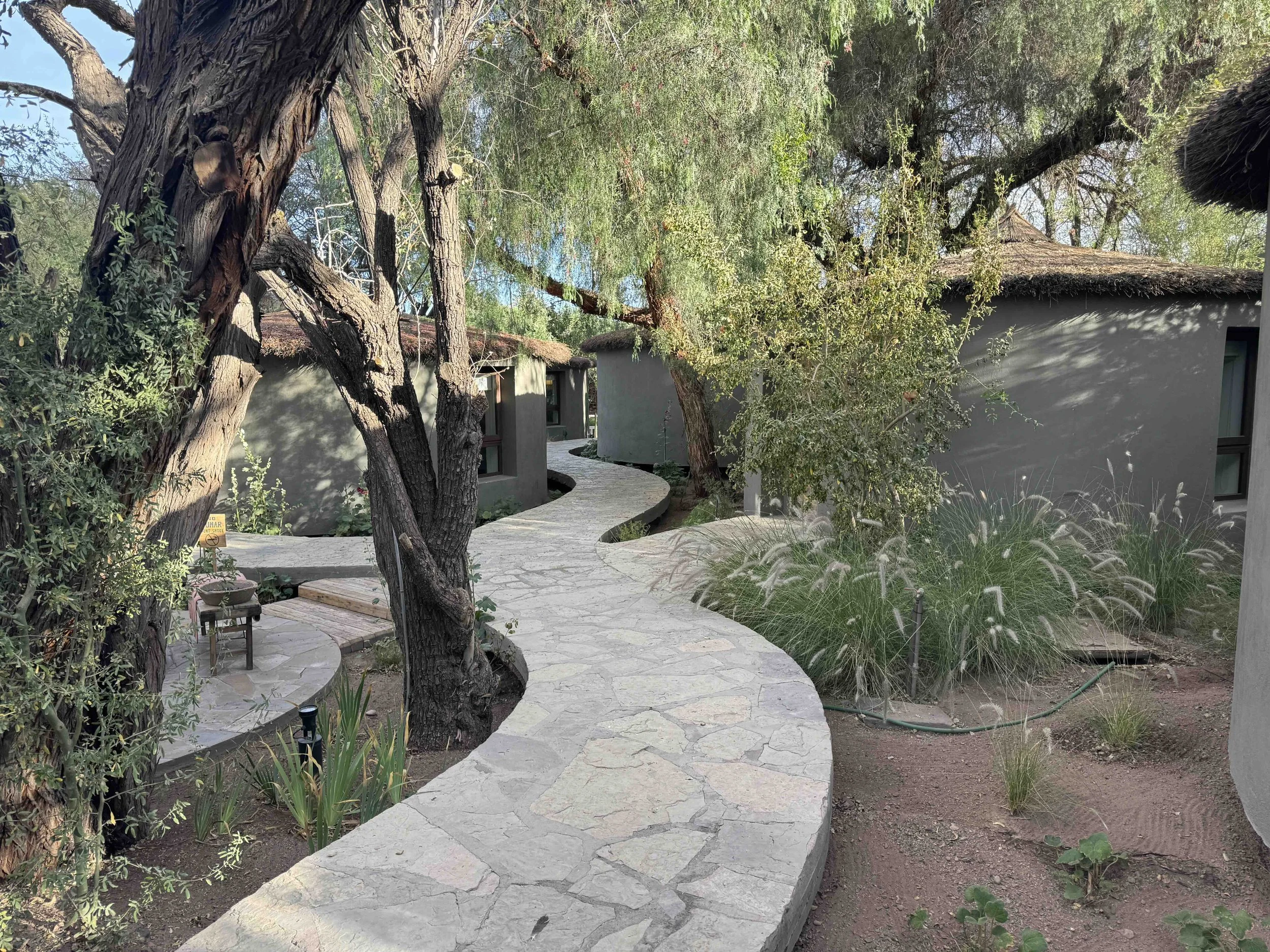
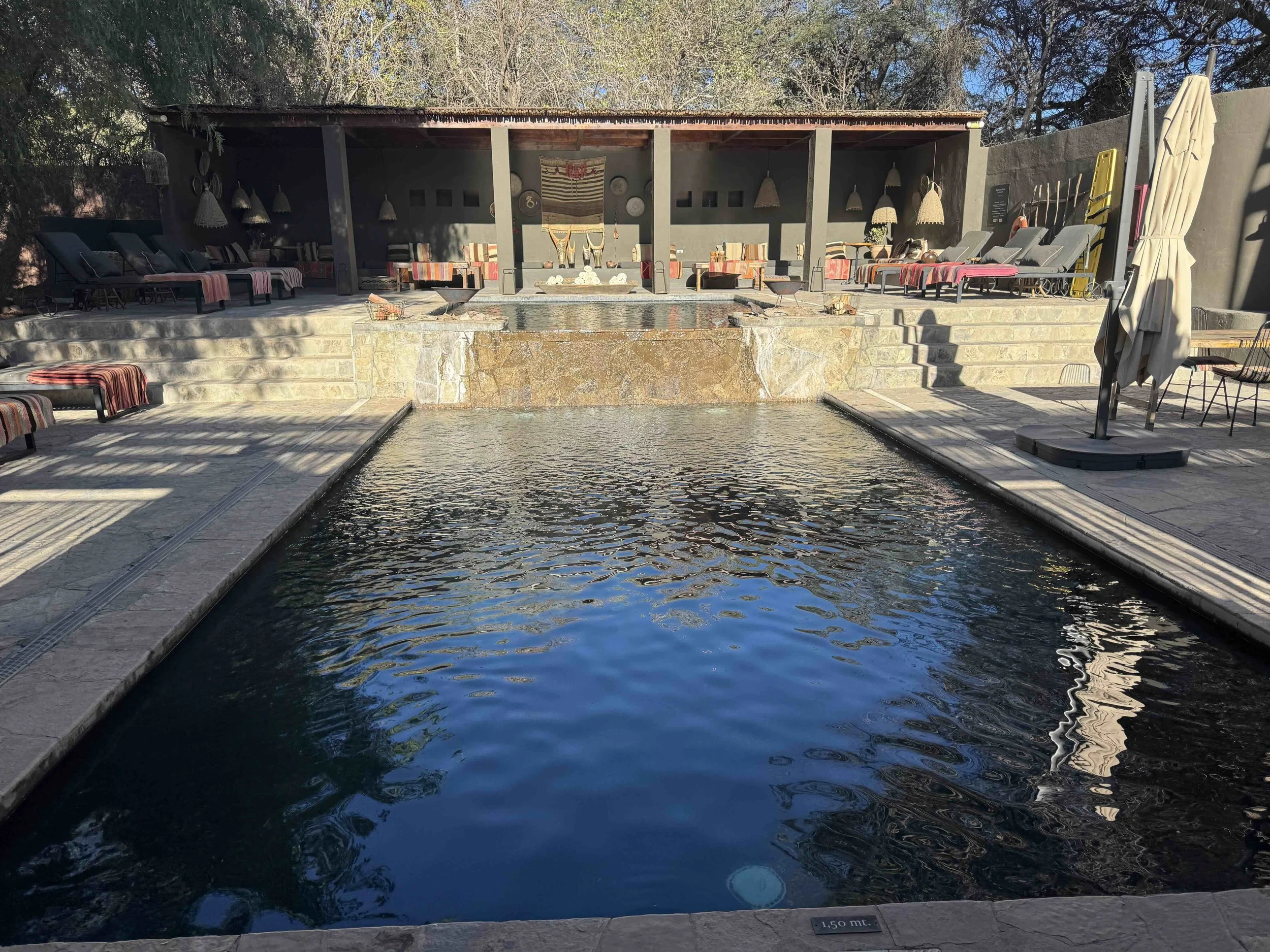
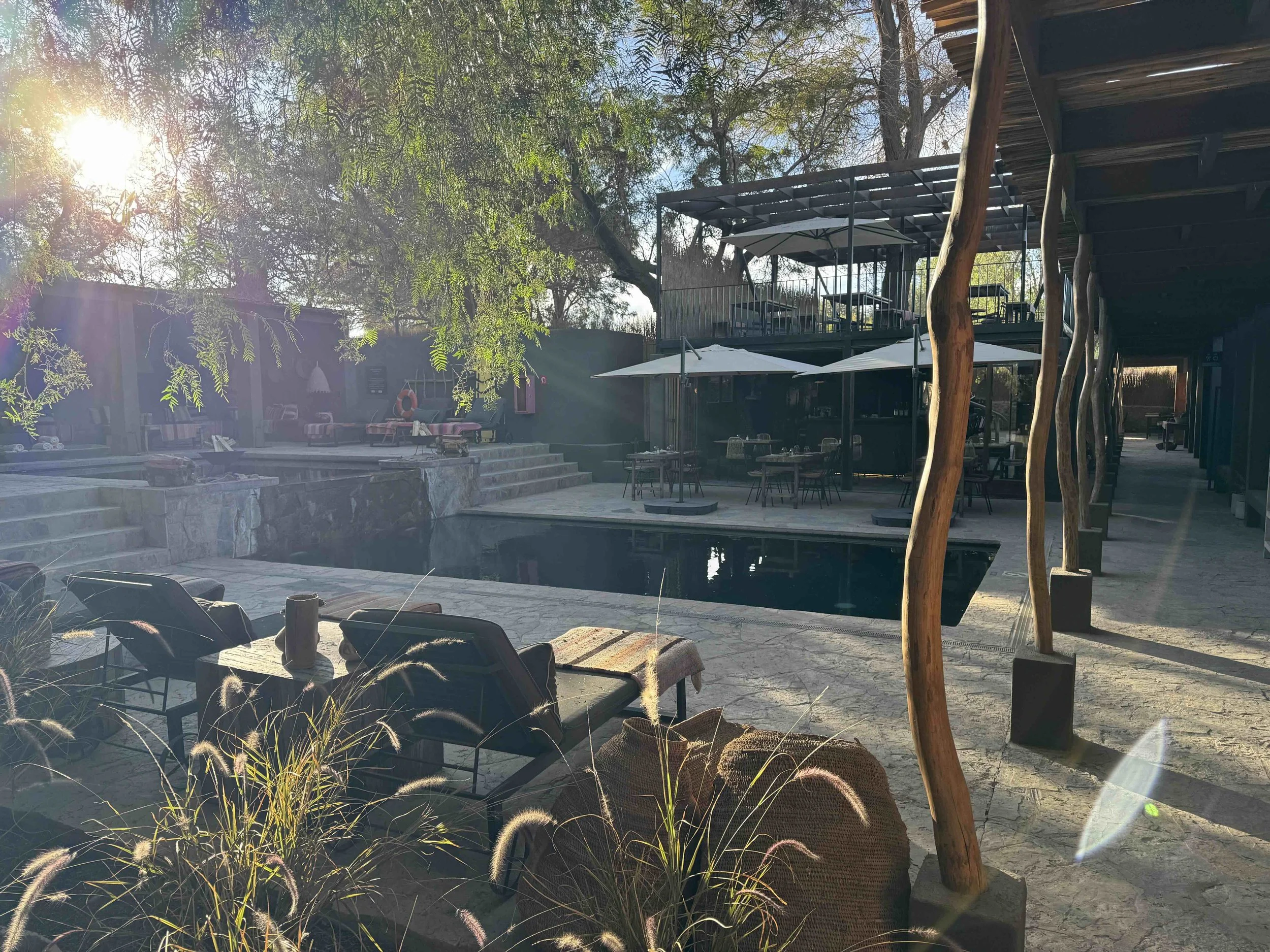
The Atacama Desert is the driest non-polar desert in the world, and just a 2 hr flight north of Santiago. The Calama airport is easy to navigate and they have car rentals available right on-site. It is just over a 1hr drive to San Pedro de Atacama on a paved, well marked road. In 2020 when we visited the first time, we loved our lodging at the Terrantai Lodge Hotel - it was right in town and offered a lovely happy hour daily, along with a wonderful breakfast. The staff there was exceptionally friendly and helpful, and best of all they had gated parking just 1/2 block away. In 2026 we stayed at Hotel Desertica and it was absolutely wonderful! Breakfast was included and it has parking on-site. They also offer a full restaurant for lunch and dinner, and the food was delightful. It reminded us of what a boutique hotel in Sedona, AZ might feel like.
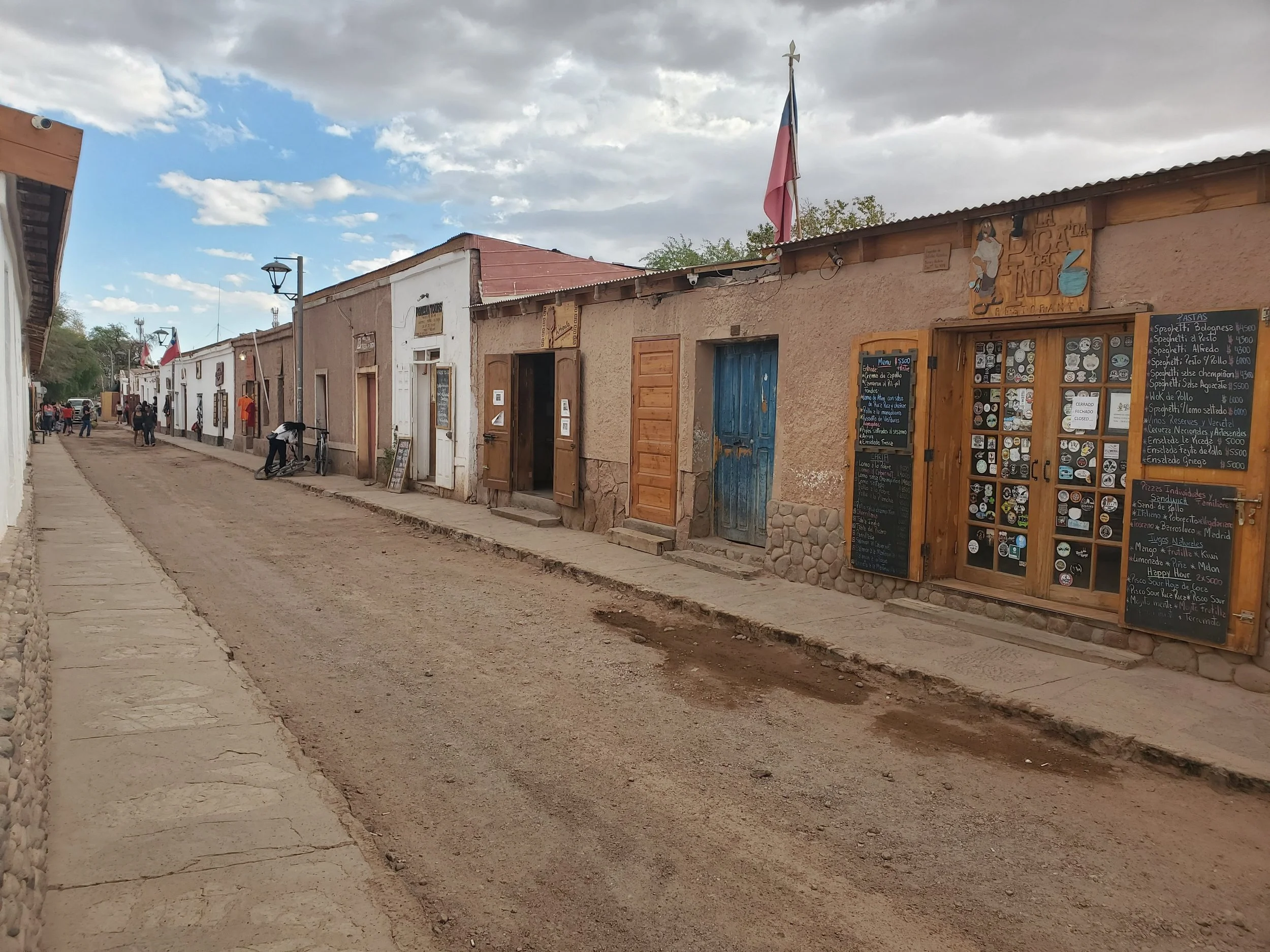
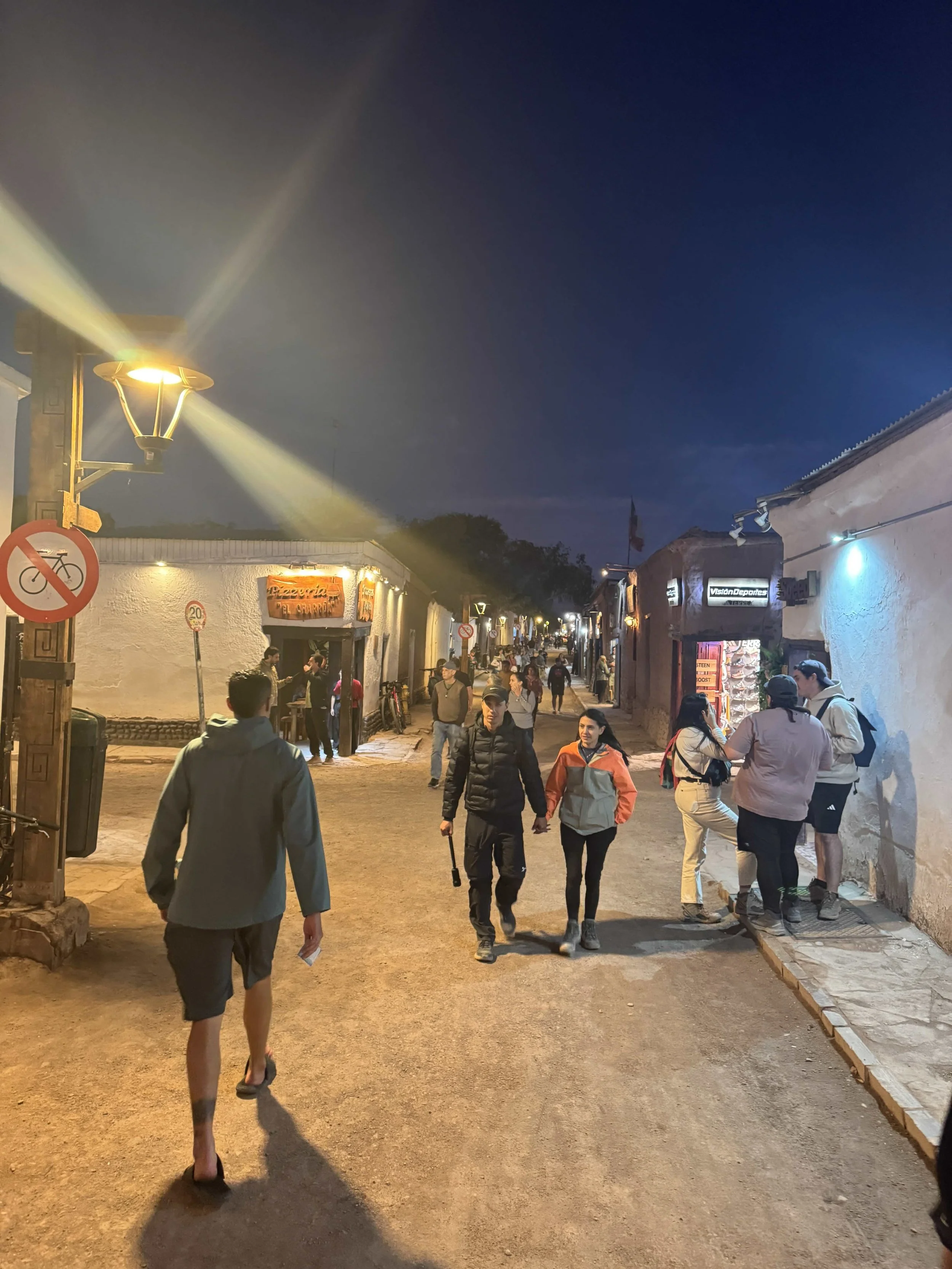
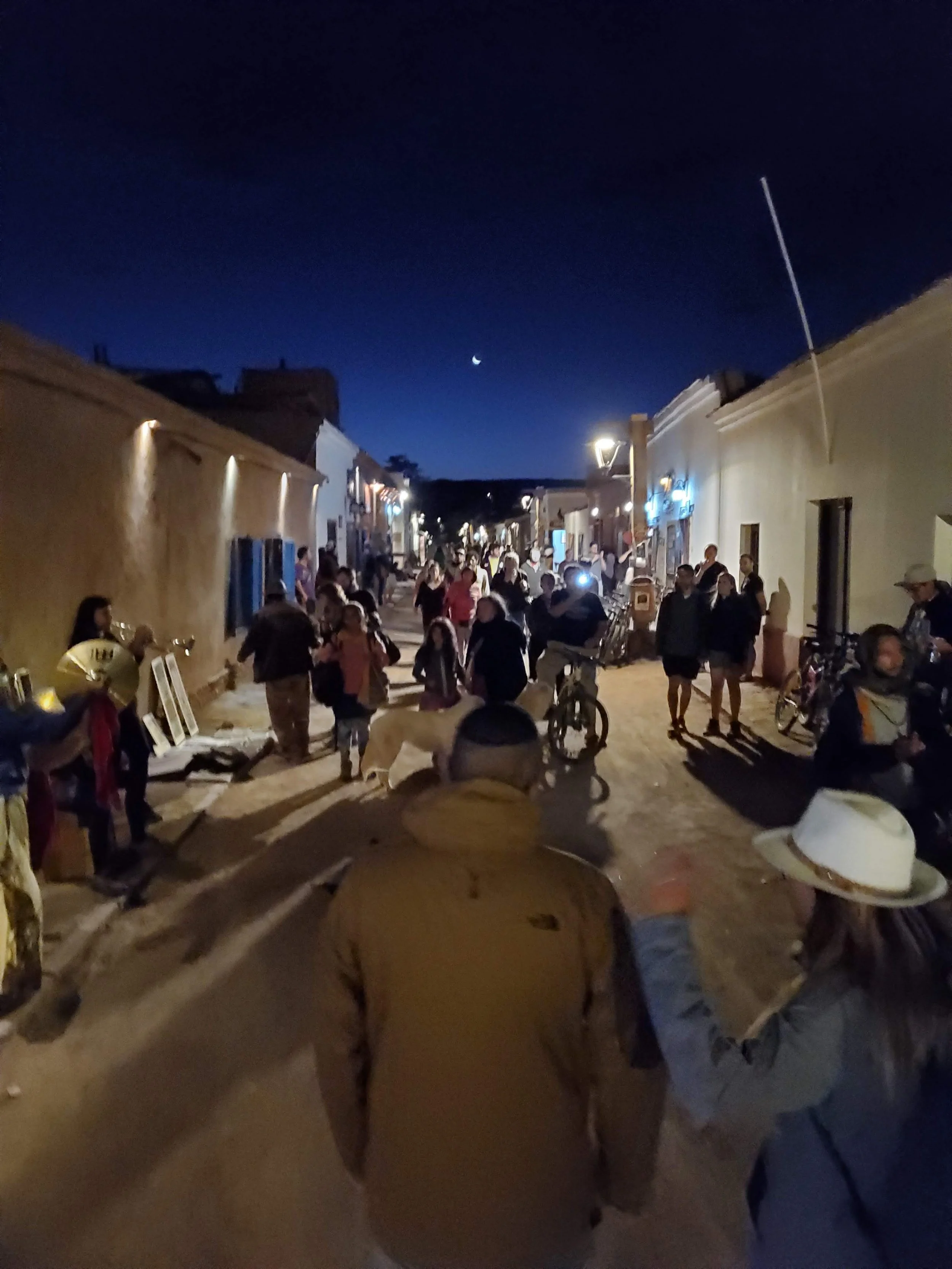
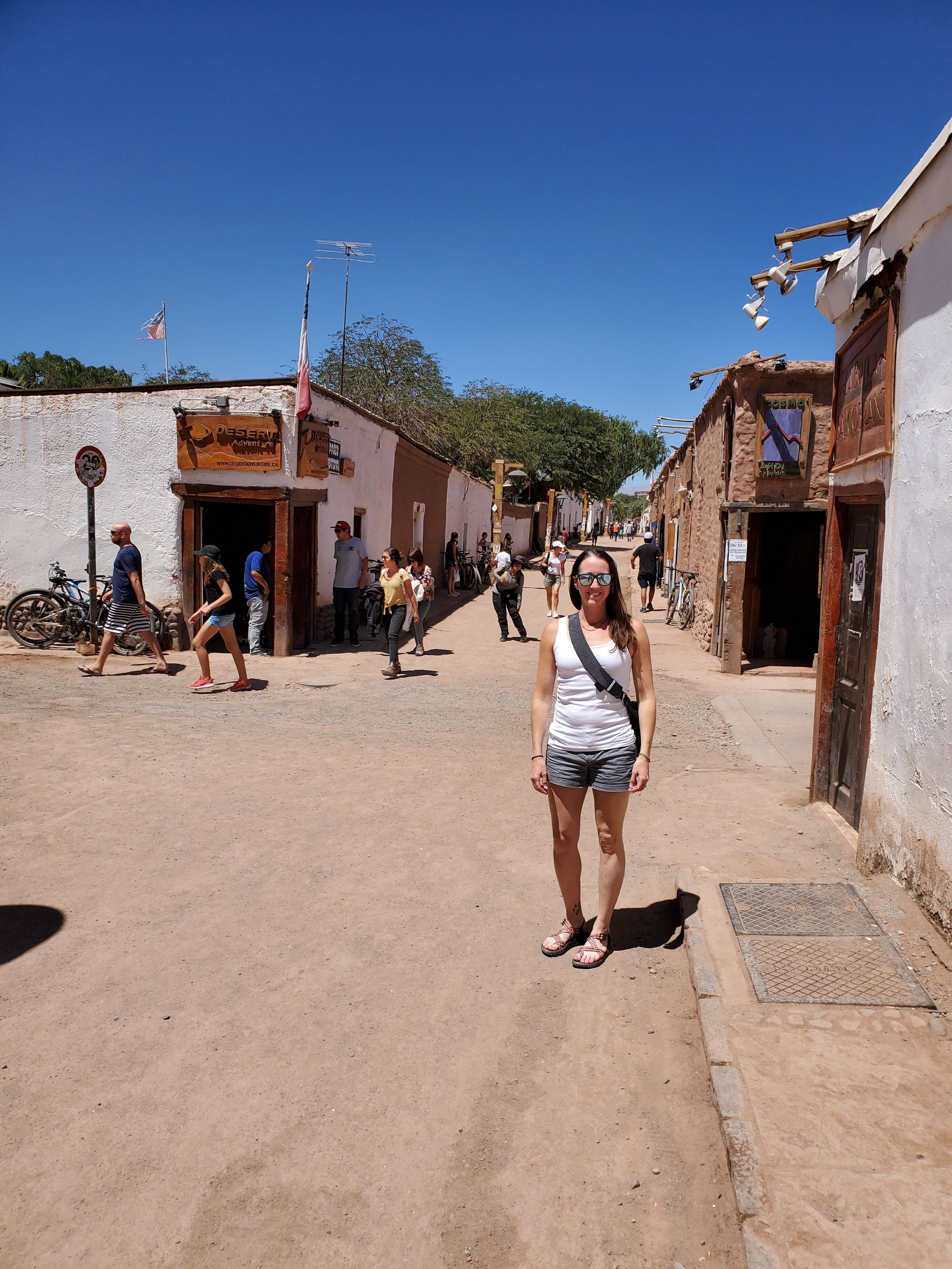
Driving into town, we couldn’t help but think of the fictional Star Wars town of Tatooine…brown single story buildings, dirt roads, surrounded by desert all around. Funny enough, the dirt roads through town seem to be to maintain a certain ambiance, as the roads all around the outskirts of town are paved!
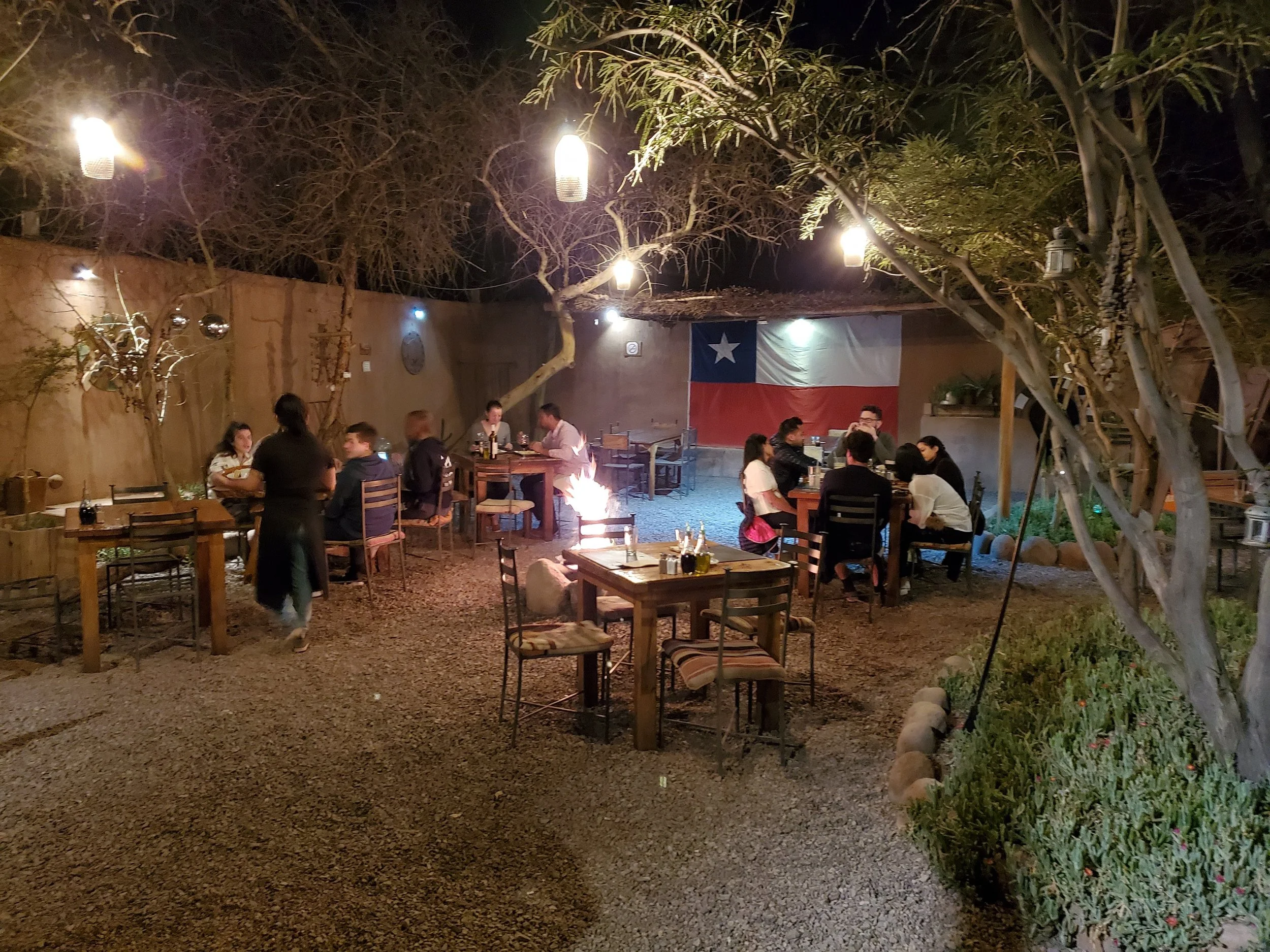
The town has a great number of well-reviewed restaurants to fit both quick/inexpensive as well as high-end food choices. We enjoyed the ambiance everywhere we ate!
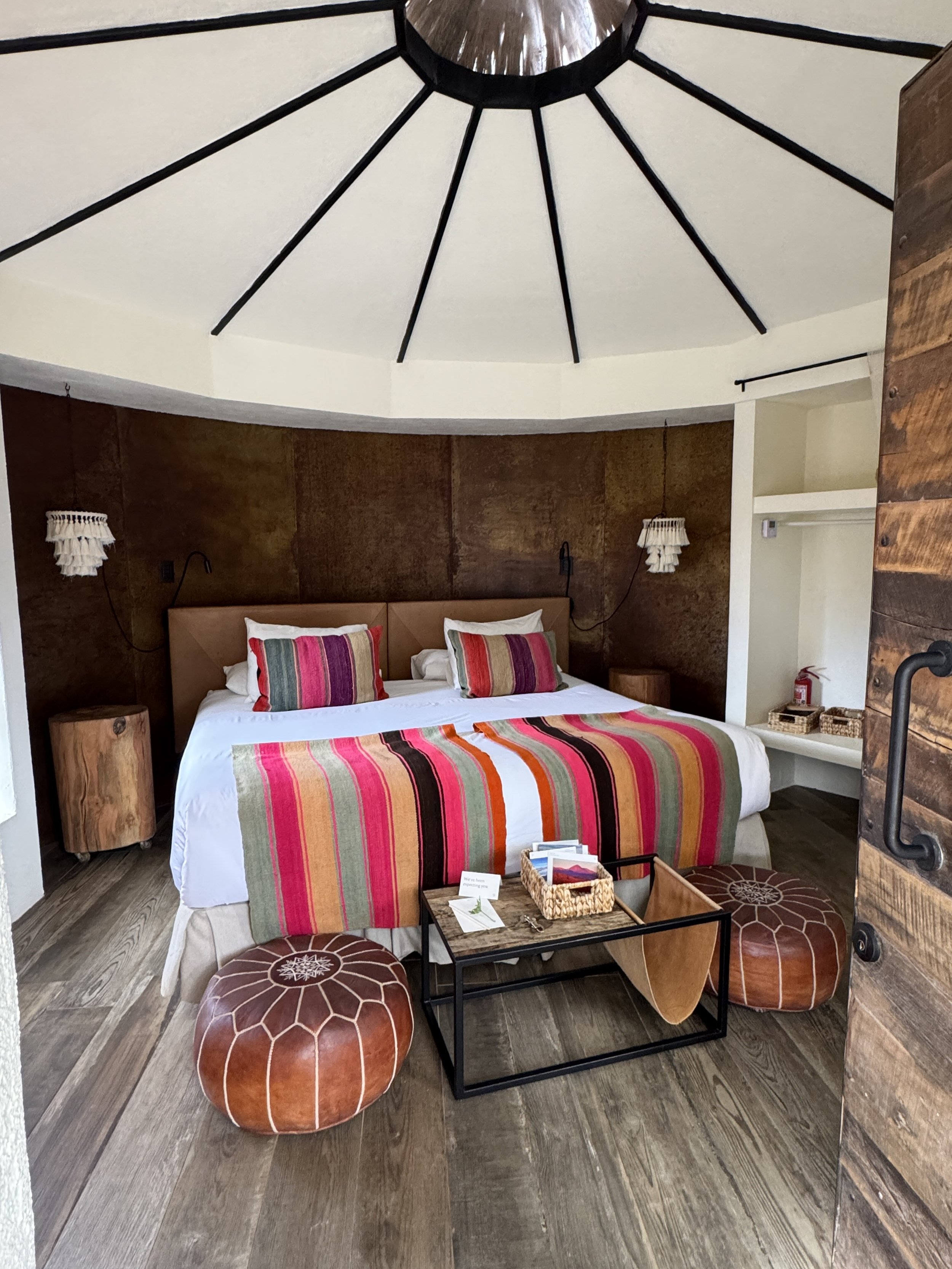
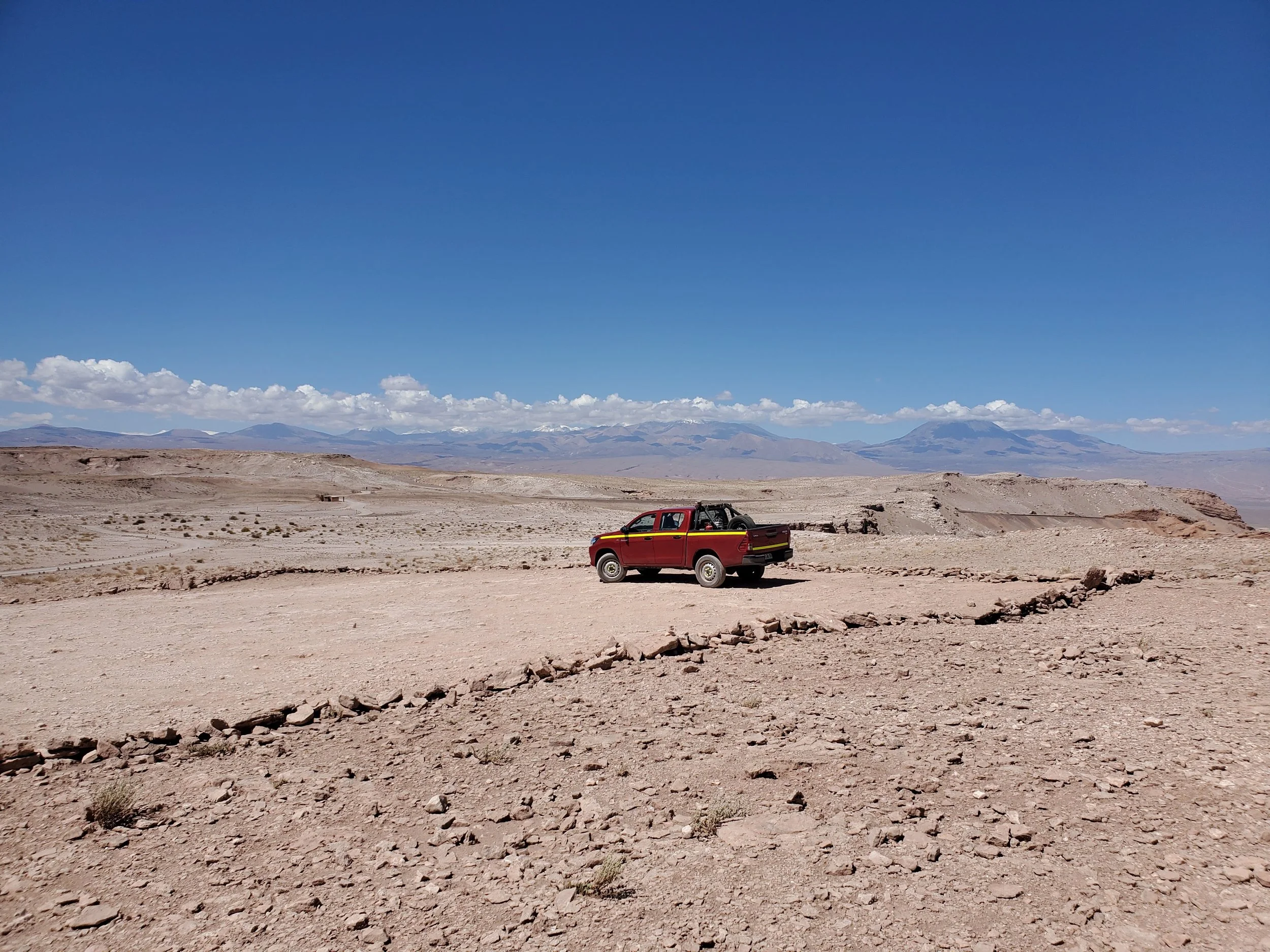
San Pedro de Atacama has numerous sights to visit within 25-90 min drive from town heading all directions. You can choose whether to rent a car or hire a tour company for your excursions. If you’re like us, you’d rather be on your own schedule, so we’d recommend renting a truck as many cars are forbidden by the rental agencies from going to certain locations! Chimpi Way was very communicative via WhatsApp, and our Toyota Hilux worked perfectly for us.
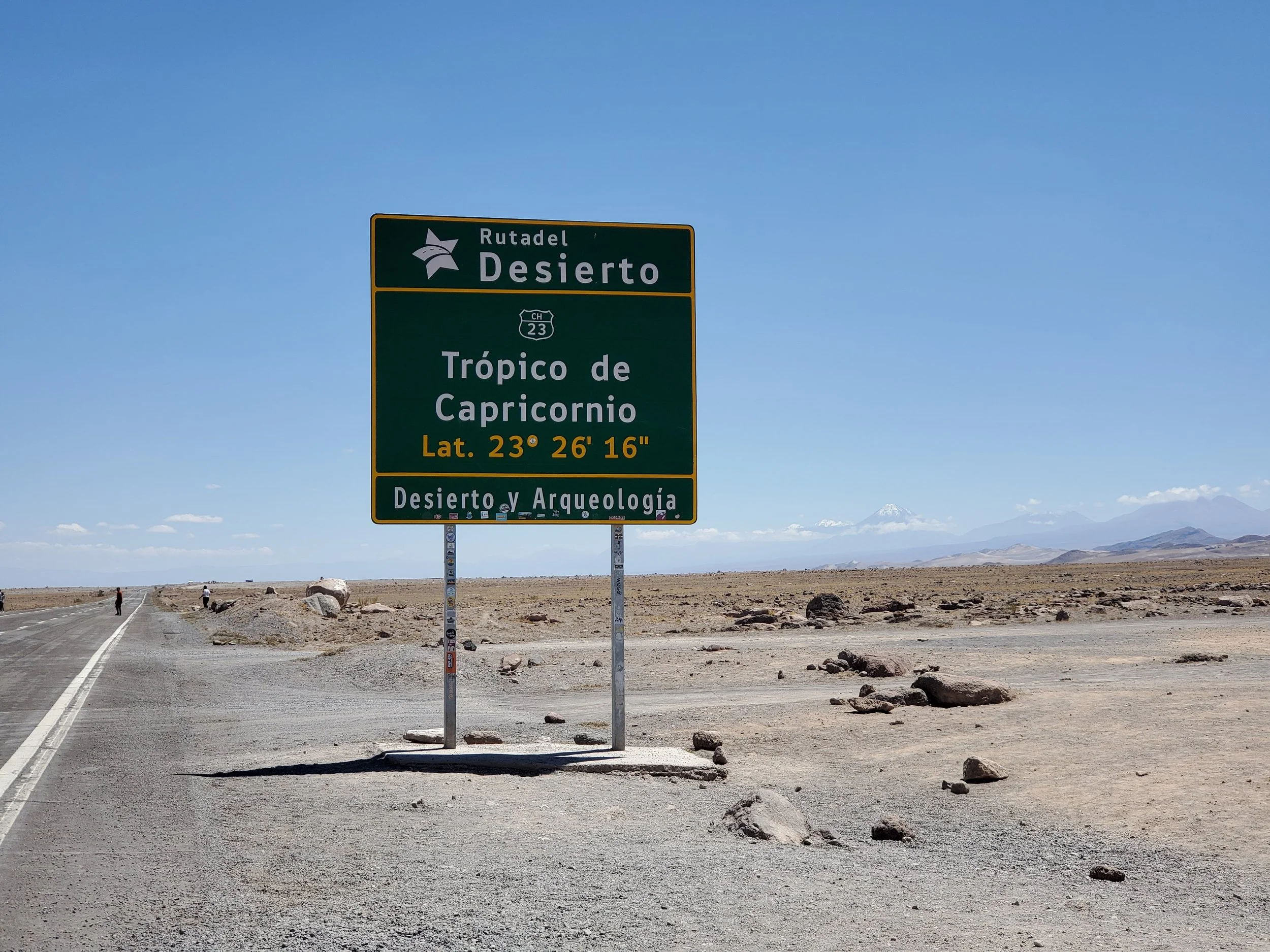
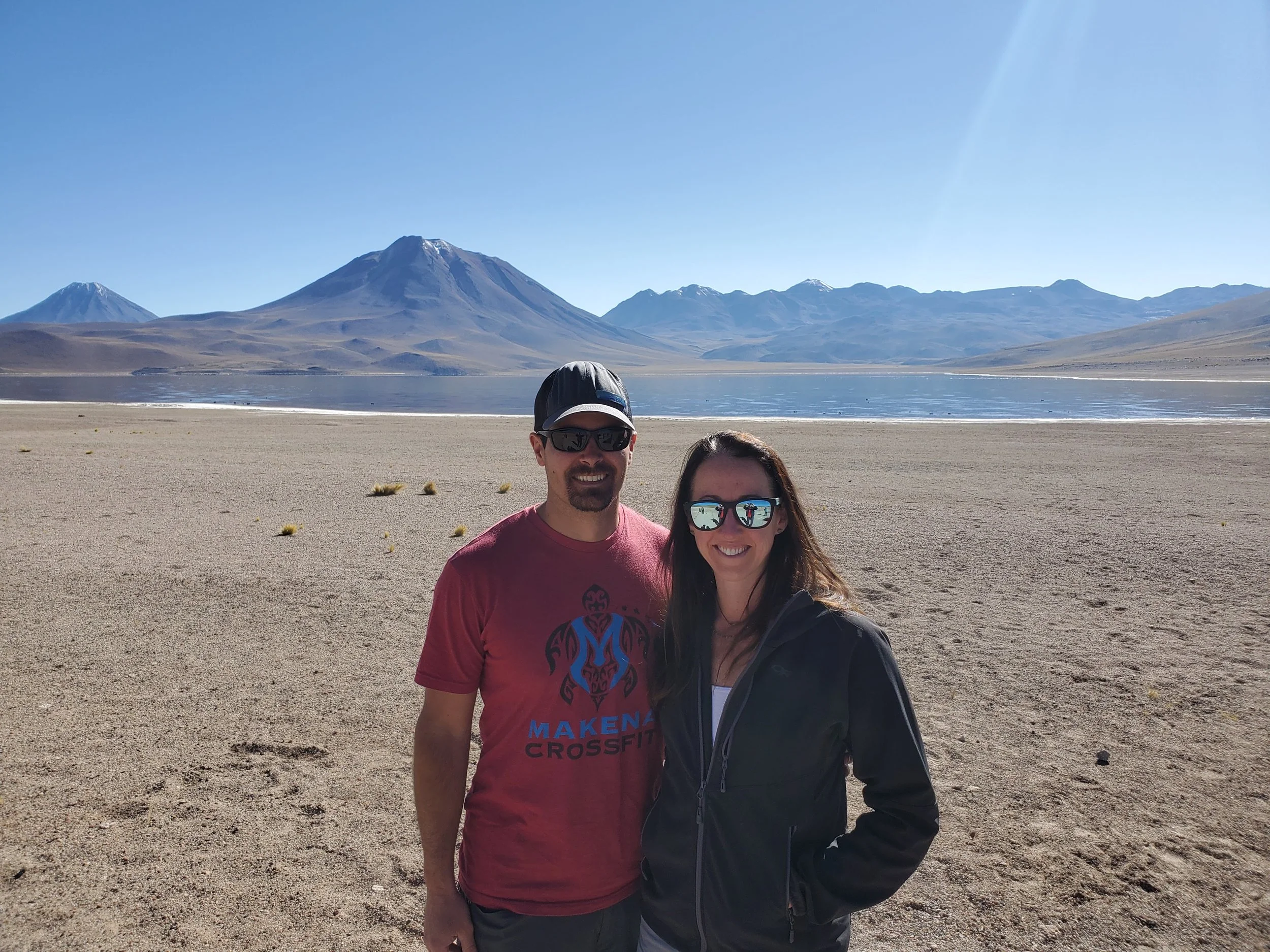
We took advantage of having a rental car, and visited Valle de la Luna (1.5 hrs total including hiking + driving to the 3 Maria’s and back). For anybody interested in just seeing the sunset, that lookout point is only 5 minutes outside of town and is called Mirador de Kari or Piedra del Coyote. We also drove to Laguna Miscanti and Miniques (see the header photo above), which was about a 90 min drive each way, past the Tropic of Capricorn. On the way back, we stopped at Lake Tebinquinche which had a 4,000CLP cost for us both. We were hoping to see Flamingos here, but sadly there were none when we were there. Just 10 min from here is Laguna Cejar where it’s possible to swim in the salt lake - at the time for a cost of 10,000CLP - 15,000CLP depending on the time of day.
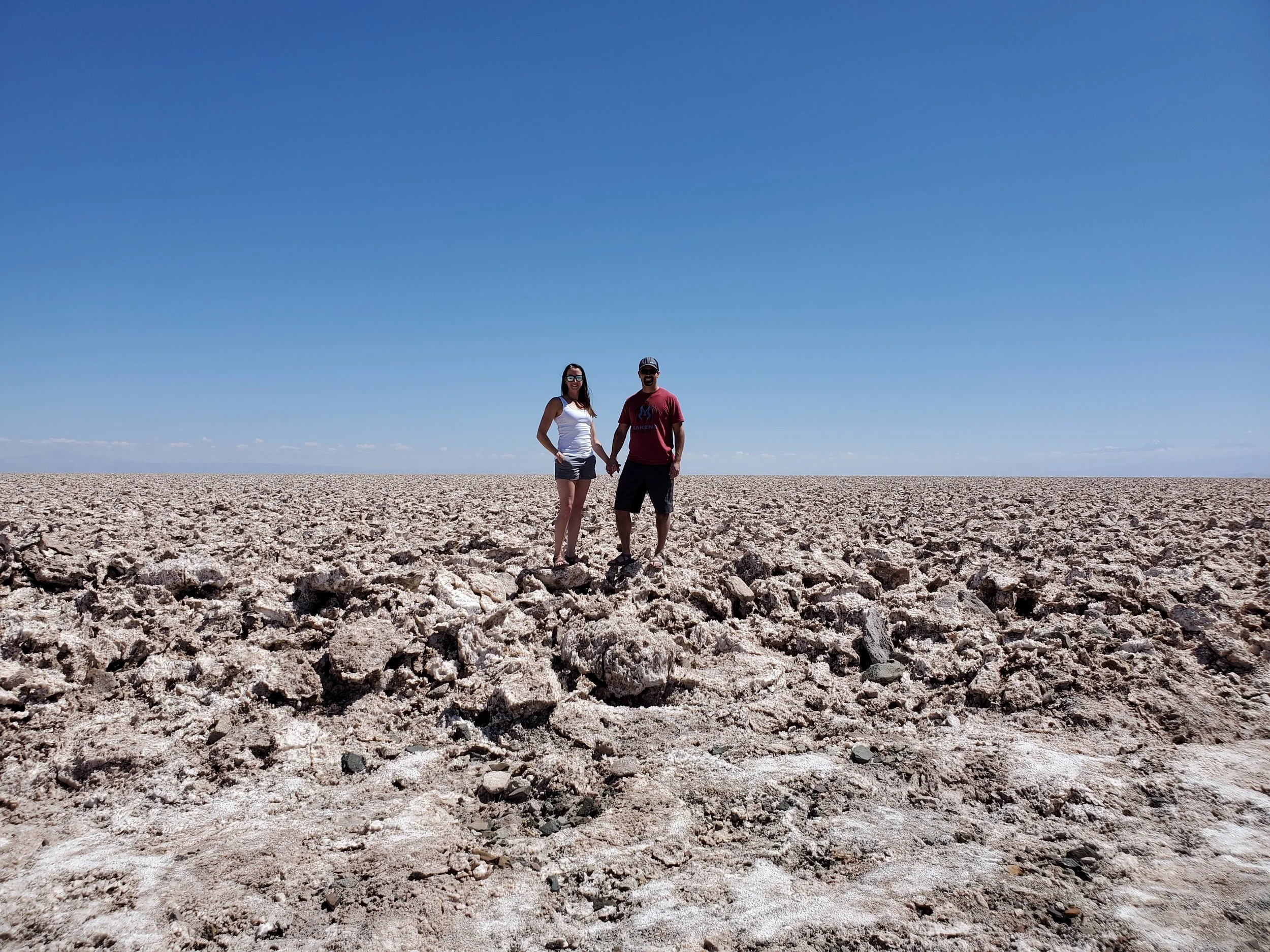
During one of our drives, we passed by a huge Salt Flat…as far as the eye could see was razor sharp, crystalized, chunky gray (dirt-covered) salt - so we stopped for a photo opportunity (see below).
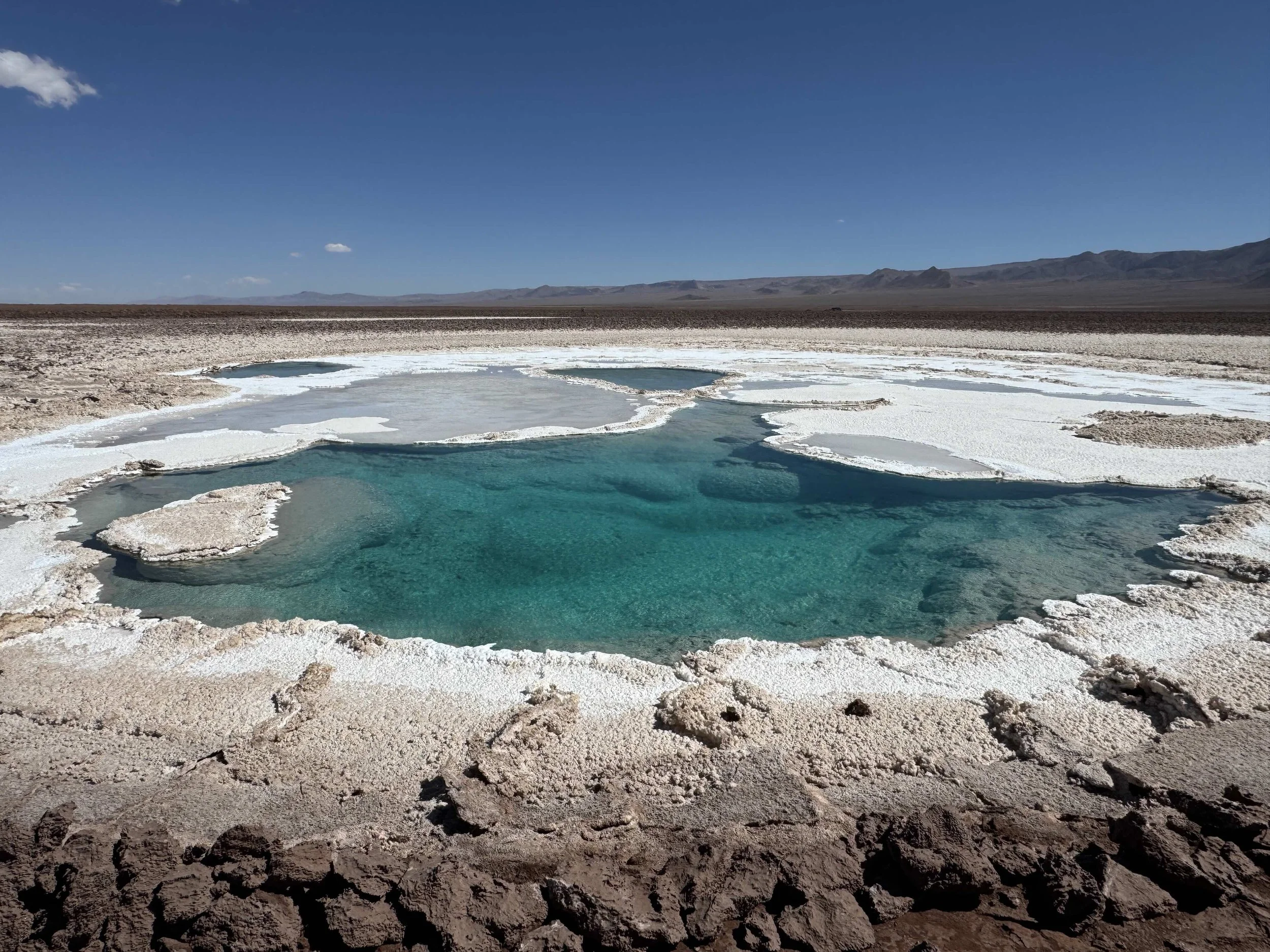
One of the highlights for us, from both of our visits to Atacama, was swimming in the salt pools! We have now swam in the salt pools at both Cejar and Lagunas Escondido Baltinache. Cejar is a quick 20 min outside of town. Baltinache was 10 minutes on the paved route 23 out of town, and then 40 minutes on a newly graded route B241, which made the drive much faster and easier than it was in 2020!
Both locations offer 1 salt water pool that you can swim in - both managed by the indigenous people of the Atacama. Both also have several other salt pools nearby that are beautiful to look at, but not allowed for swimming. The water in both was quite cold, but the experience of floating effortlessly in a natural salt water pool was unforgettable. We felt that Baltinache was a little bit warmer (it’s a smaller pool so maybe that is why), and a little more bouyant. We could literally position our bodies upright in the water like a toothpick - not moving hands or legs, and float with our heads above water….quite a unique experience! Cejar had nicer views with the mountains and volcanoes clearly visible in the background.
Due to the heavy salt content, only 20 minutes of floating is allowed and when you get out of the water, your skin will be covered in flaky white salt. Showers (30 seconds of water only, no soap) were available as part of the park entrance fees, but don’t forget to bring a towel for afterward.
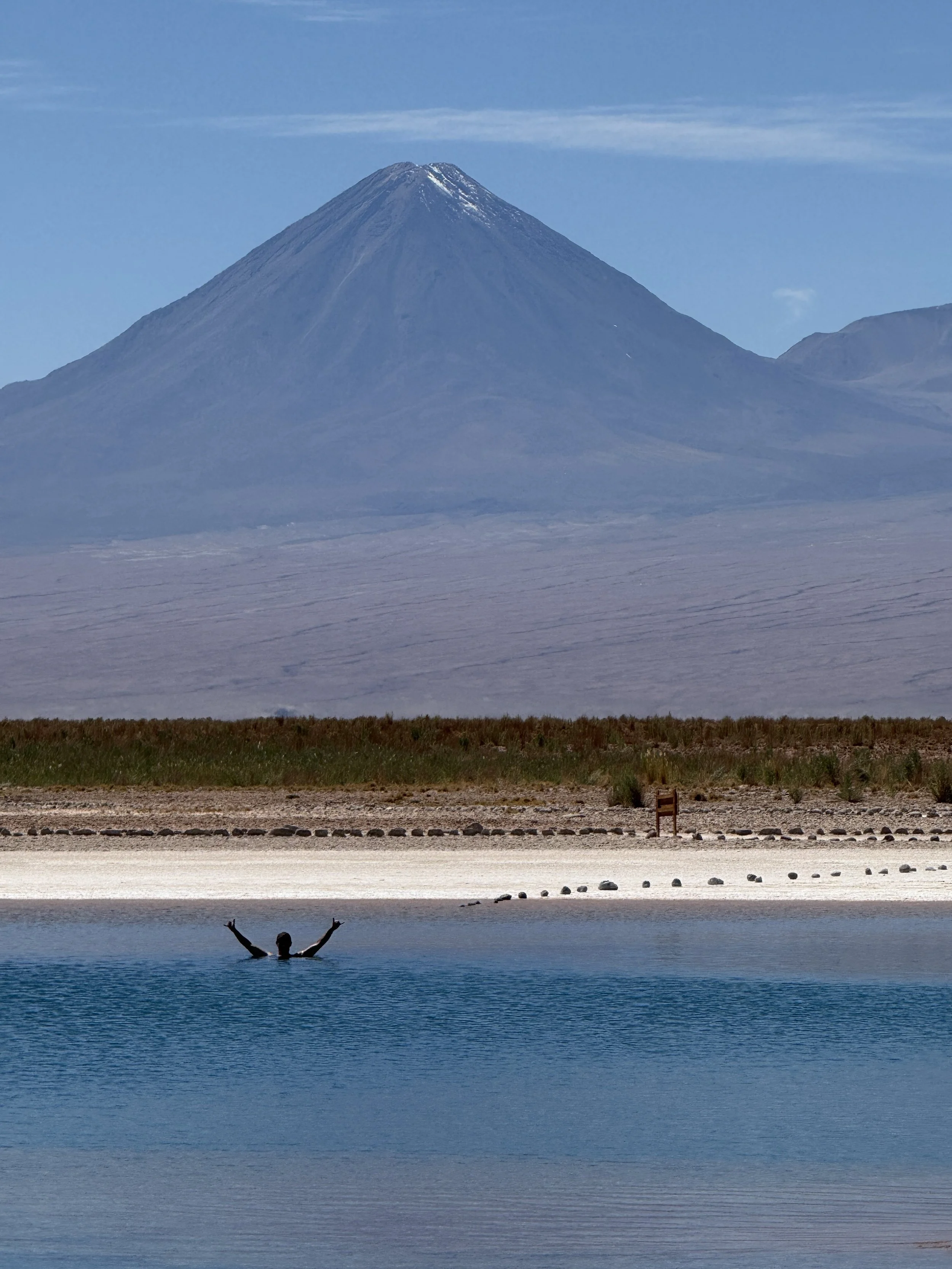
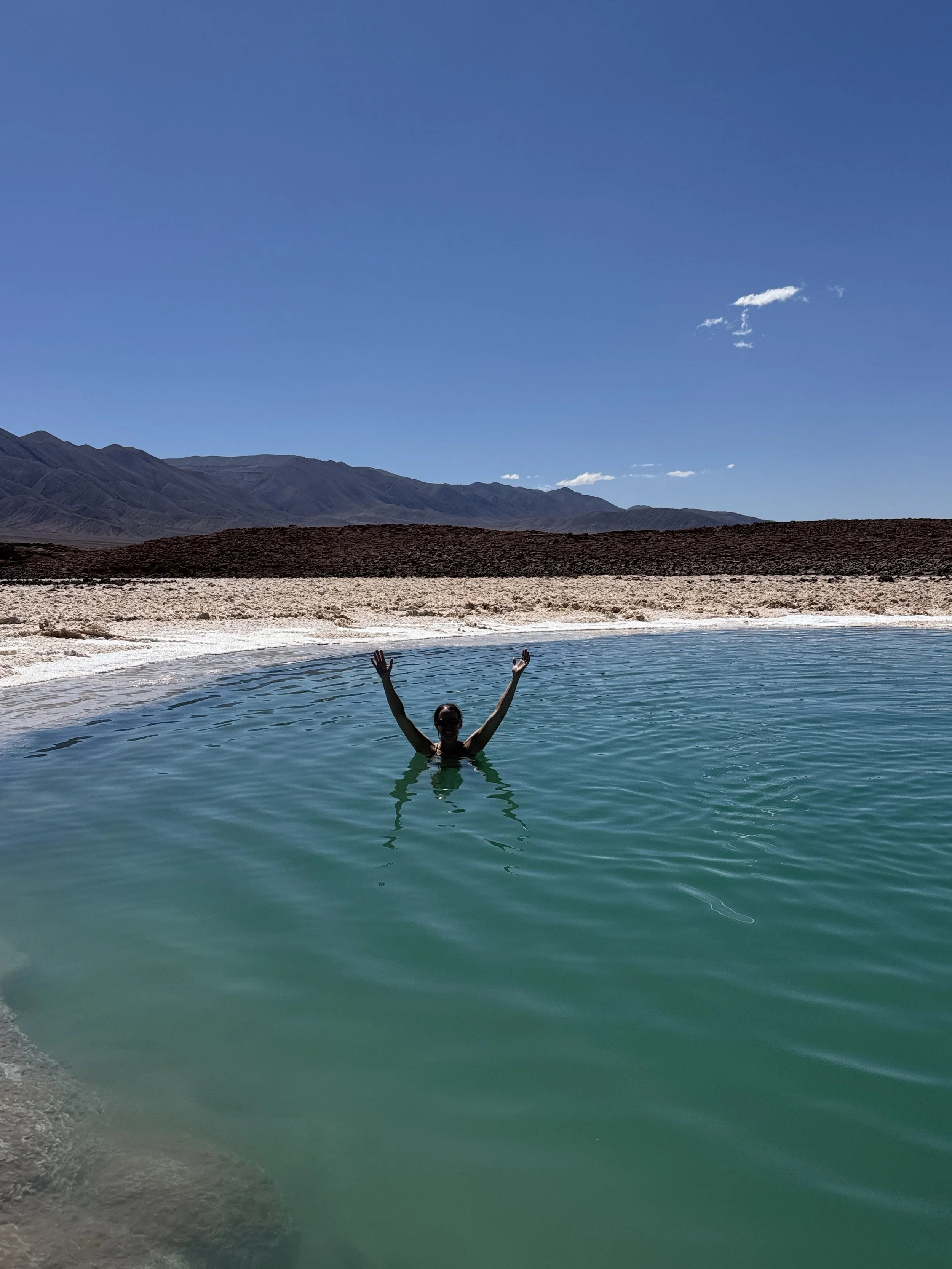
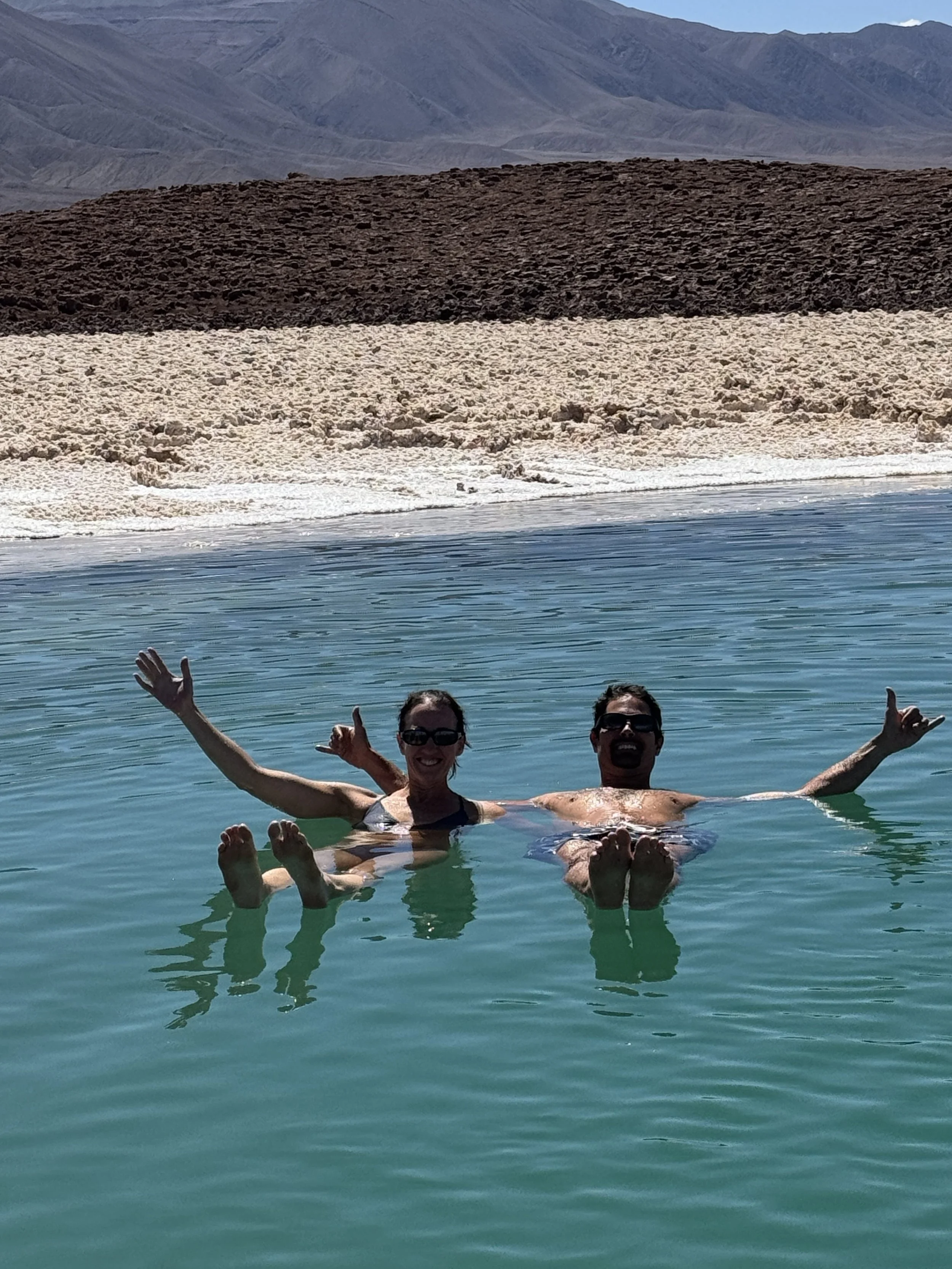
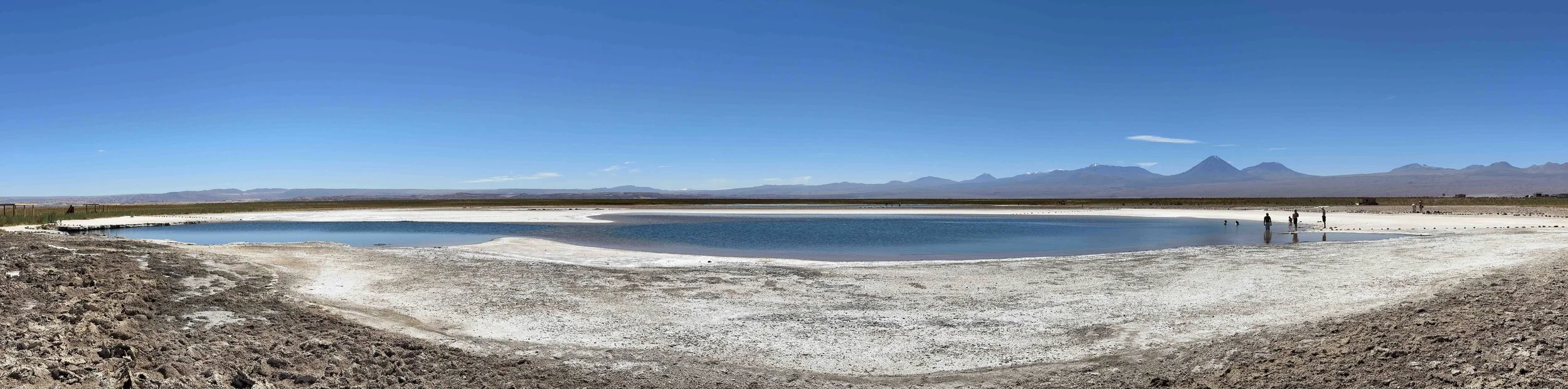
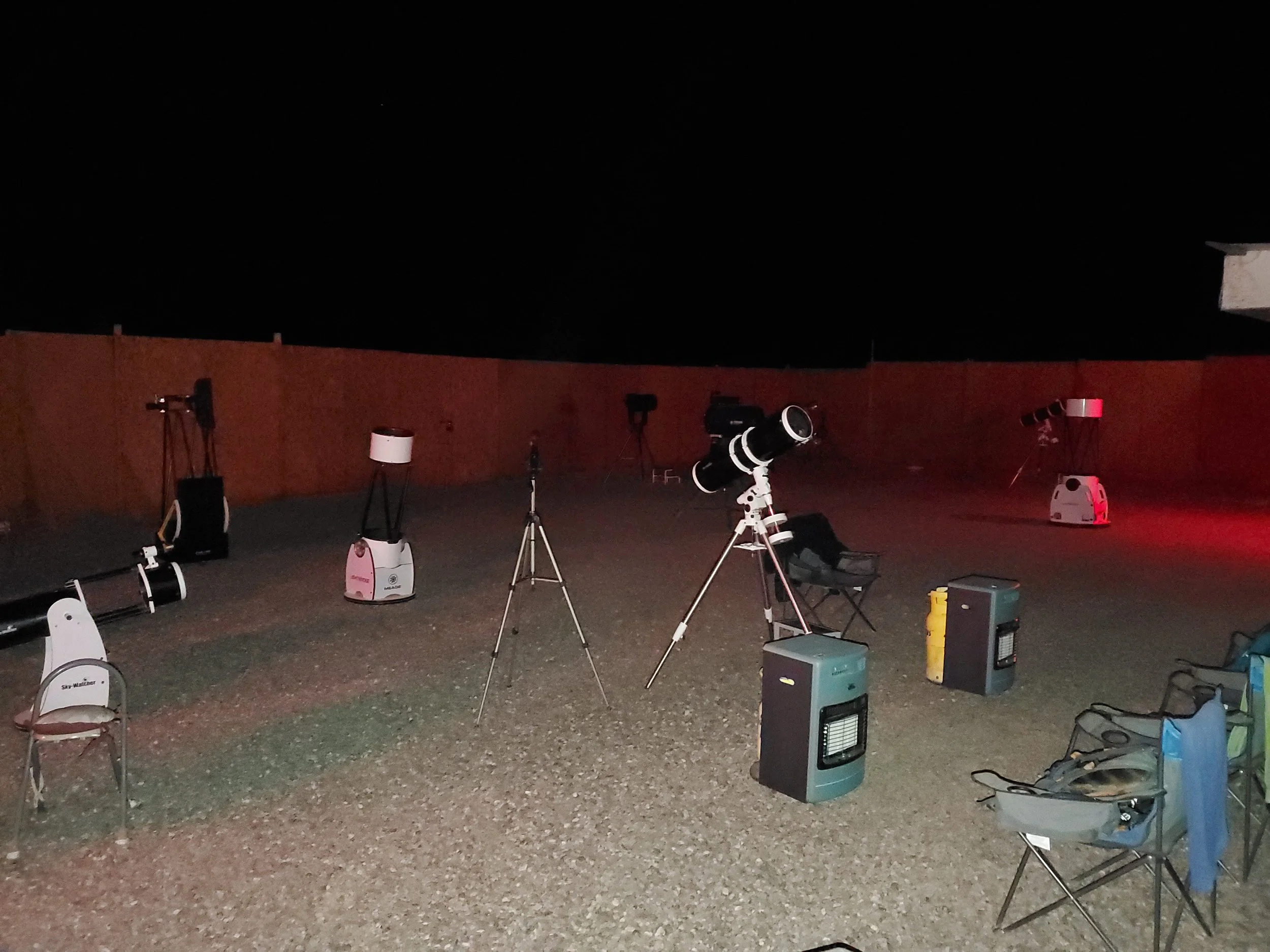
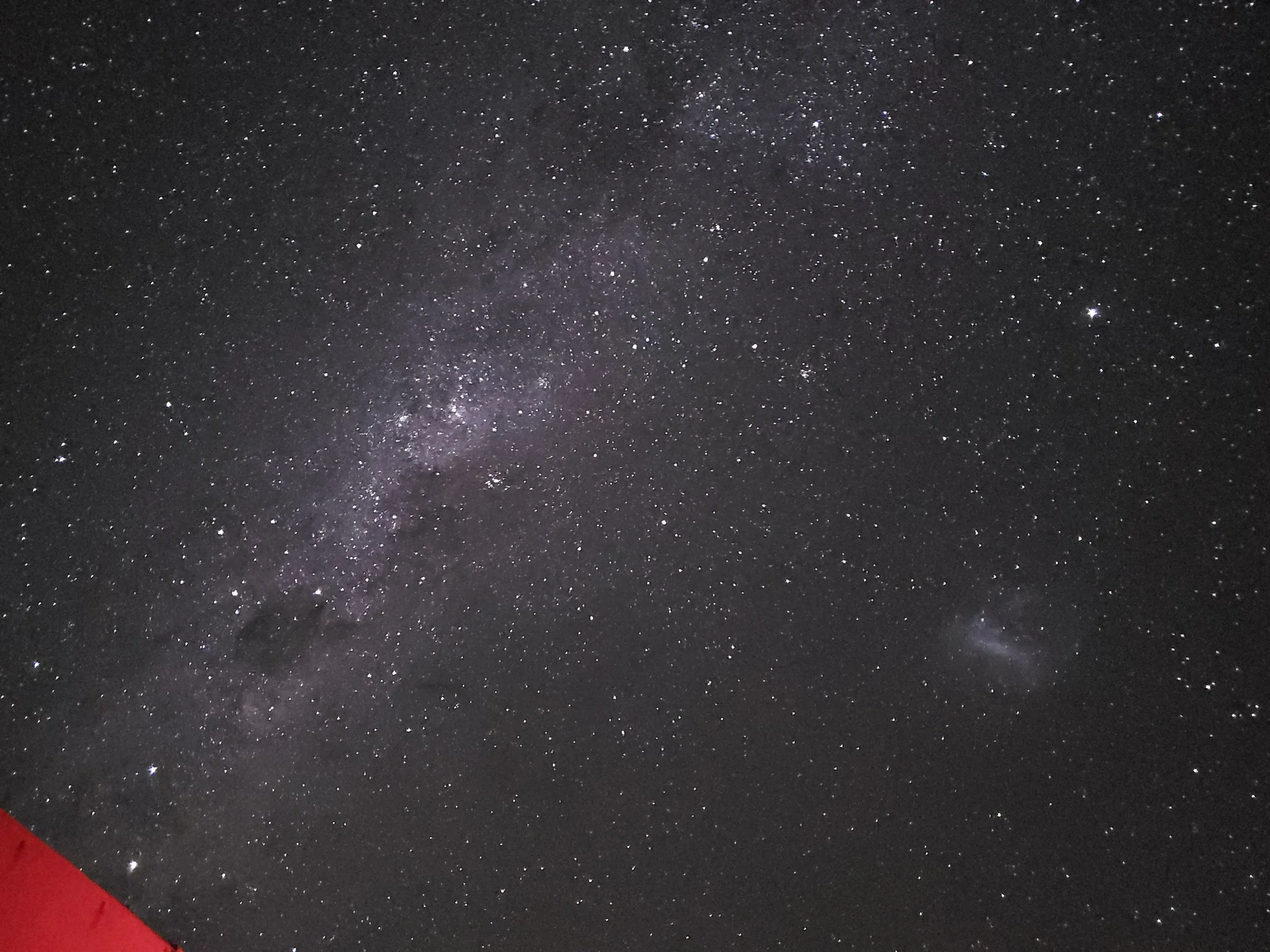
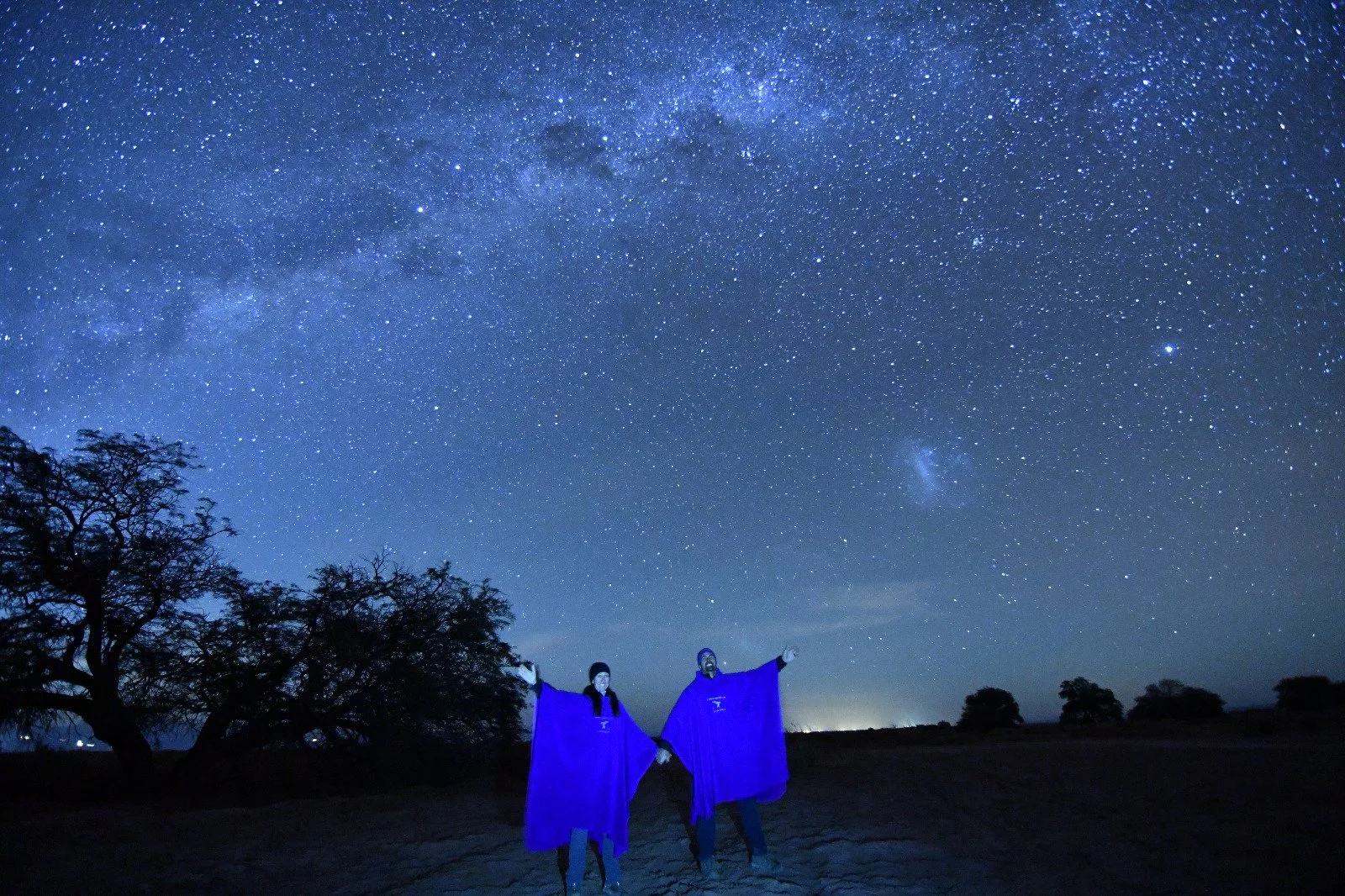
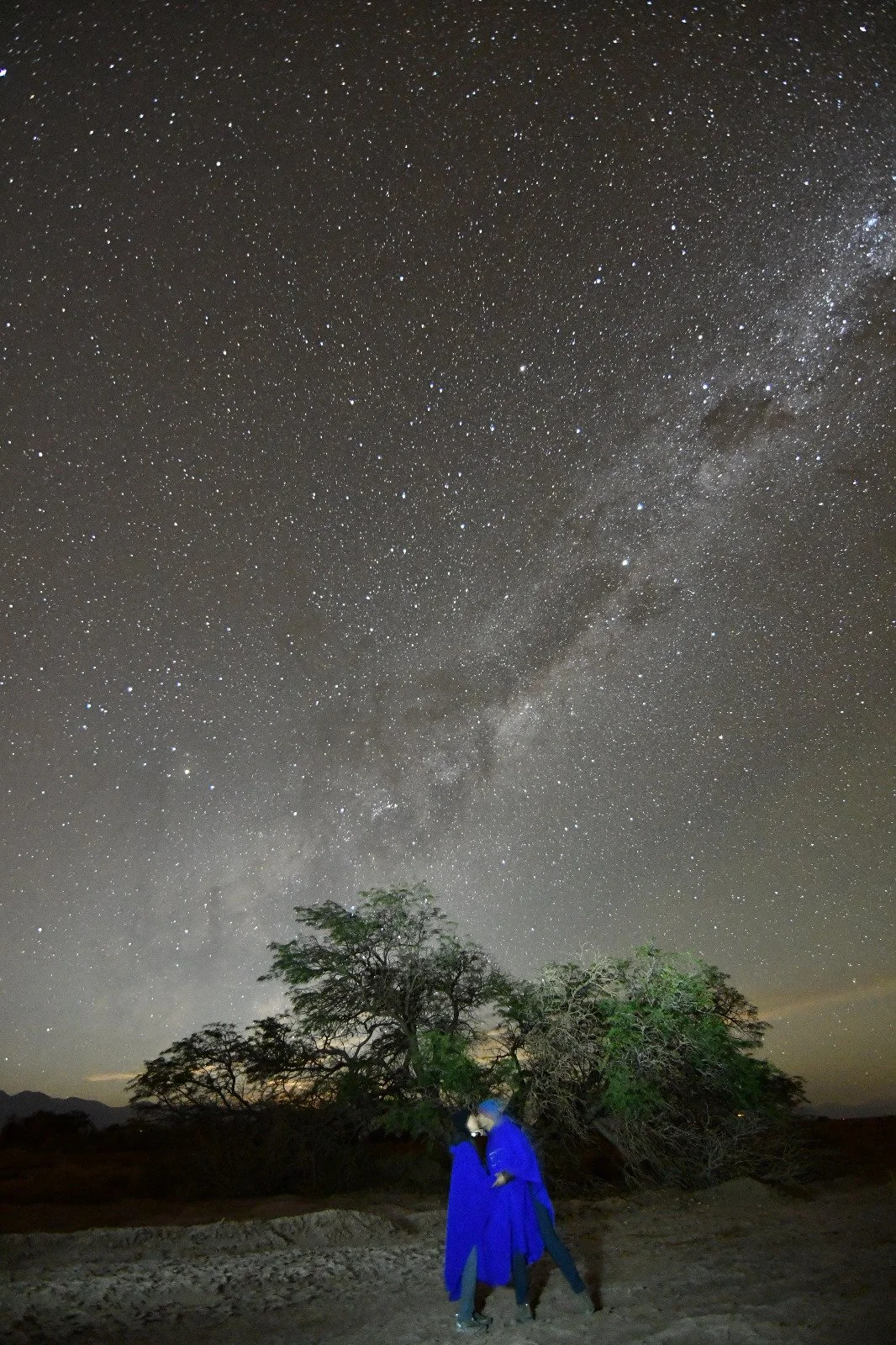
In addition to the salt water pools, our favorite experience in Atacama was our stargazing tour which was called “Stargazing Atacama Desert” with Jorge. Check it out on their website: https://www.atacamadesertstargazing.com/#!/-stargazing-2/ or on Trip Advisor…Atacama Desert Stargazing at the time of publishing there are just shy of 900 reviews! Coordination is best via WhatsApp, and Jorge is very up-front and honest - if there’s too much light from the moon he won’t run tours. If he is certain there will be clouds and the visibility won’t be good, he will cancel the tour.
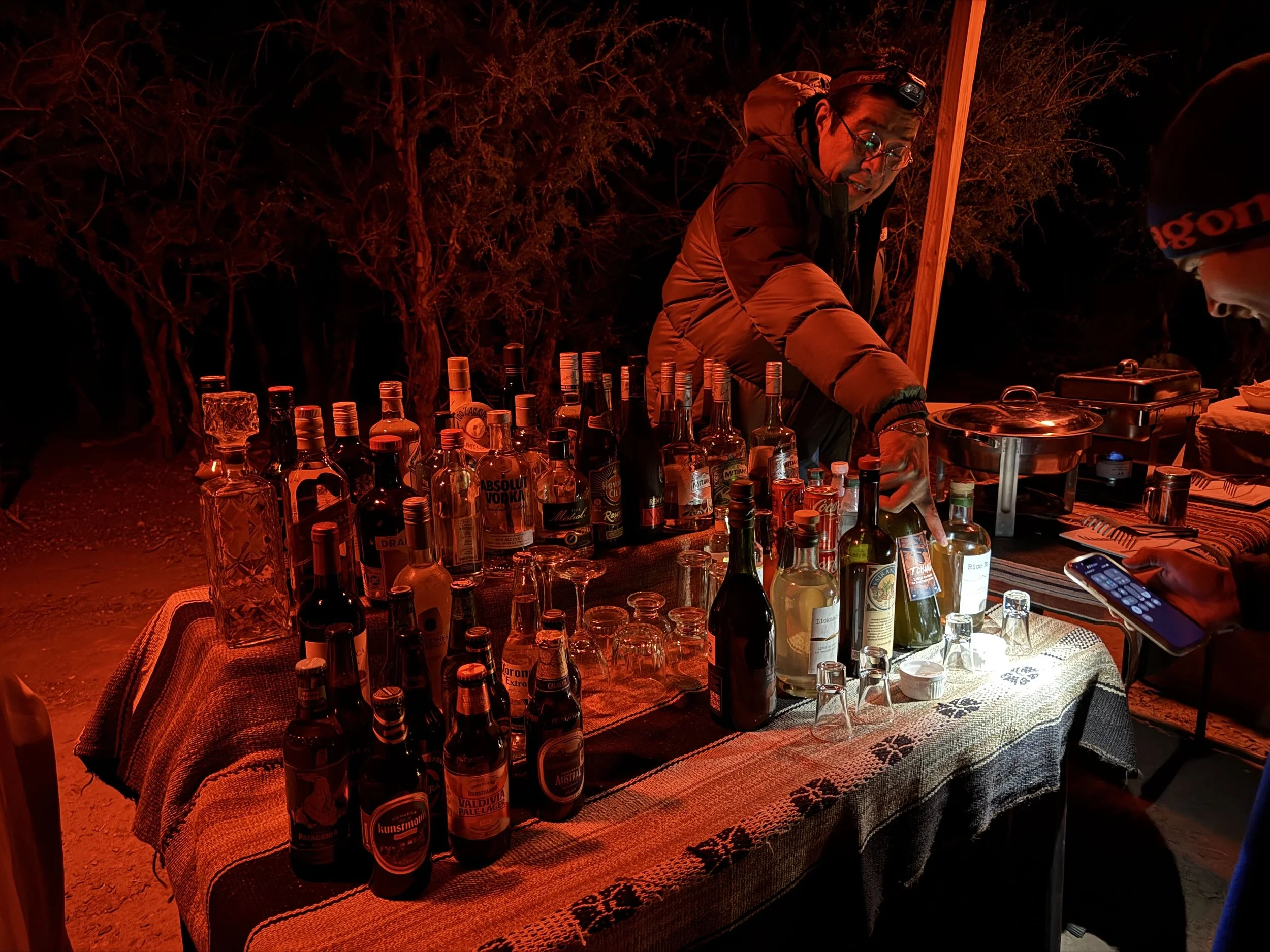
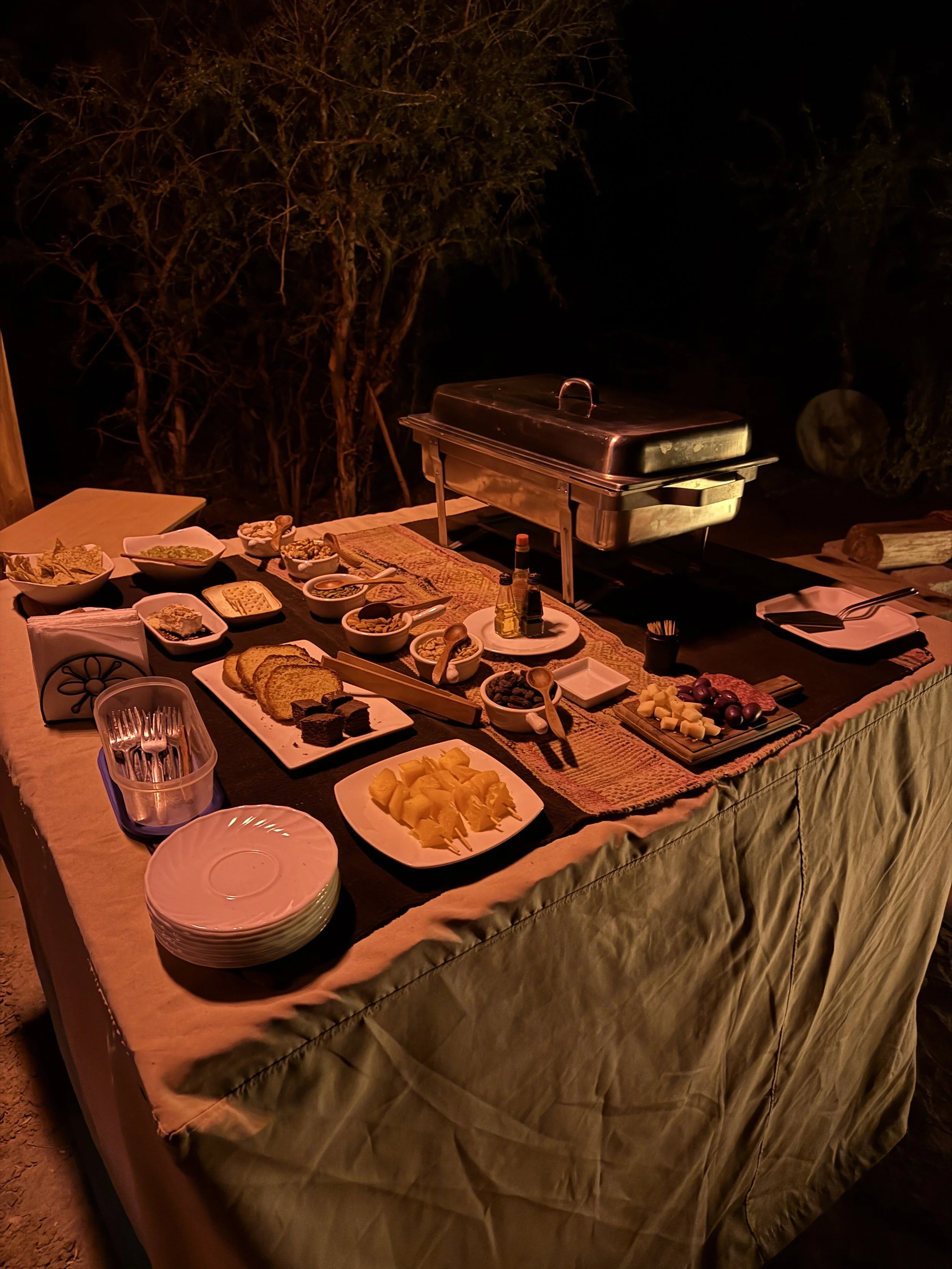
Depending on the time of year, and the time of sunset/moonrise, your tour might start at different times in the evening. You’ll be picked up from your hotel and driven to Jorge’s private property just outside of town. Jorge had 8-10 professional telescopes set up in his fenced yard, and his wife had prepared several tables full of food and drinks! As we sat in camp chairs with blankets and hot drinks, Jorge started teaching us the basics of Astronomy.
He showed us the major constellations using a laser pointer, and then multiple star clusters, nebulas and planets via different telescopes around the yard. The experience ended up being absolutely magical and we would consider this a must-do if you end up in San Pedro de Atacama.
Australis Cruise
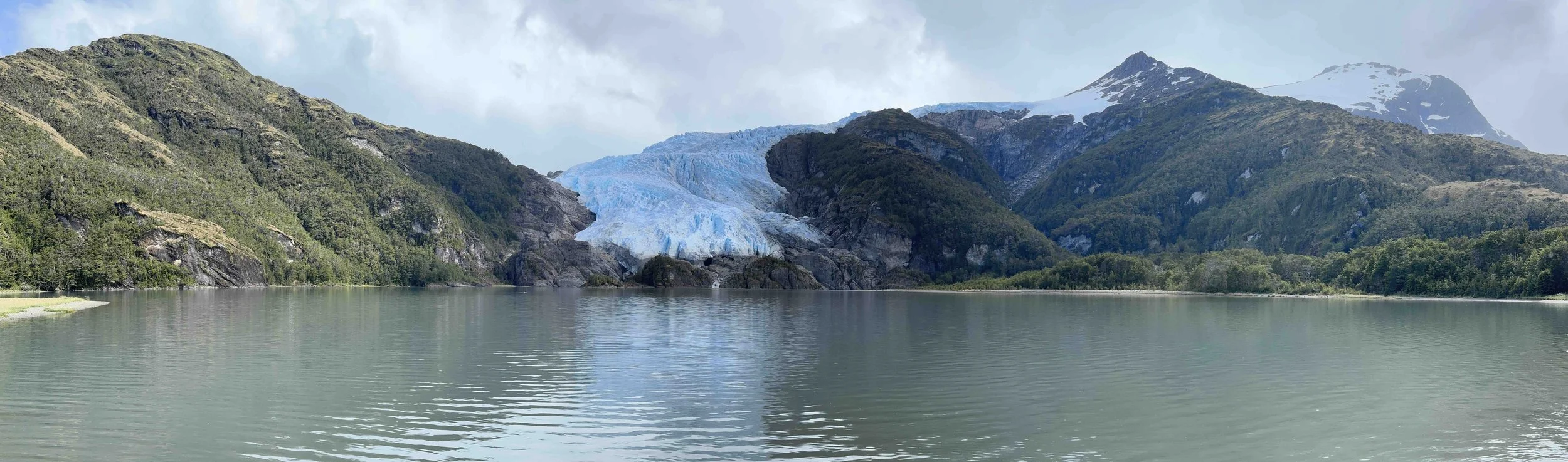
During our 2026 exploration of South America, in order to get ourselves between Ushuaia, Argentina and Punta Arenas, Chile, we decided to take a 4 night cruise with Australis. Their 2 sister ships transit back and forth between Punta Arenas and Ushuaia, or you can do the full 8 nights if you wanted to go round trip from either town. Ultimately the cruise has land (or zodiac) excursions planned every day, weather permitting, including time at Cape Horn, various Glaciers, and Magdalena (aka Penguin) Island.
The alternative to this cruise (if you were wanting to get between countries on a one-way trip) is a very long bus ride. Unfortunately rental cars will only be allowed round trip (e.g. starting and ending in Chile) and for international flights you’d have to get yourself back up to Santiago/Buenos Aires.
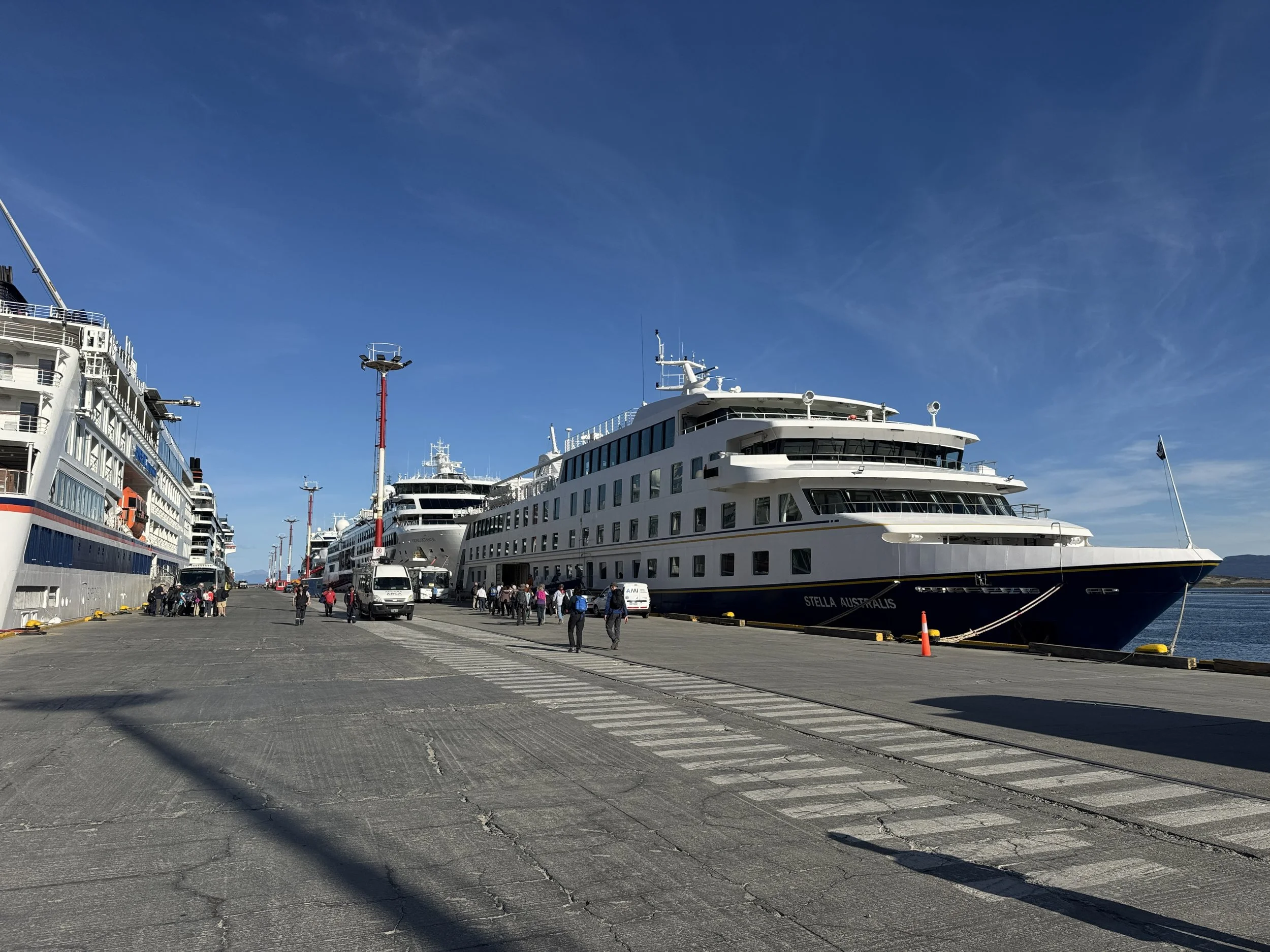
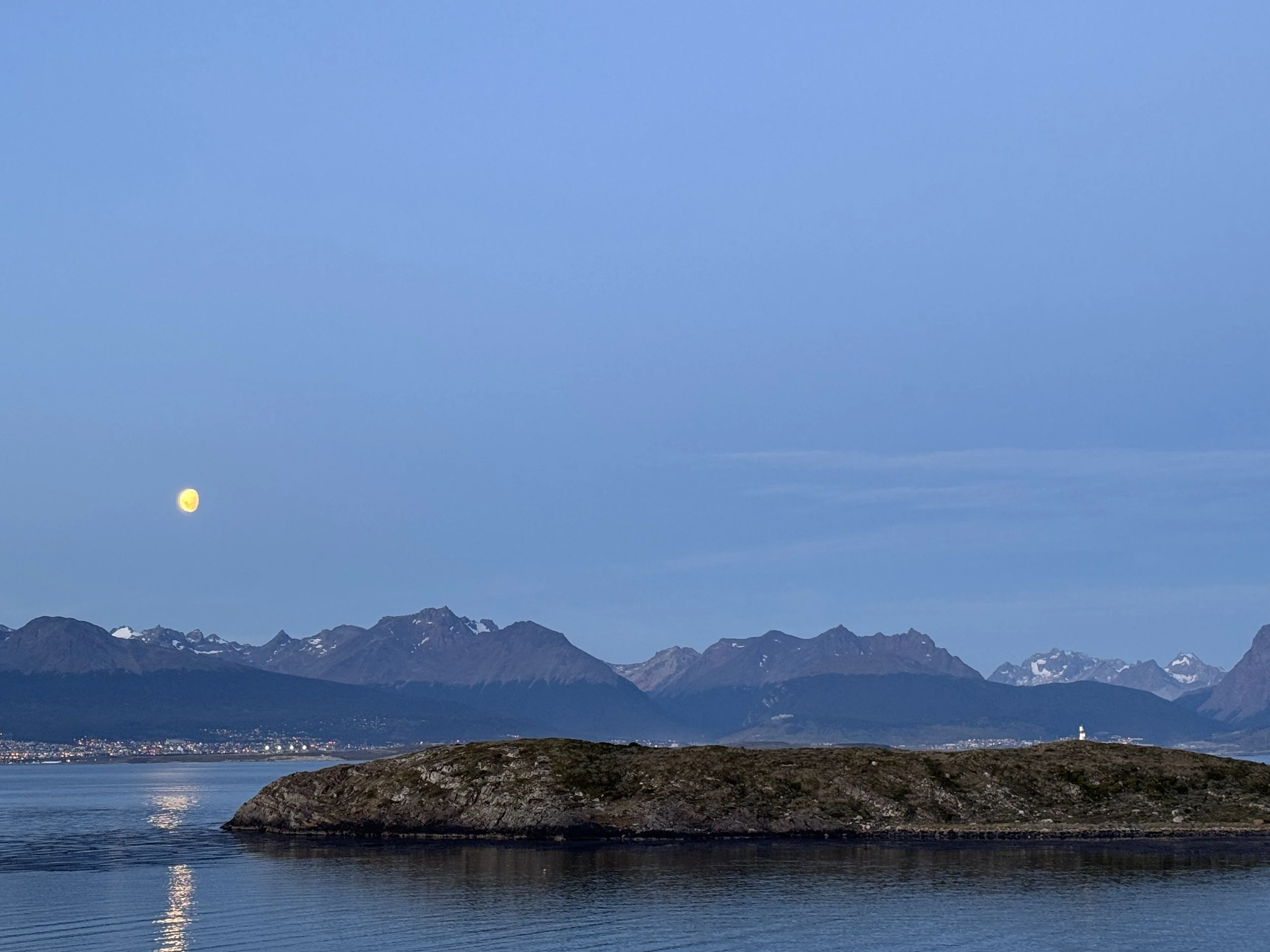
Check out our Argentina page for our thoughts on Ushuaia where we started this cruise. The short version is - we didn’t think it was worth more than 1-2 nights there as a place to get on/off a cruise! They claim Ushuaia is “el Fin del Mundo” or “the End of the World”, though technically Cape Horn (which belongs to Chile) is further south and you should get to visit it on this cruise!
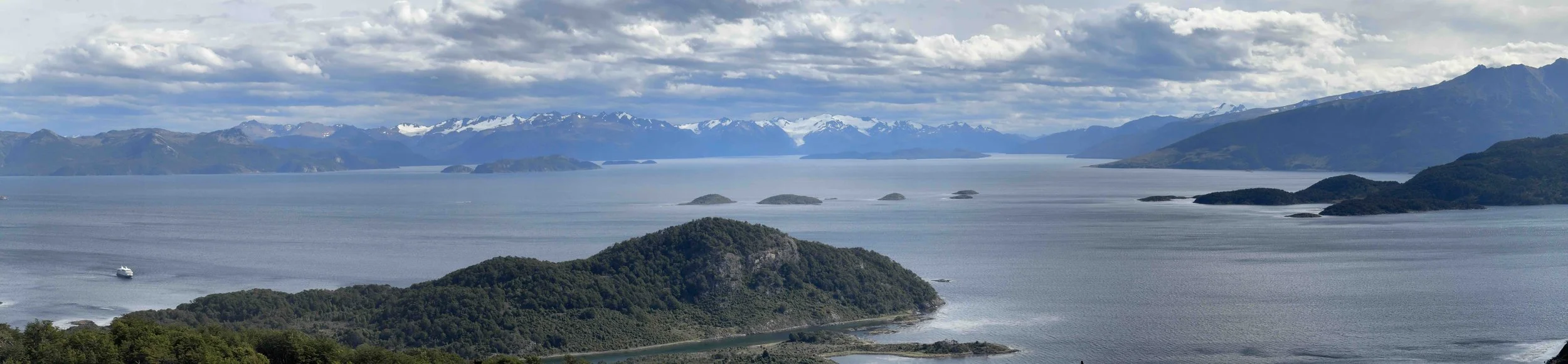
The Australis cruise was well organized and communicated from booking through the departure. Each day followed a fairly consistent structure. Meals were taken at an assigned table with the same other passengers the whole trip. Breakfast was offered as a Buffet, whereas you would select your Lunch & Dinner options and it would be served plated. For daily excursions, we would be assigned to a group sometimes according to our desired difficulty of the activity, and sometimes according to whether we were a part of a travel agency booking, or by language spoken. The boats did NOT have wifi available (even for purchase), however we heard rumors that might be changing soon by order of the Chilean government.
Admittedly, we were younger than most other passengers by maybe 20 years, on average?! Therefore the descriptions of the difficulty of the excursions were geared toward an older generation and the speed at which the land excursions took place was slower than our normal pace.
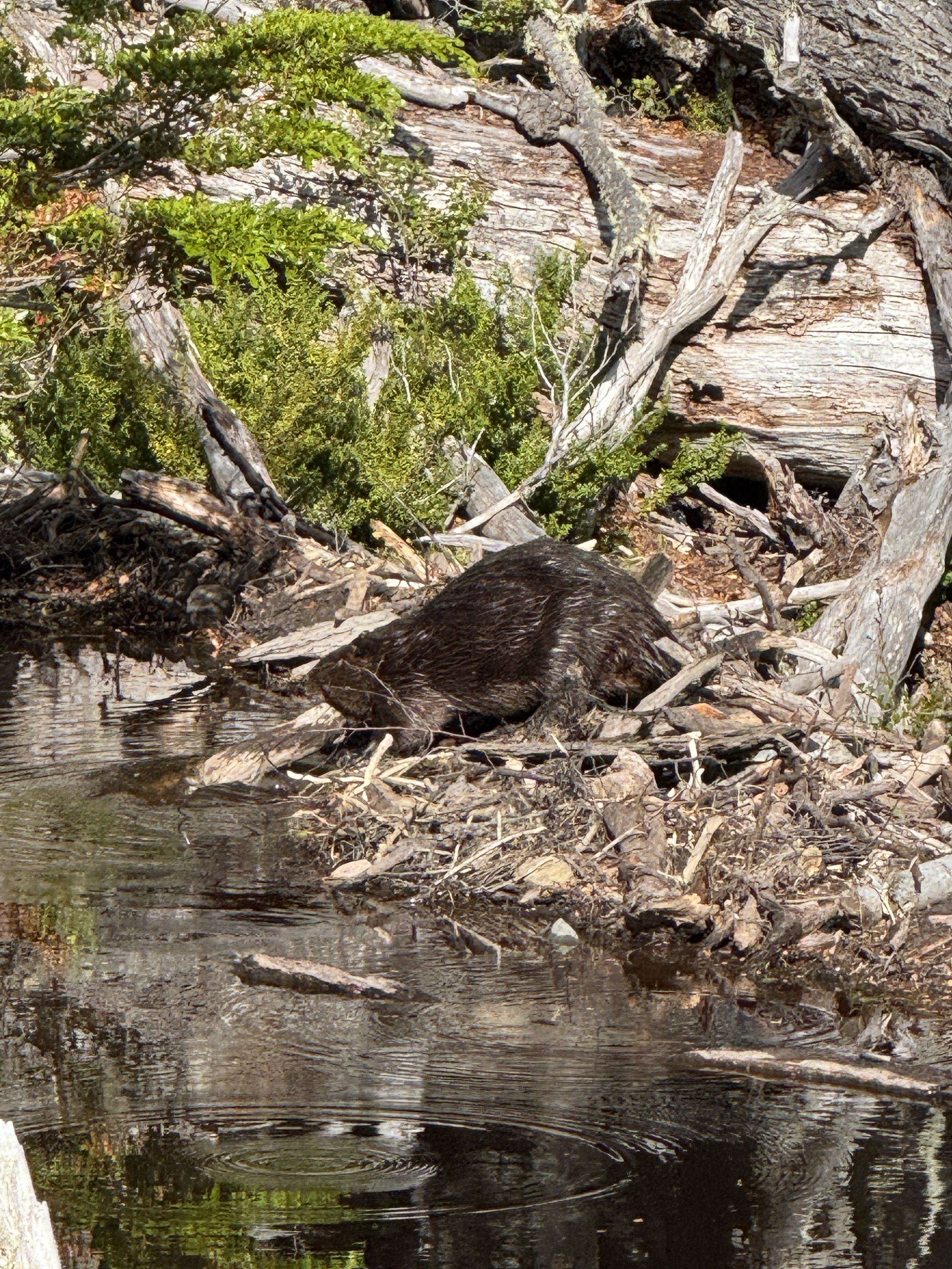
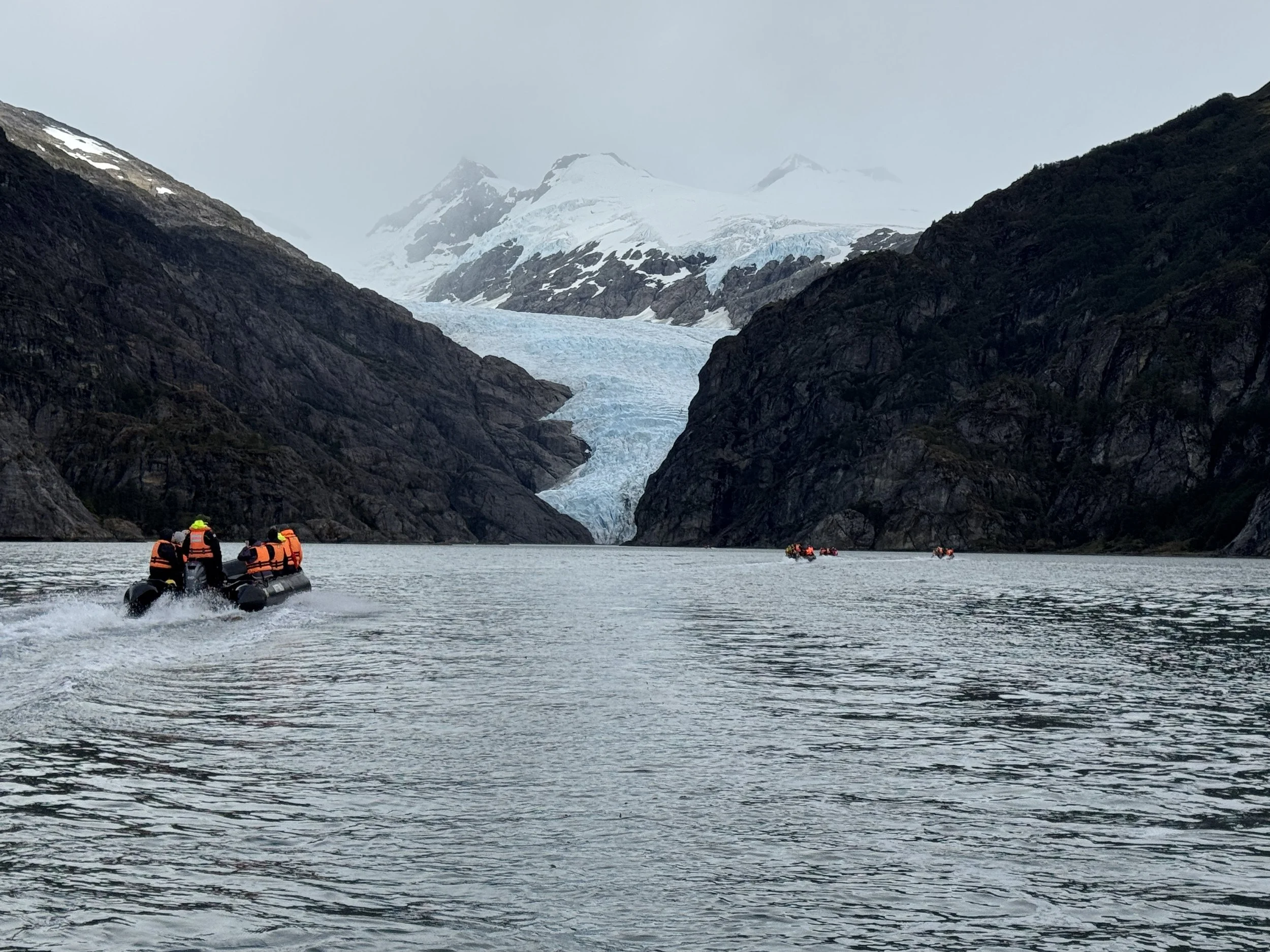
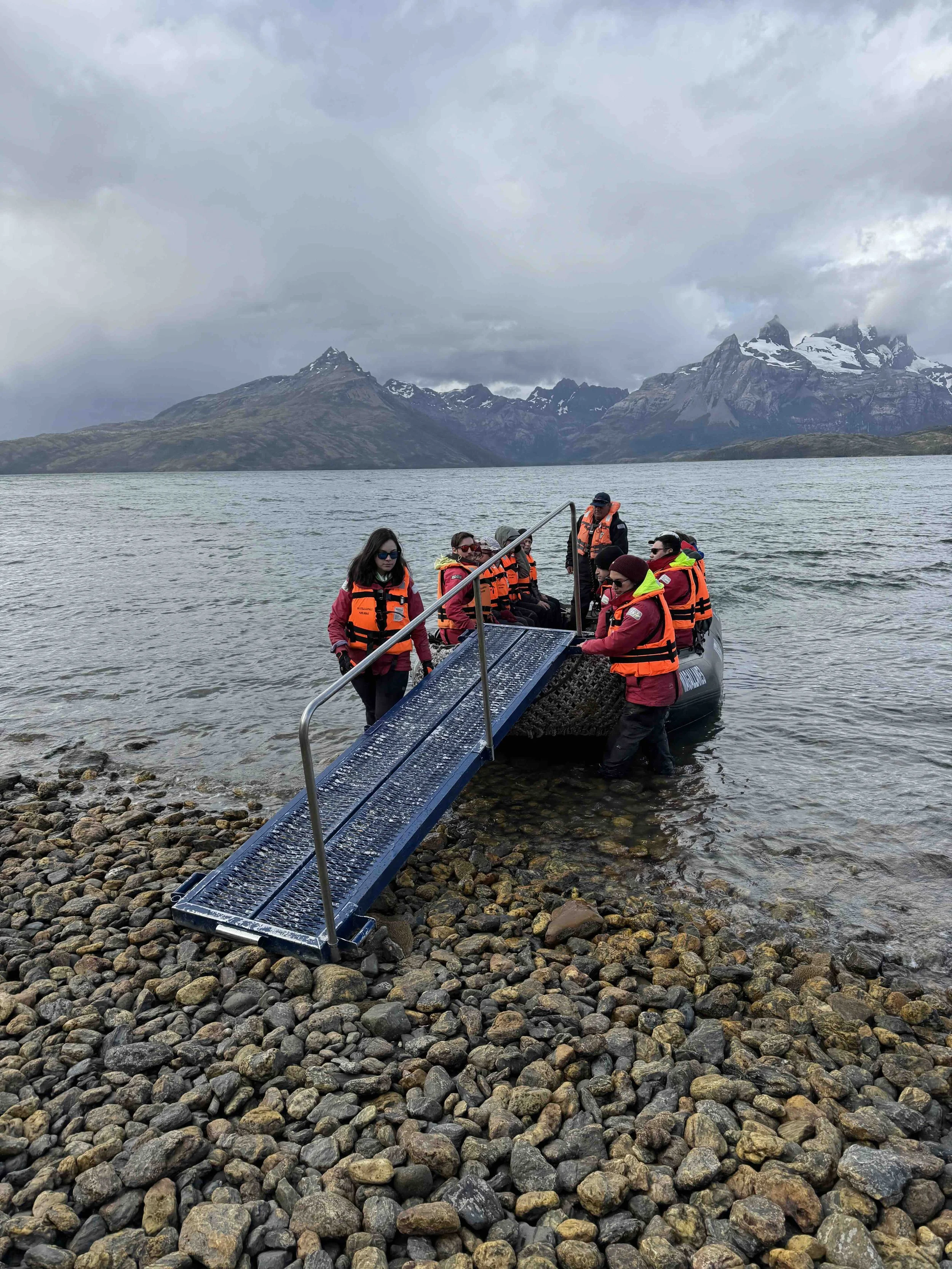
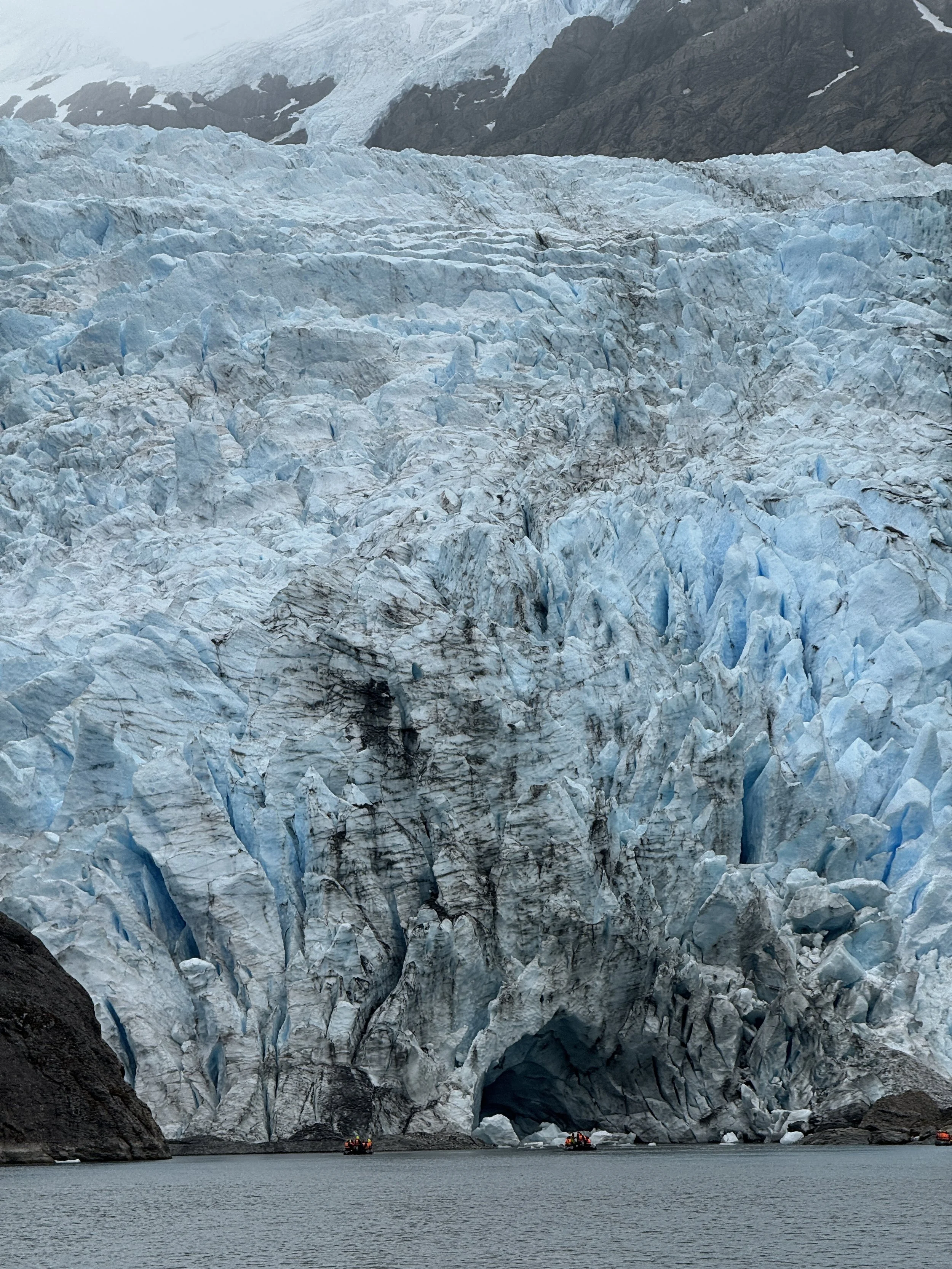
Some of the excursions included a visit on land, and some were solely on the zodiac boat - for example taking a boat up close to a glacier and cruising along its face. On one of the land excursions, we were delighted to pass by a couple of beaver dams and actually saw a beaver out working on it!
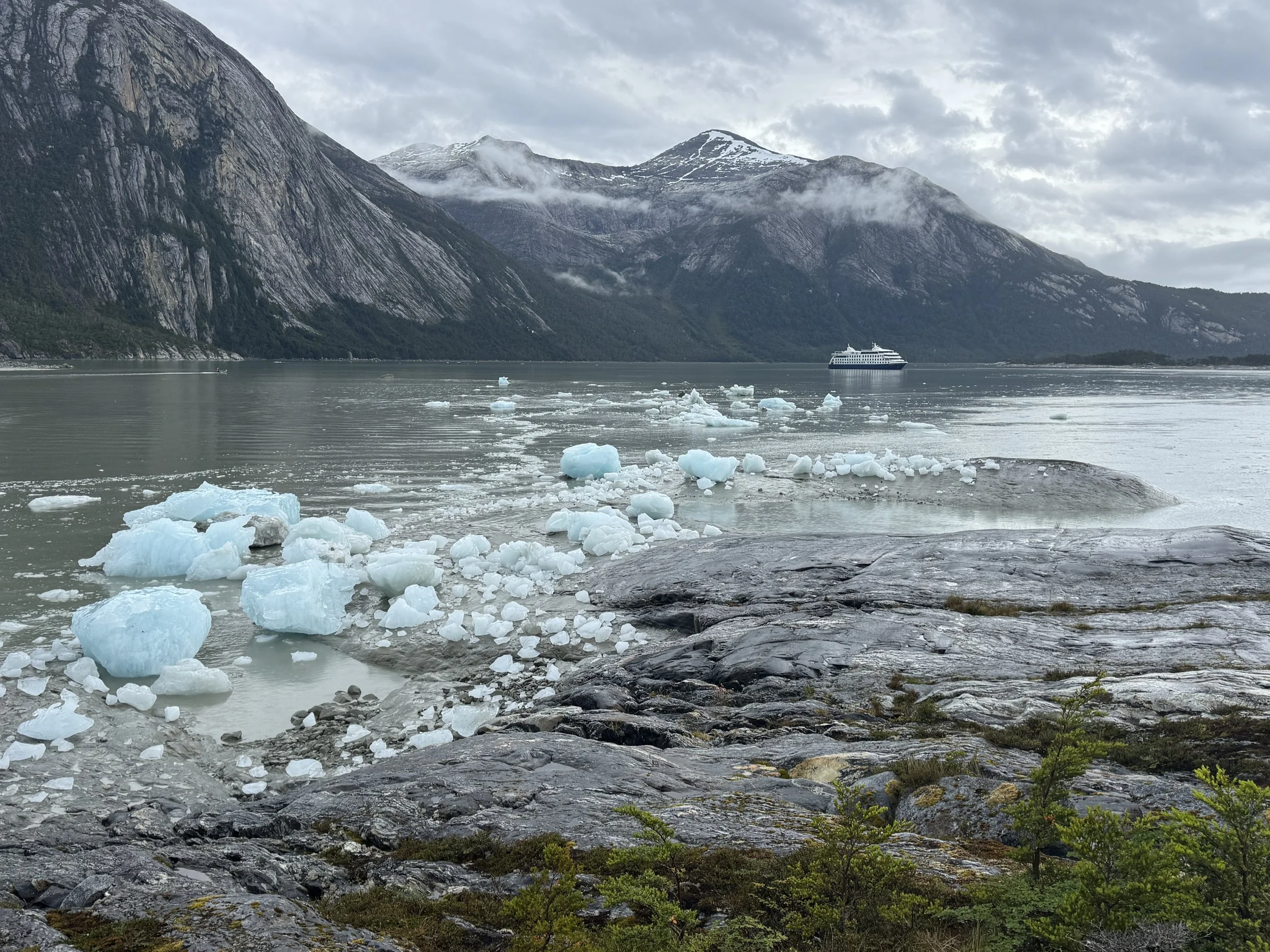
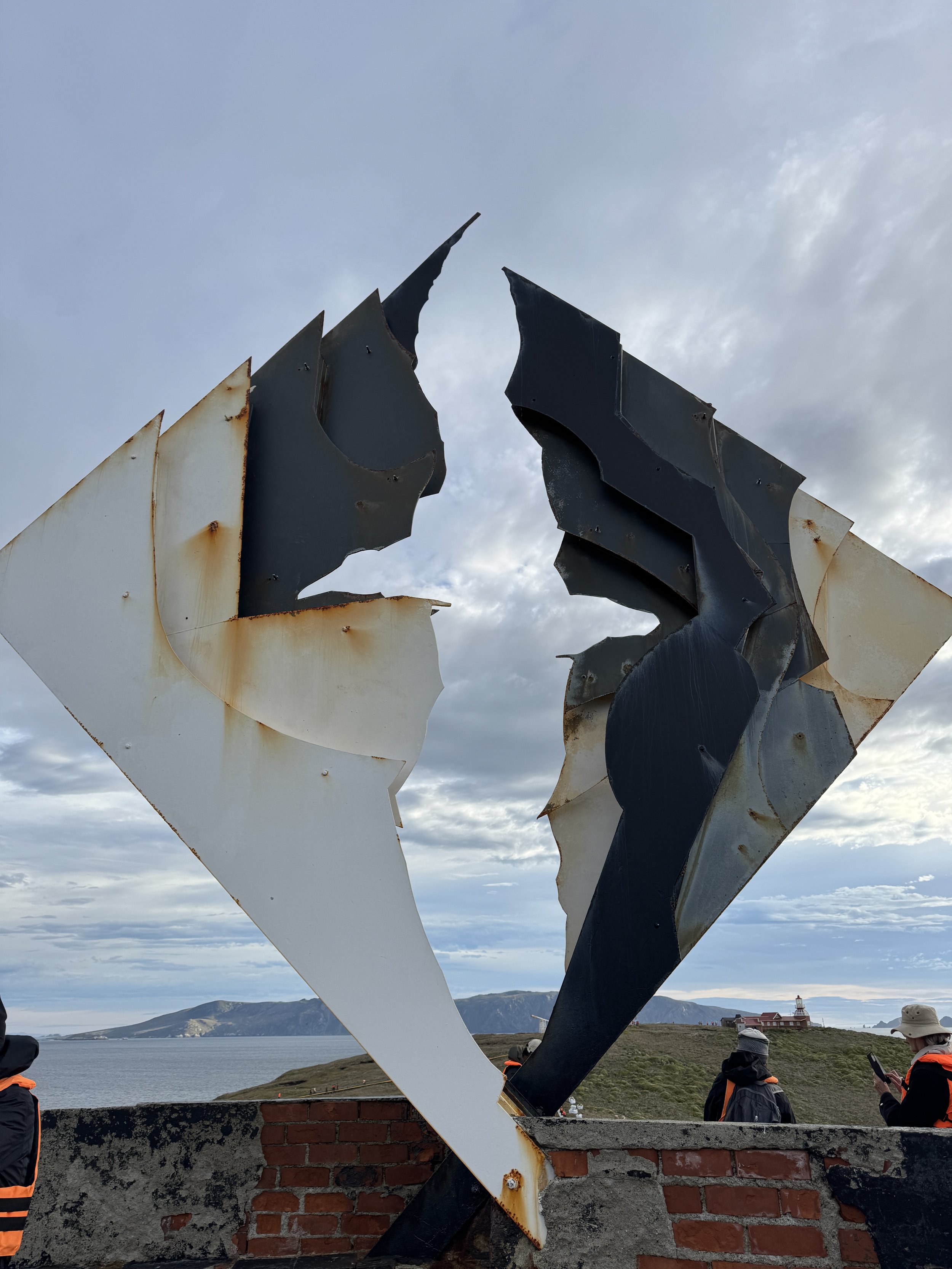
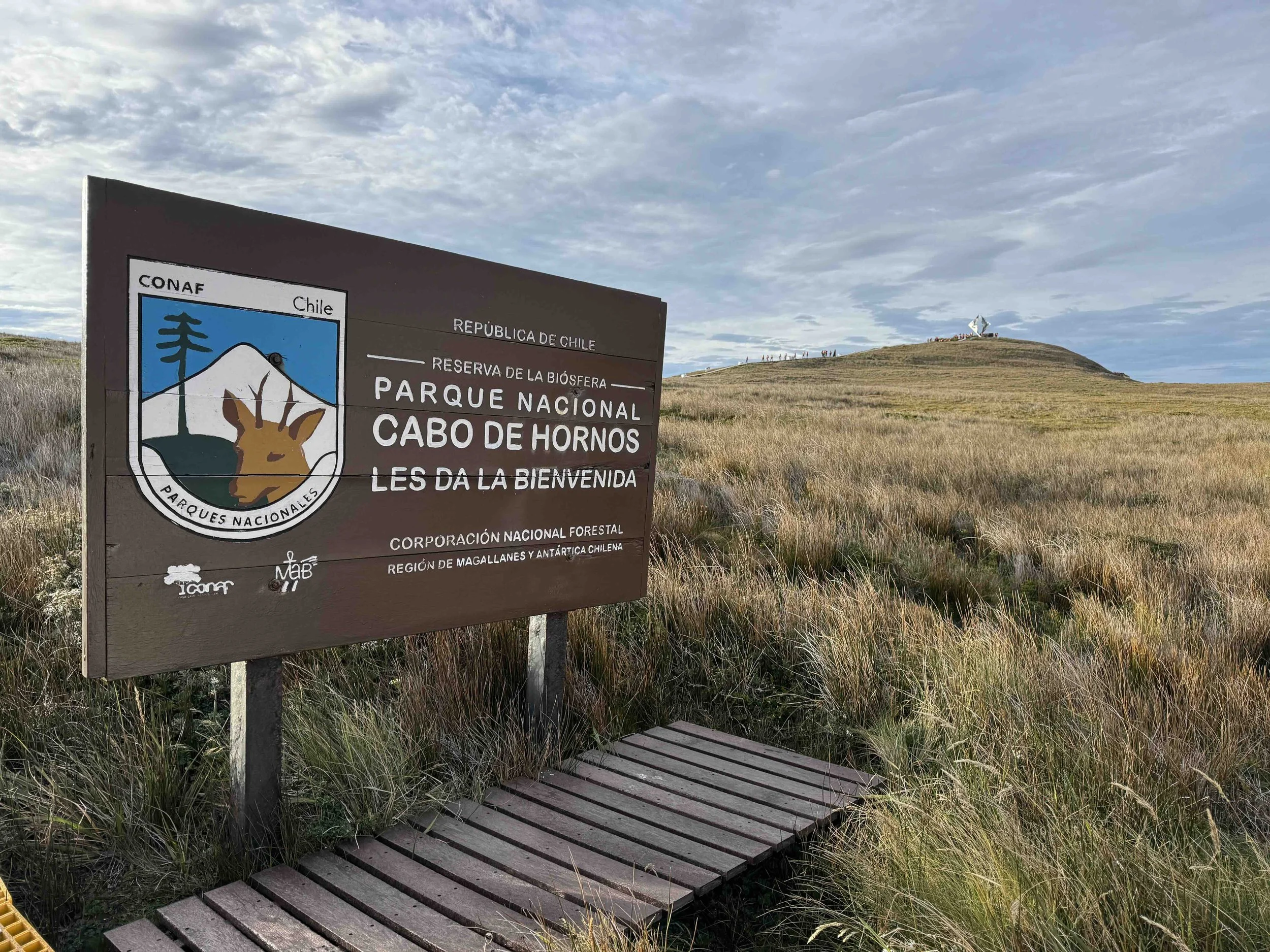
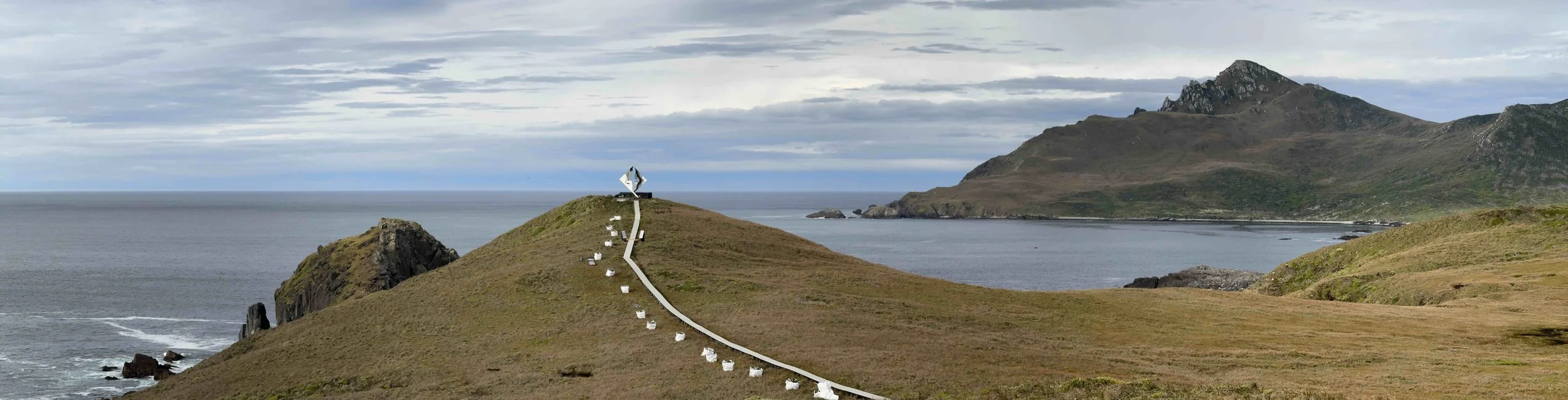
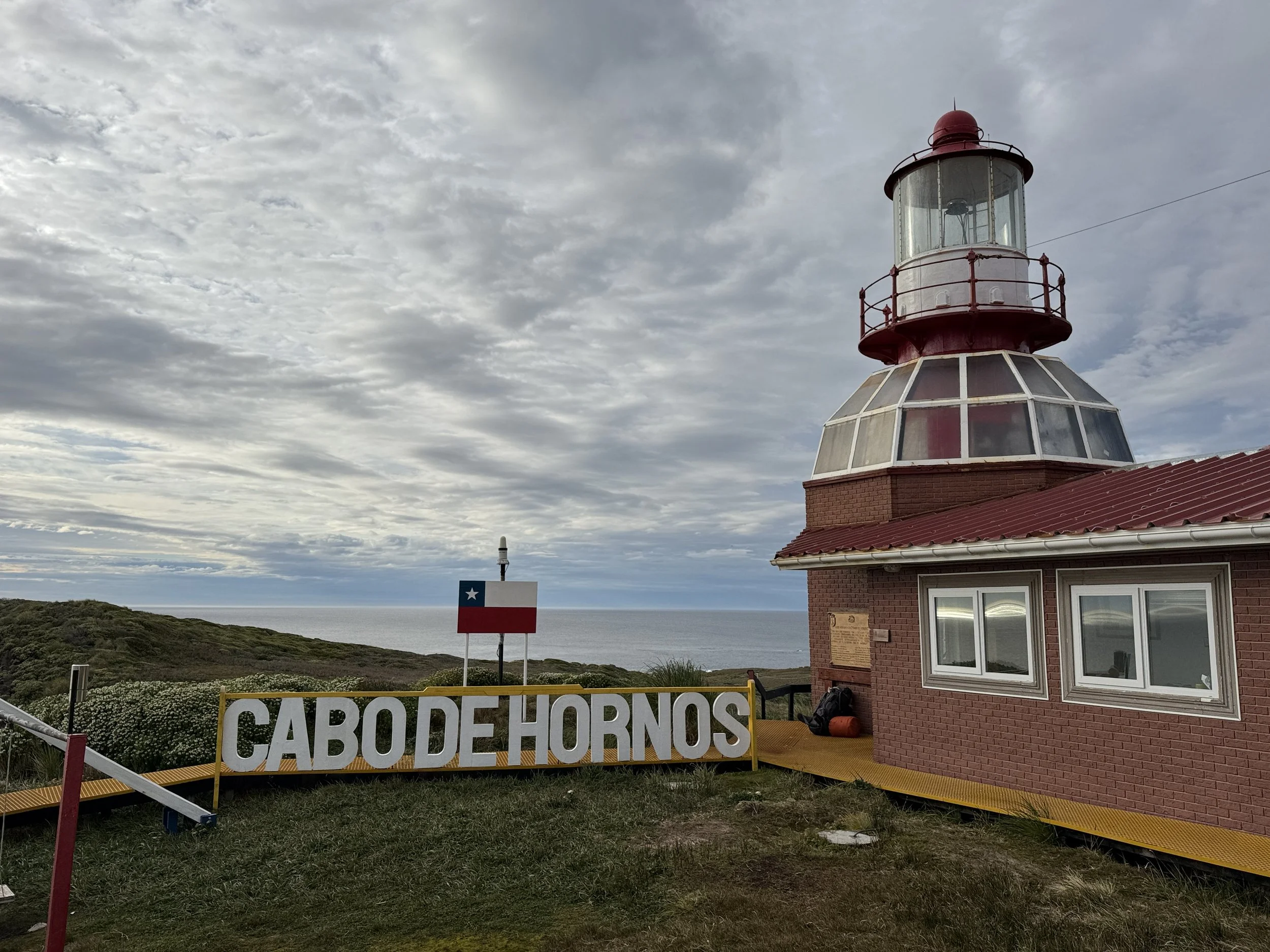
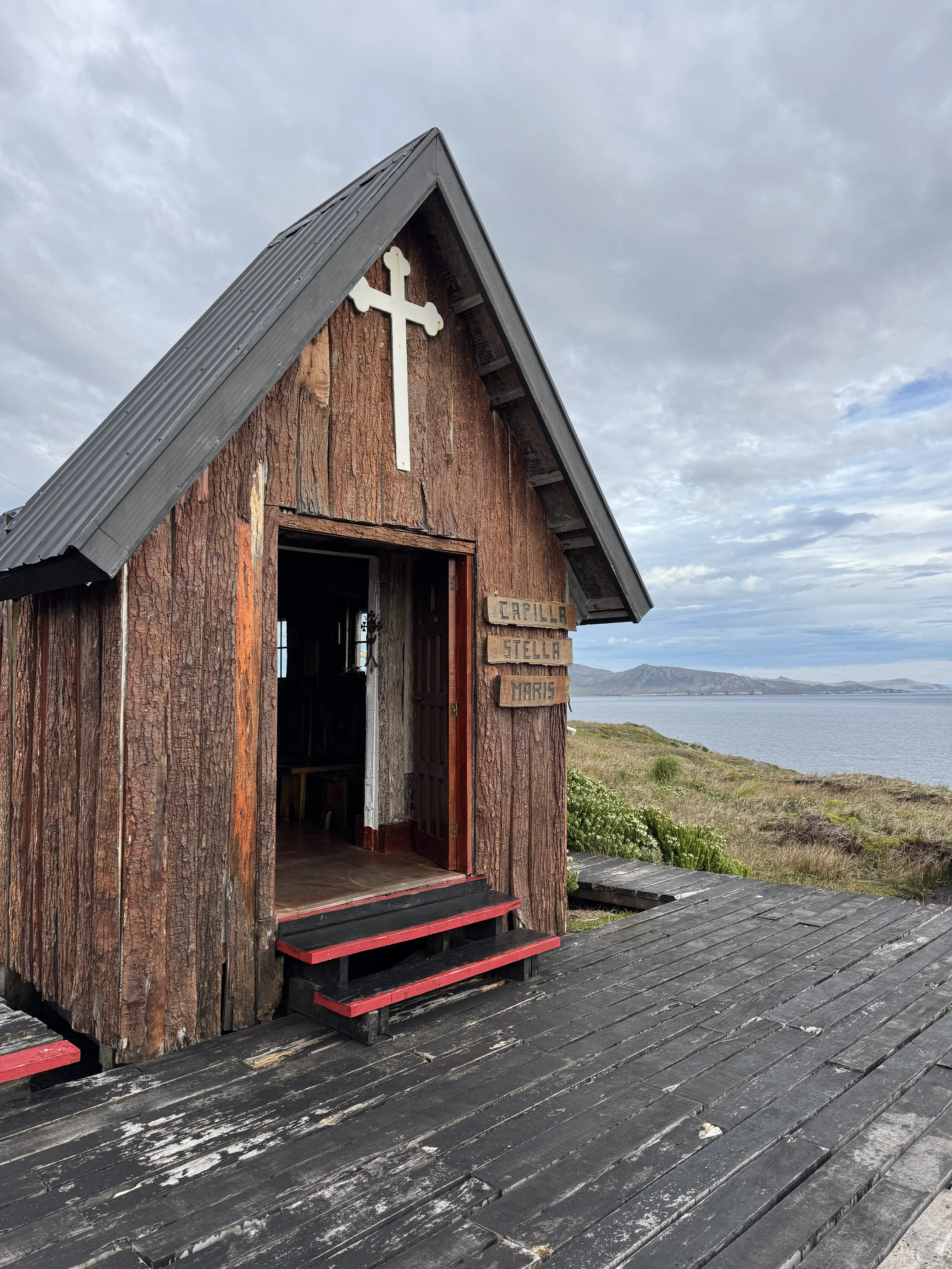
One of the excursions was to walk around Cape Horn which has a plank walkway leading to a sculpture that commemorates the official southern tip of the continent. There is also a lighthouse on the island which is occupied by a lighthouse keeper and his family (a post in the Chilean Navy), as well as a tiny chapel.
Though many Antarctica Cruises depart from Ushuaia, none (that we know of) stop at Cape Horn along the way. So at this time, Australis may be operating the only 2 ships making this a tourist destination. This is the southern-most point along Australis’ itinerary - from here it heads back north and into/through the fjords either on its way to Punta Arenas, or Ushuaia.
We were lucky enough to visit Cape Horn with very mild, sunny, calm weather, but because of the exposure in this remote part of the ocean, there is the possibility that the sea state could be too difficult to load & unload zodiac boats, and excursions are sometimes cancelled here.
Easter Island / Isla de Pascua / Rapa Nui
This island is famous for its numerous stone carvings of large faces called “Moai”. Archeologists believe these were carved between 1250-1500AD by the clans of the island, who originated from eastern Polynesia (like the Marquesas in French Polynesia, or the Cook Islands). Moai statues were carved at a specific rock quarry and transported to their clan’s land using ropes controlled by men. Most Moai sit on the shoreline and face inward, likely honoring clan leaders who would watch over their villages. Only about 50 of the 900 Moai found across the island have been re-erected onto their altars since the 1960s, but dozens have been excavated in/around the rock quarry where they were in various stages of being carved.
Rapa Nui is a 5hr flight from Santiago, and we had debated making the trek, but ultimately, we were really pleasantly surprised with the experience, and would highly recommend taking 3-4 days to check it out. Hotel Ohana was a peaceful little oasis about a 7 min drive to Hanga Roa, their main town. As a side note, we had read disappointing reviews about its scuba diving, but since we were here, figured why not – and we were also pleasantly surprised with the visibility, coral and fish life!
Santiago
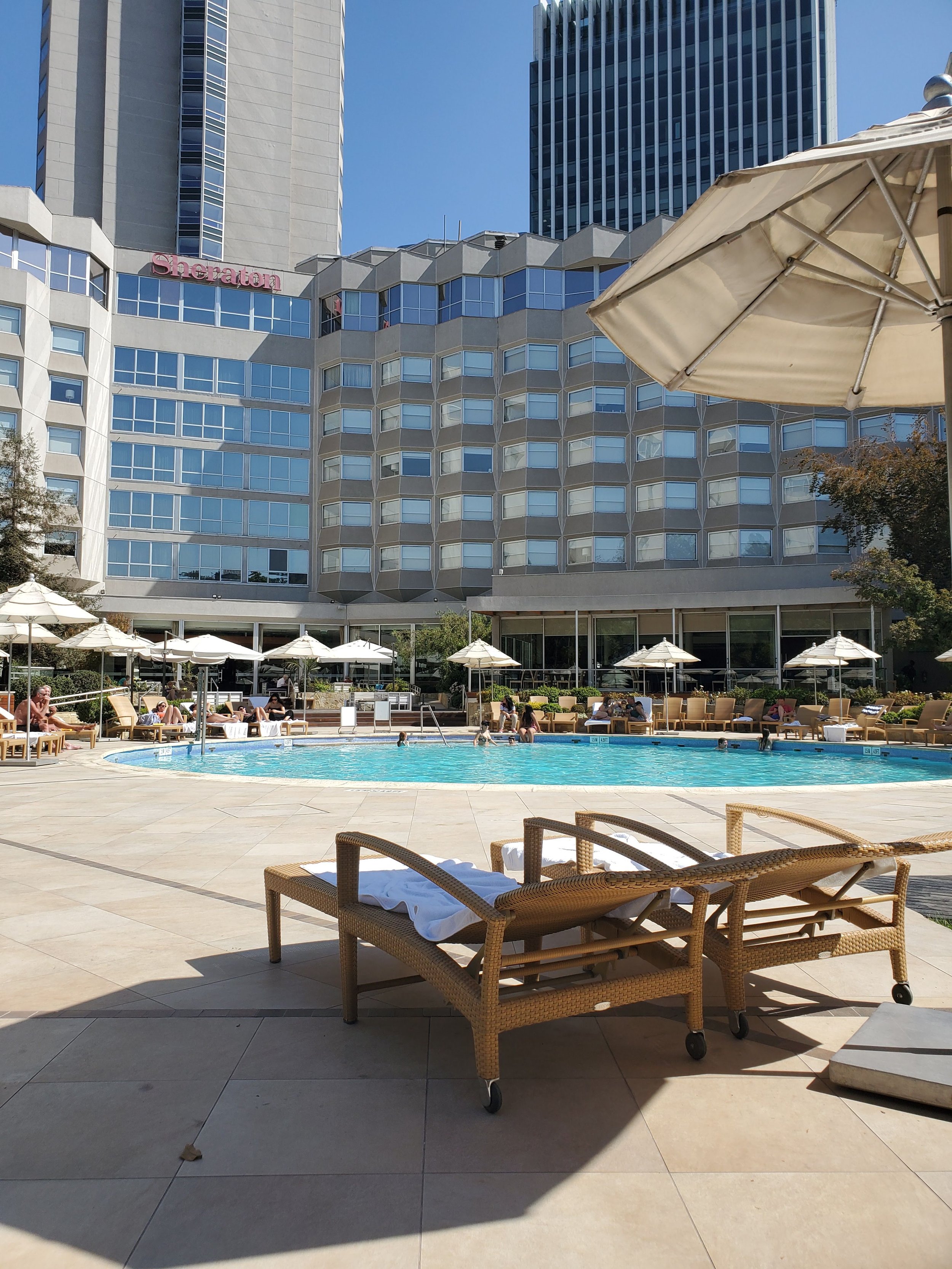
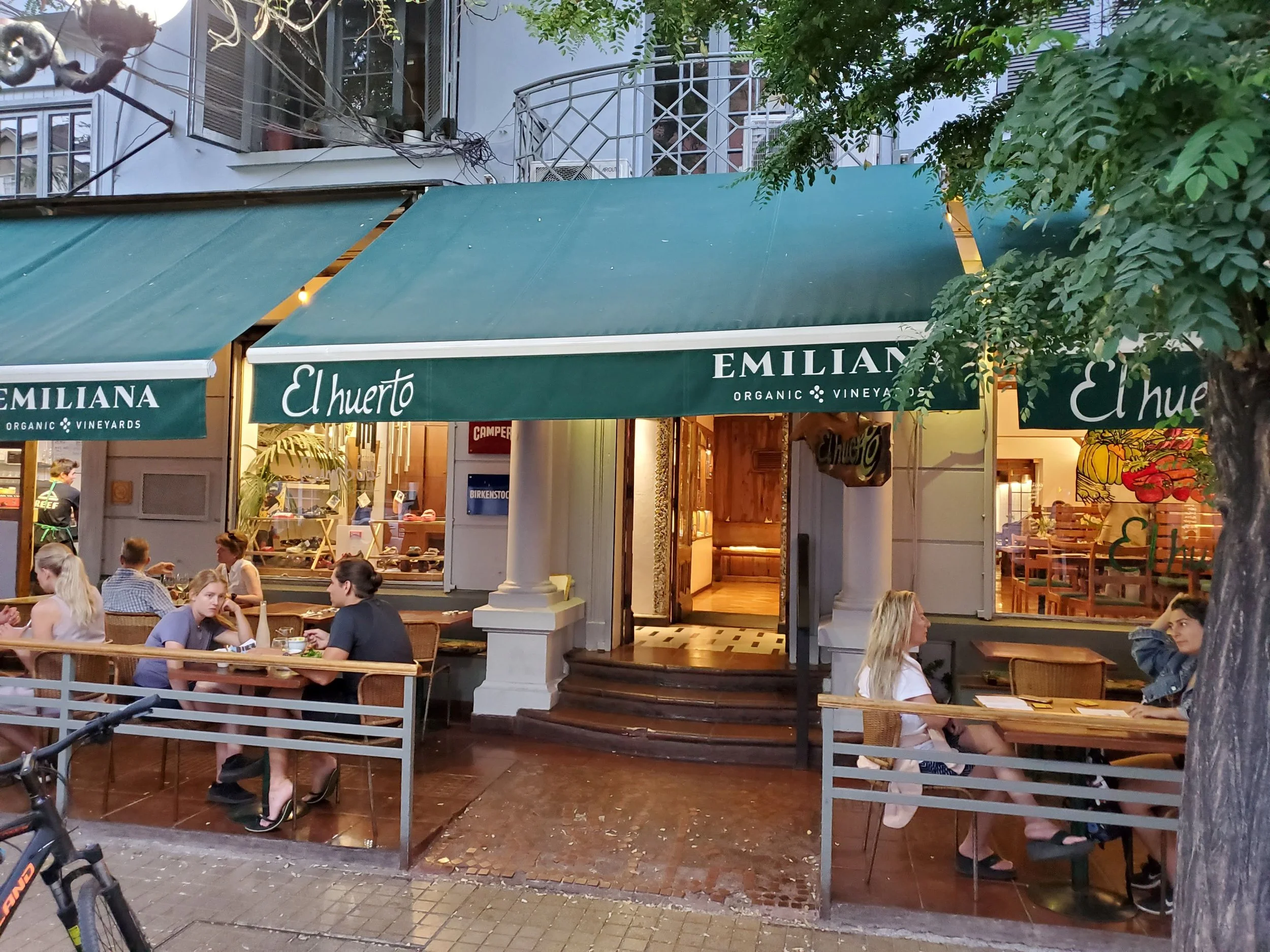
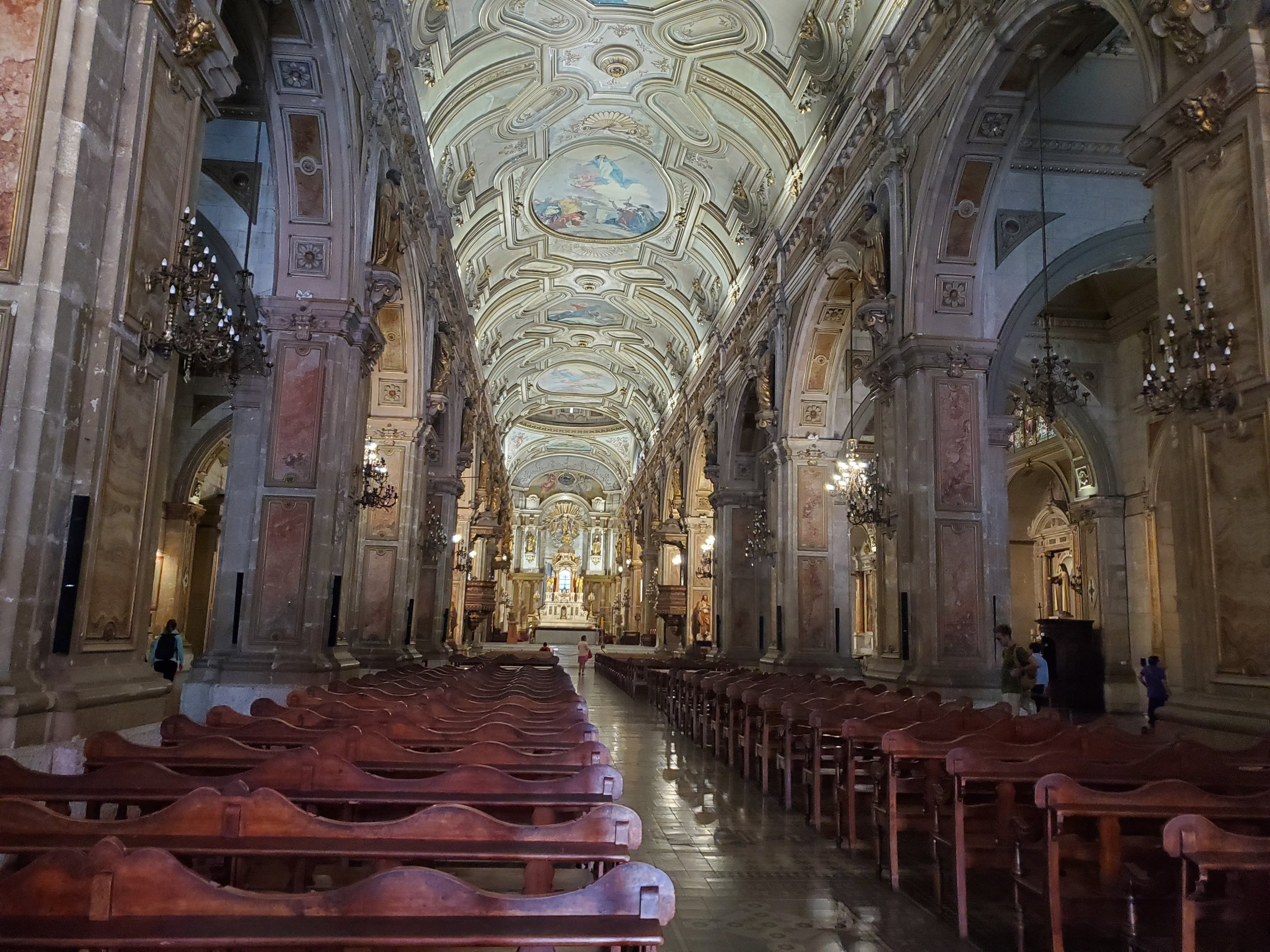
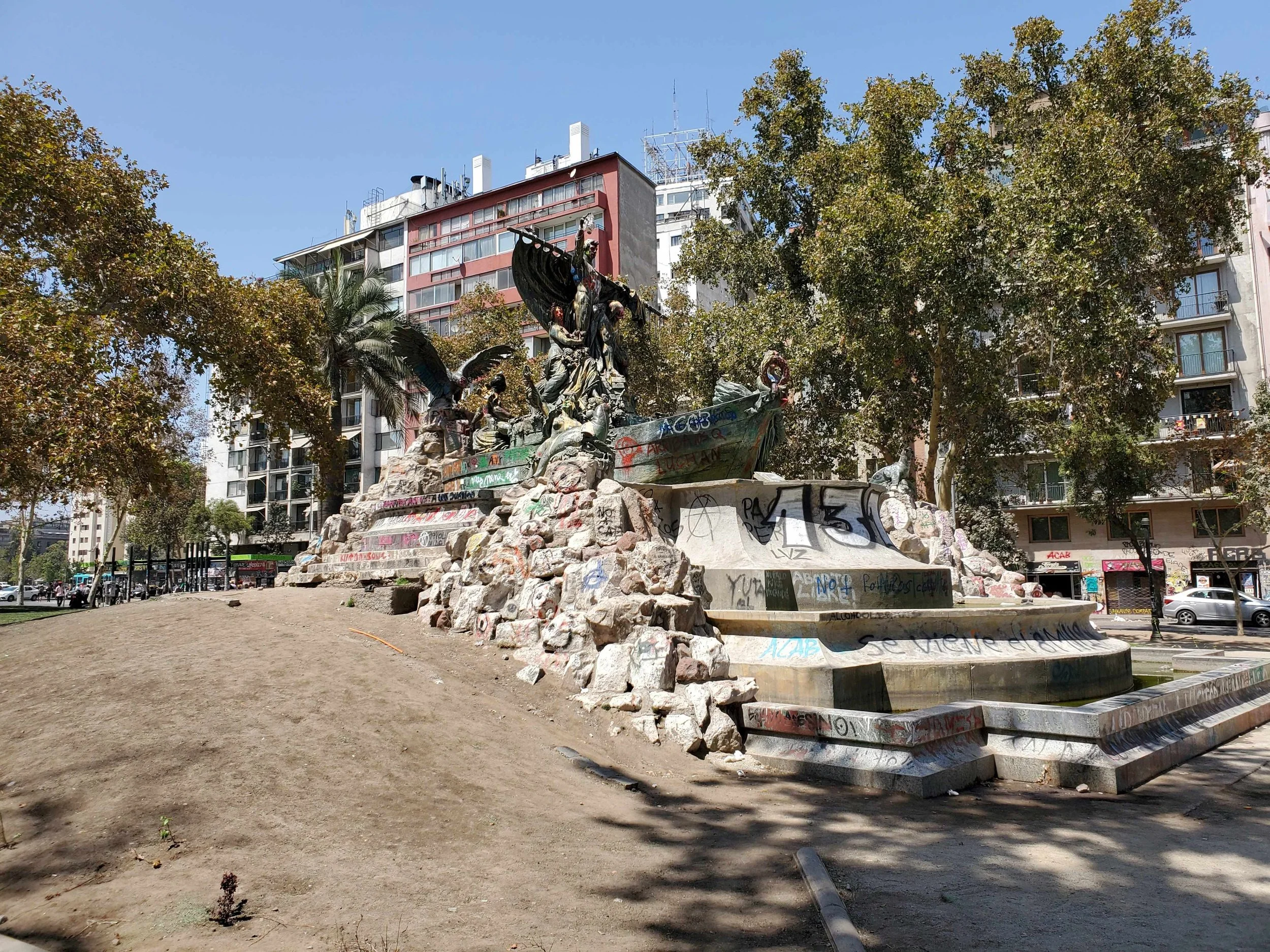
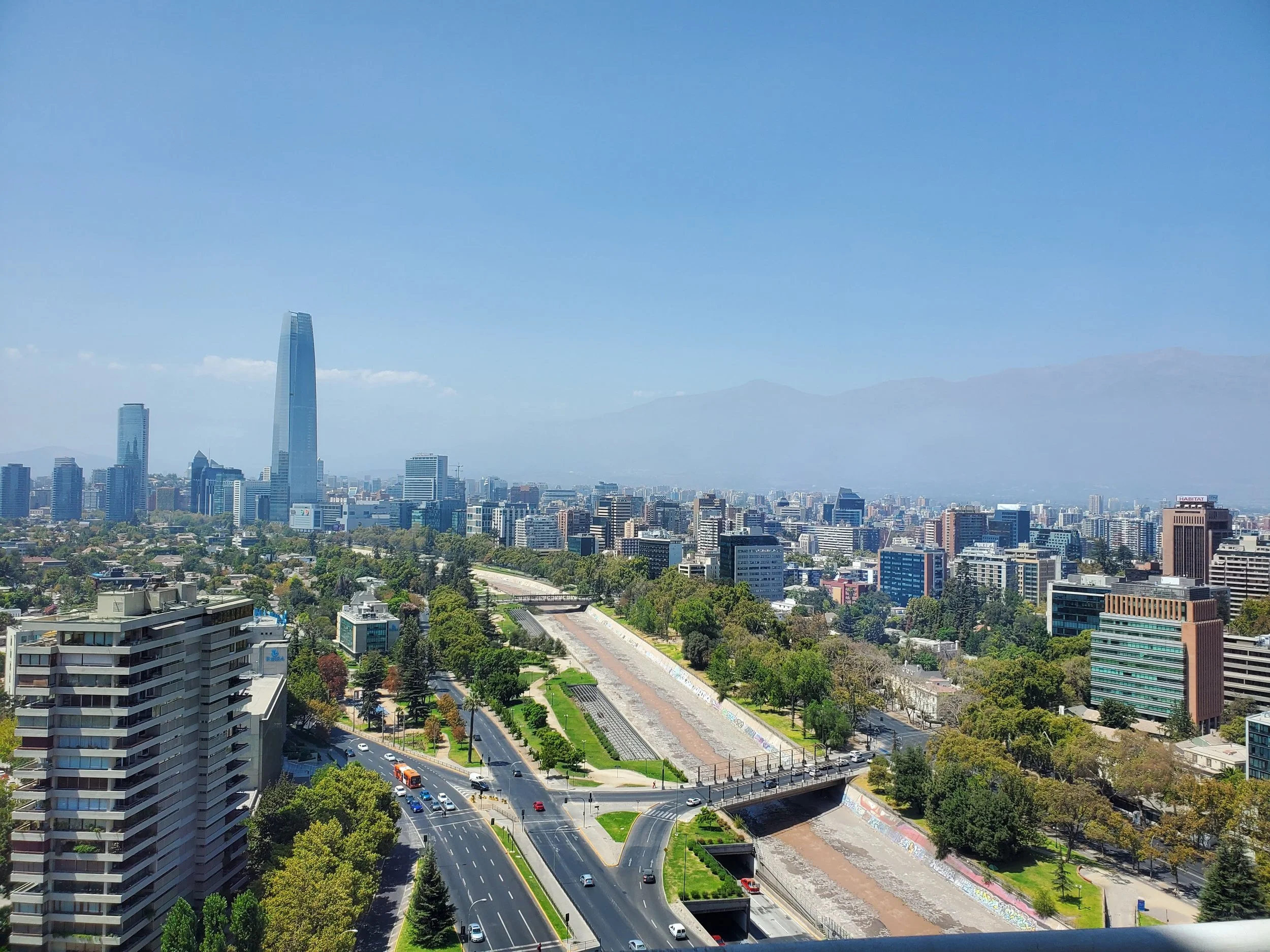
We’ve now visited Santiago twice - once in early 2020, and once in 2026. We enjoyed the city and its people and found parts of it very comparable to cities within the United States. The first time we stayed at the Sheraton Convention Center hotel, which was in a great, safe location across the bridge from the Providencia neighborhood restaurants. The hotel offered a wonderful poolside breakfast buffet with made-to-order omelets. It was next door to an ATM and Starbucks, both of which were convenient. We spent a couple days lounging by the pool and exploring the local restaurants. Our second visit we were more squarely in the Providencia neighborhood at Hotel Solace which offered a chic rooftop pool & bar, as well as a great breakfast. Its location is more convenient than the Sheraton to local restaurants, the nearby Costanera Center mall (also the tallest building in South America!), and circling Uber drivers who can get you anywhere in the city. El Huerto is a wonderful vegetarian restaurant close-by which we visited on both trips and thoroughly enjoyed.
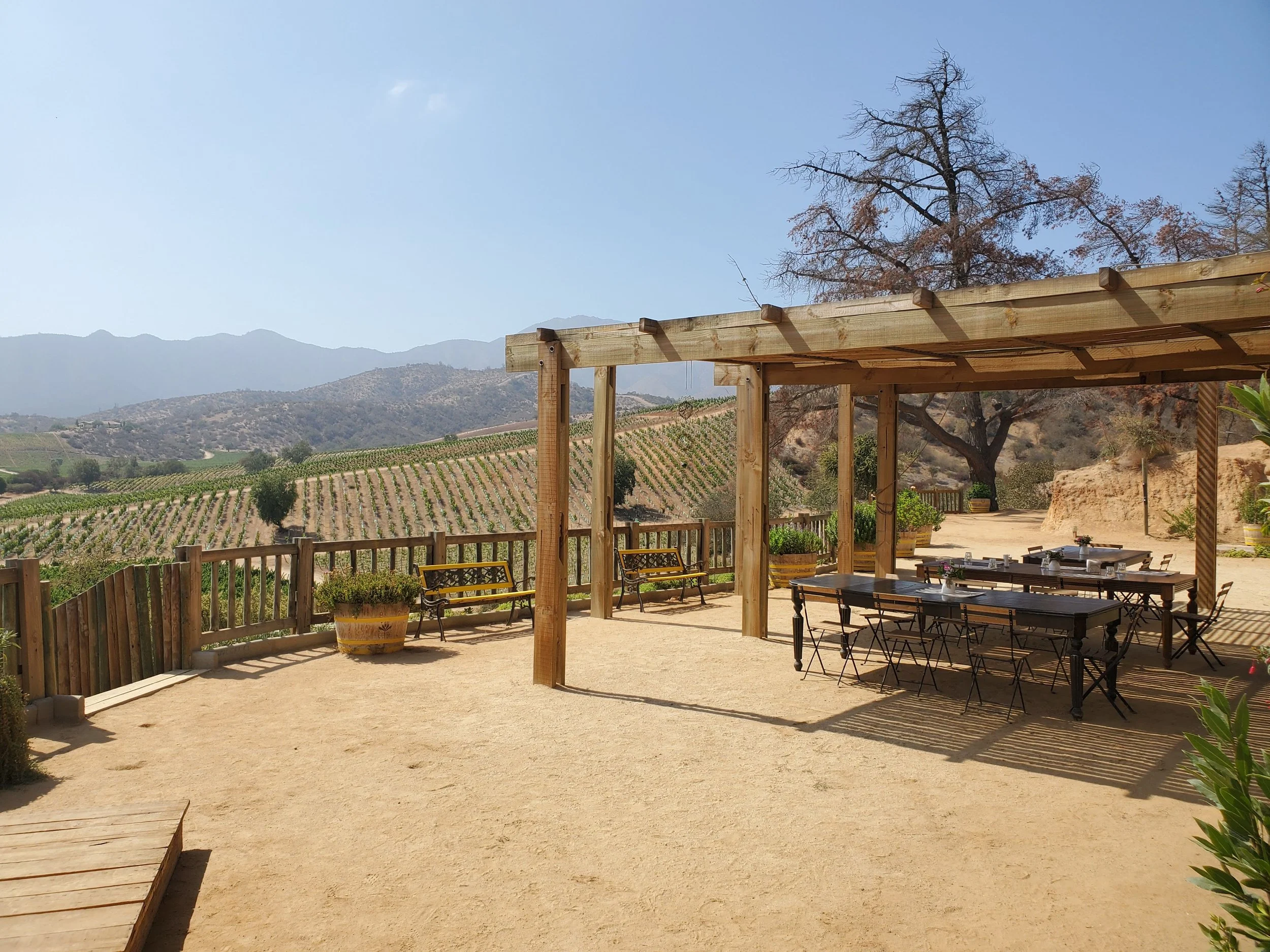
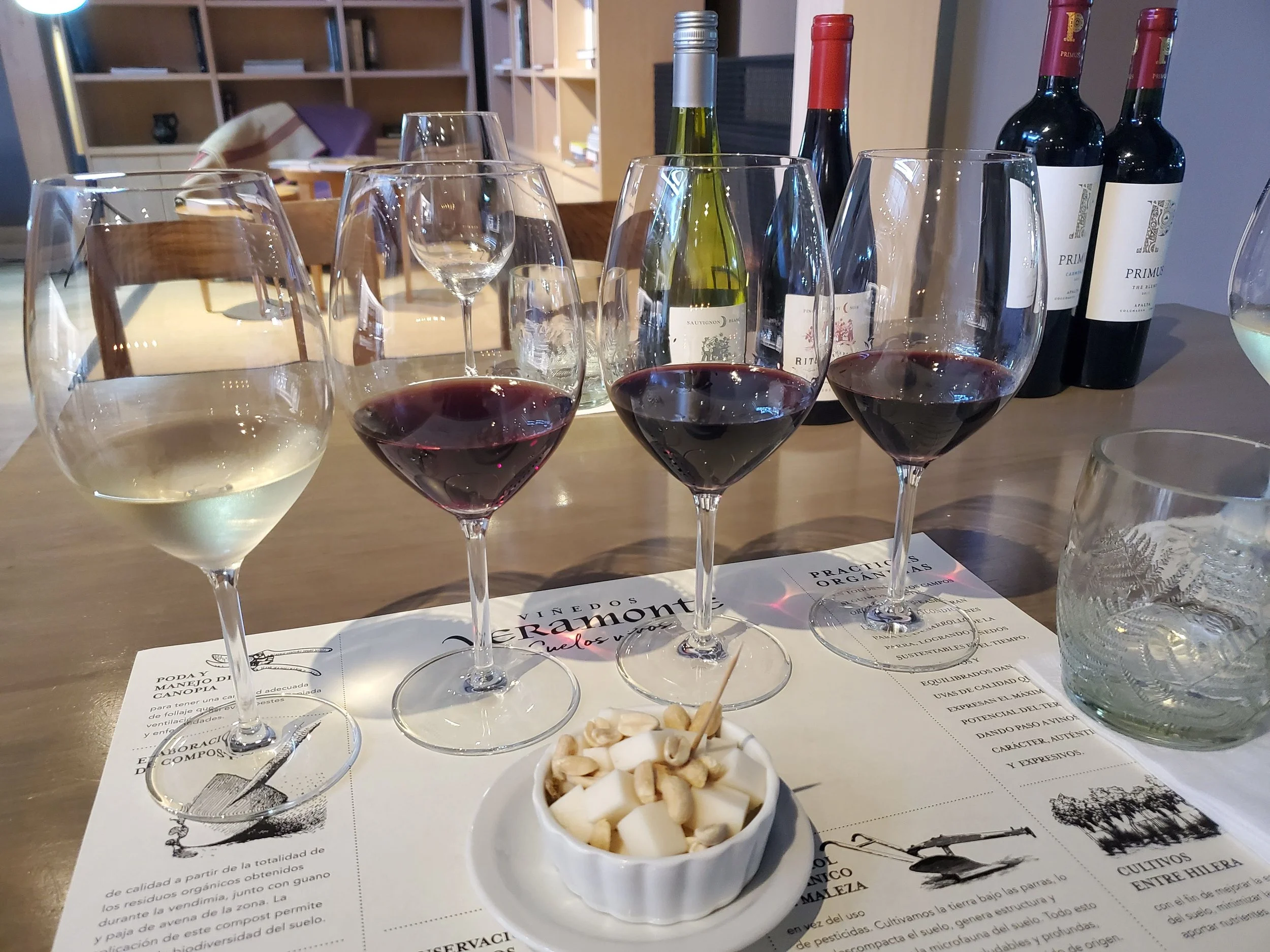
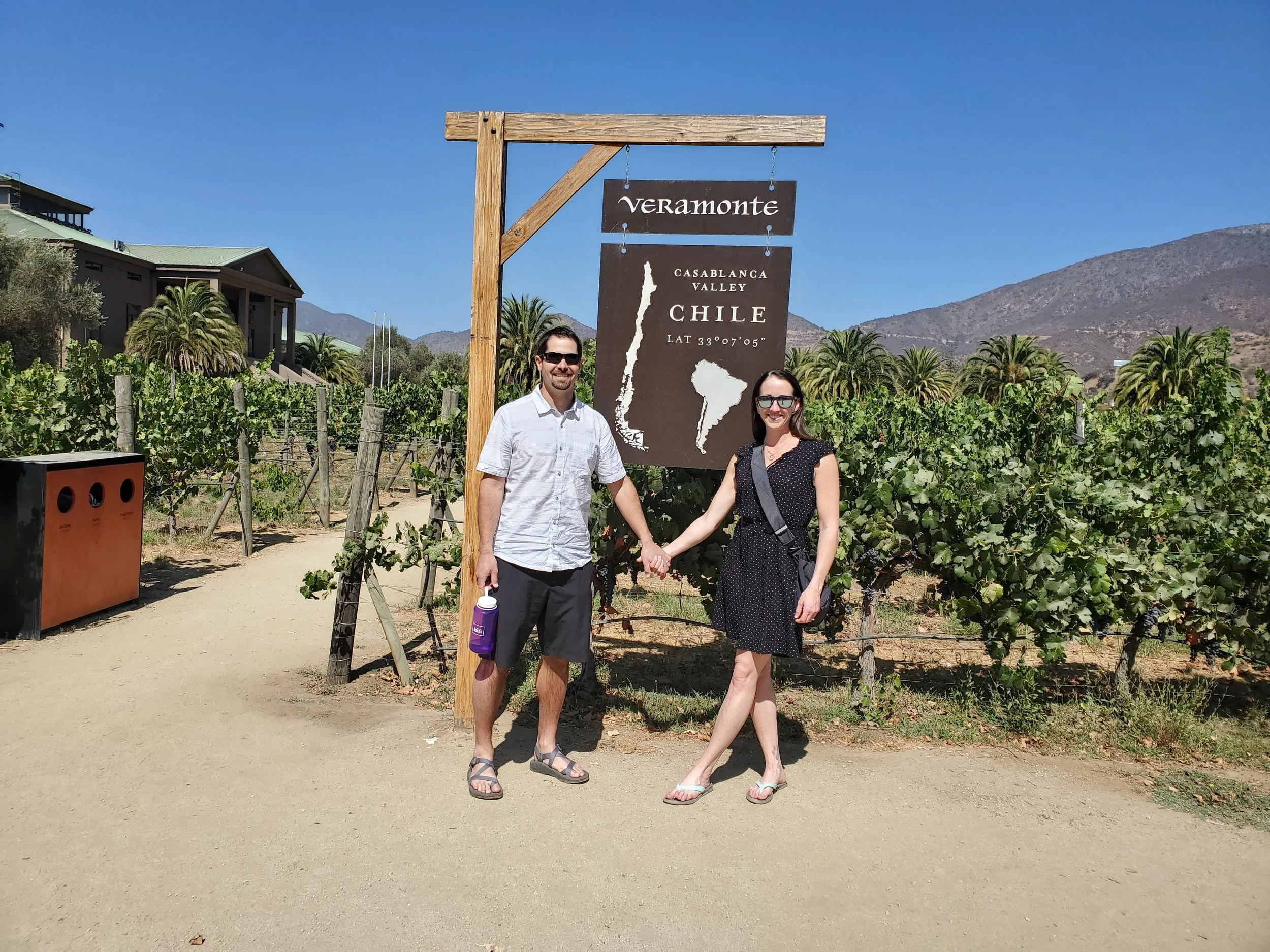
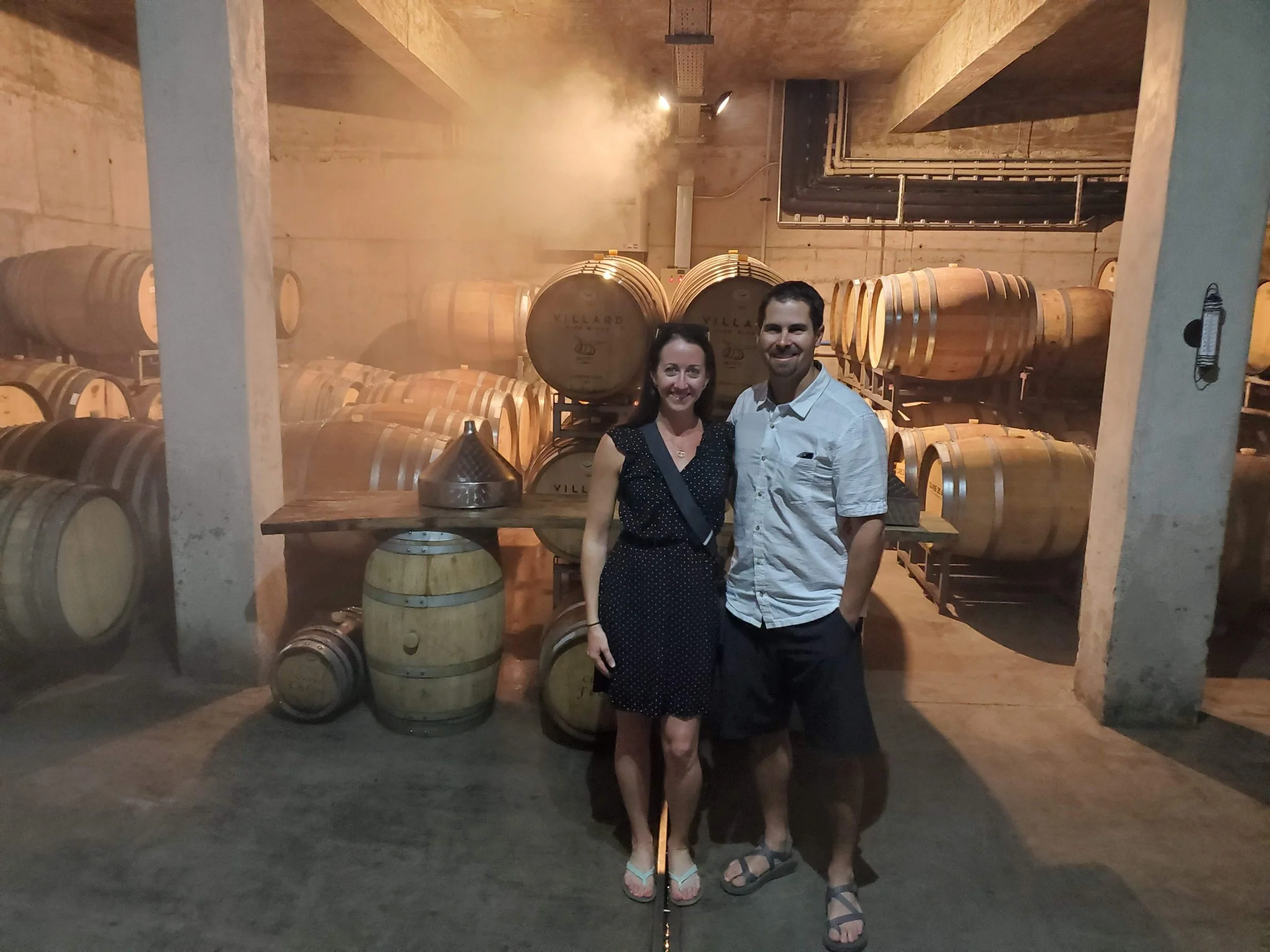
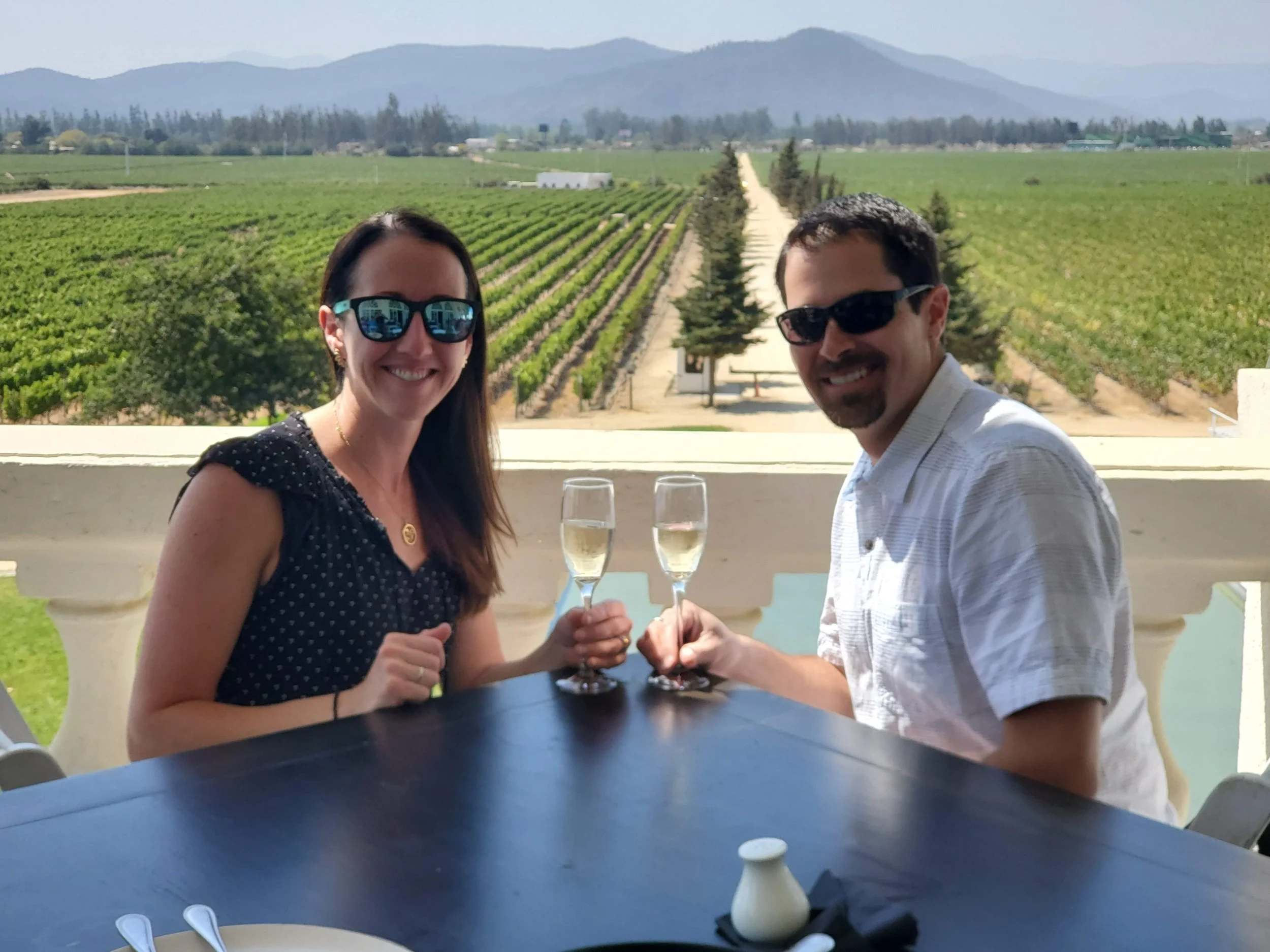
On both trips, we enjoyed a Free Walking Tour (our go-to method of learning about a city!), and a Casablanca Valley Wine Tour we found on Viator. The drive from Santiago to Casablanca is about an hour and the tours we took were very similar. In 2020, we visited Bodegas RE, Villard, Vinamar (for a delicious lunch overlooking the vineyards), and finally Veramonte before heading home. In 2026 the itinerary was: Emiliana, Vinamar, Bodegas RE, and Casas del Bosque (for lunch). Each winery provided tastings and a couple had some small bites as well. They say the Casablanca Valley is similar to Napa Valley in California in terms of its distance from the equator, and from the nearest body of water - hence why the conditions are excellent for wine making.

Torres del Paine
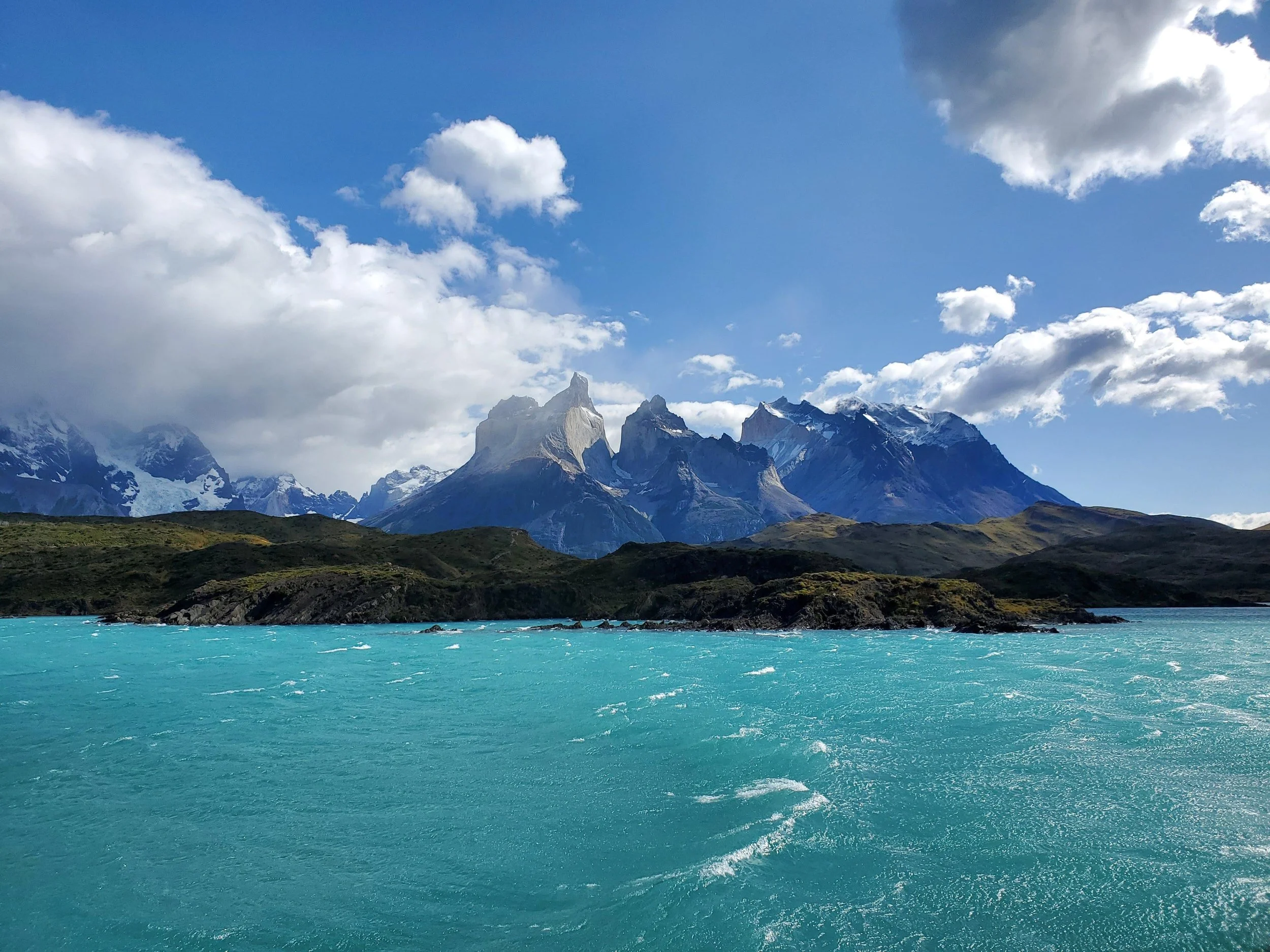
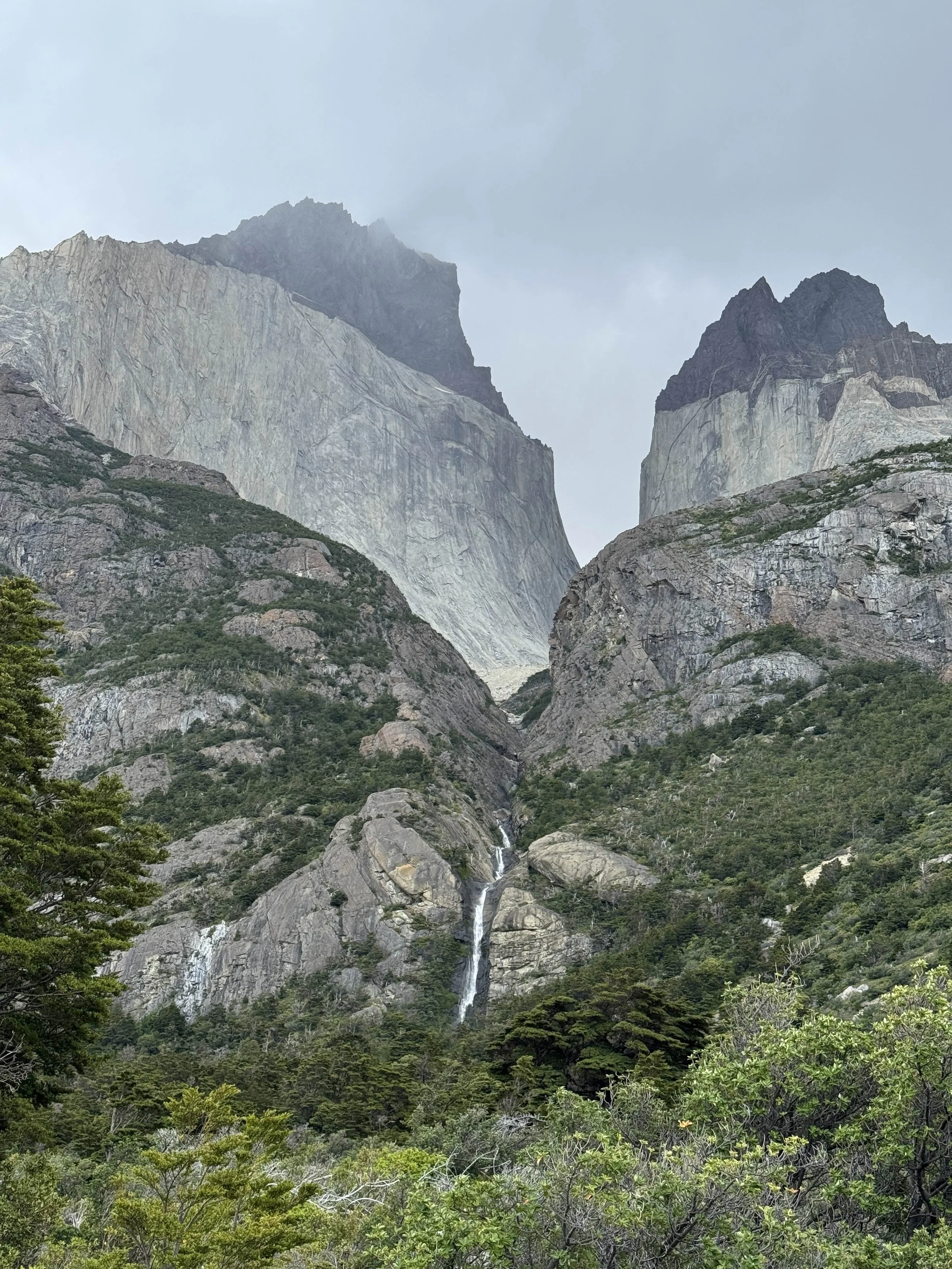
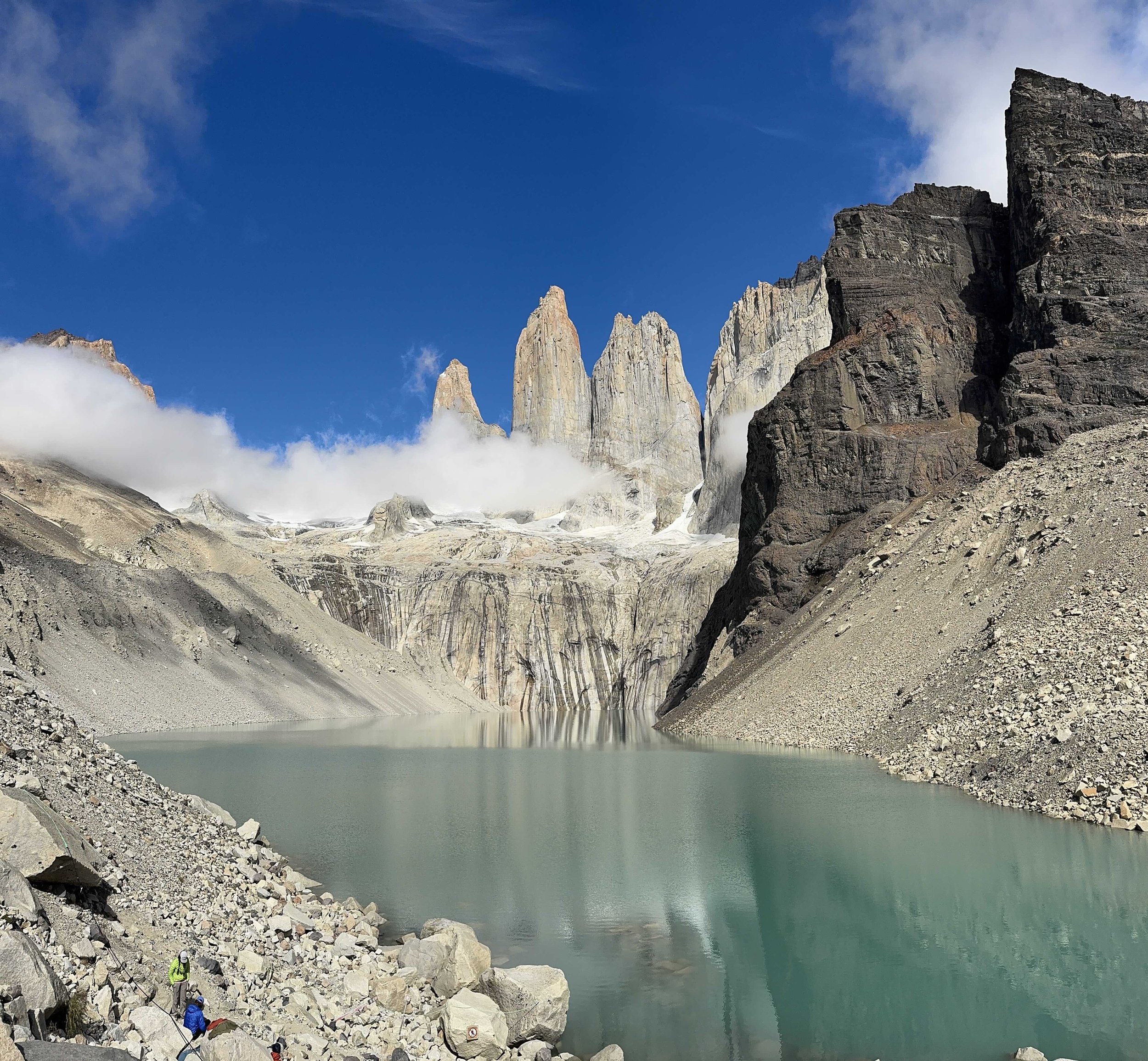
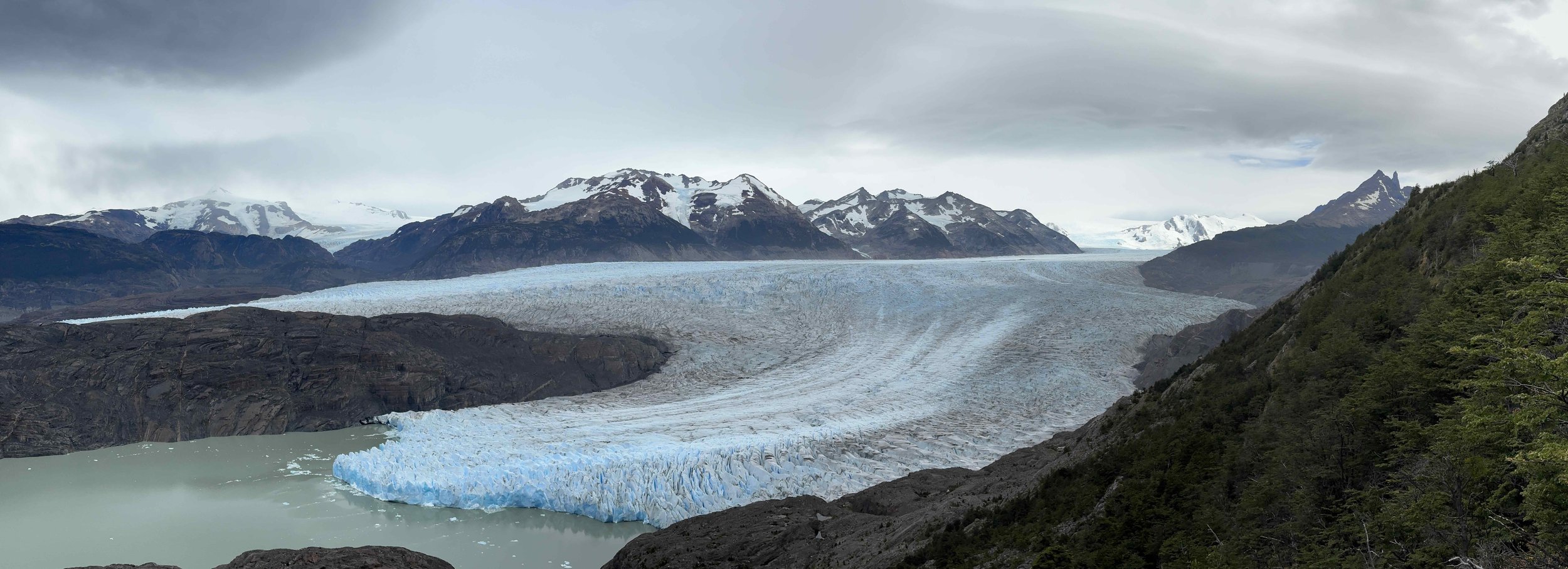
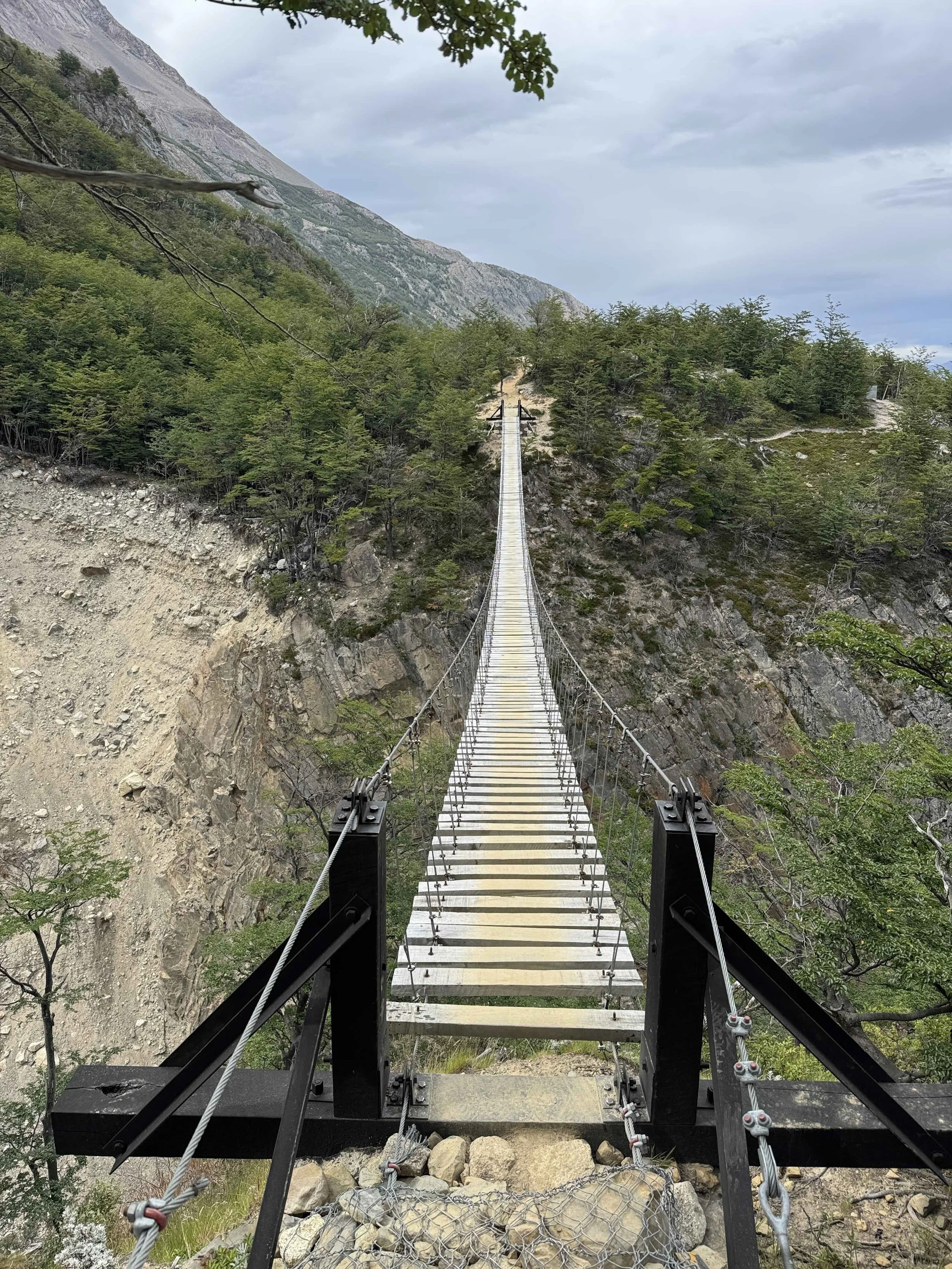
Torres Del Paine National Park is a stunning jewel on the southern tip of South America, and (not surprisingly) was a highlight for us both times we visited. The contrast between barren desert-like low lands, with jagged mountain peaks, constantly varied weather conditions, boulders, glaciers and raging rivers created an exciting energy and visual appeal around every corner. We would highly recommend planning some time in this beautiful part of the world.
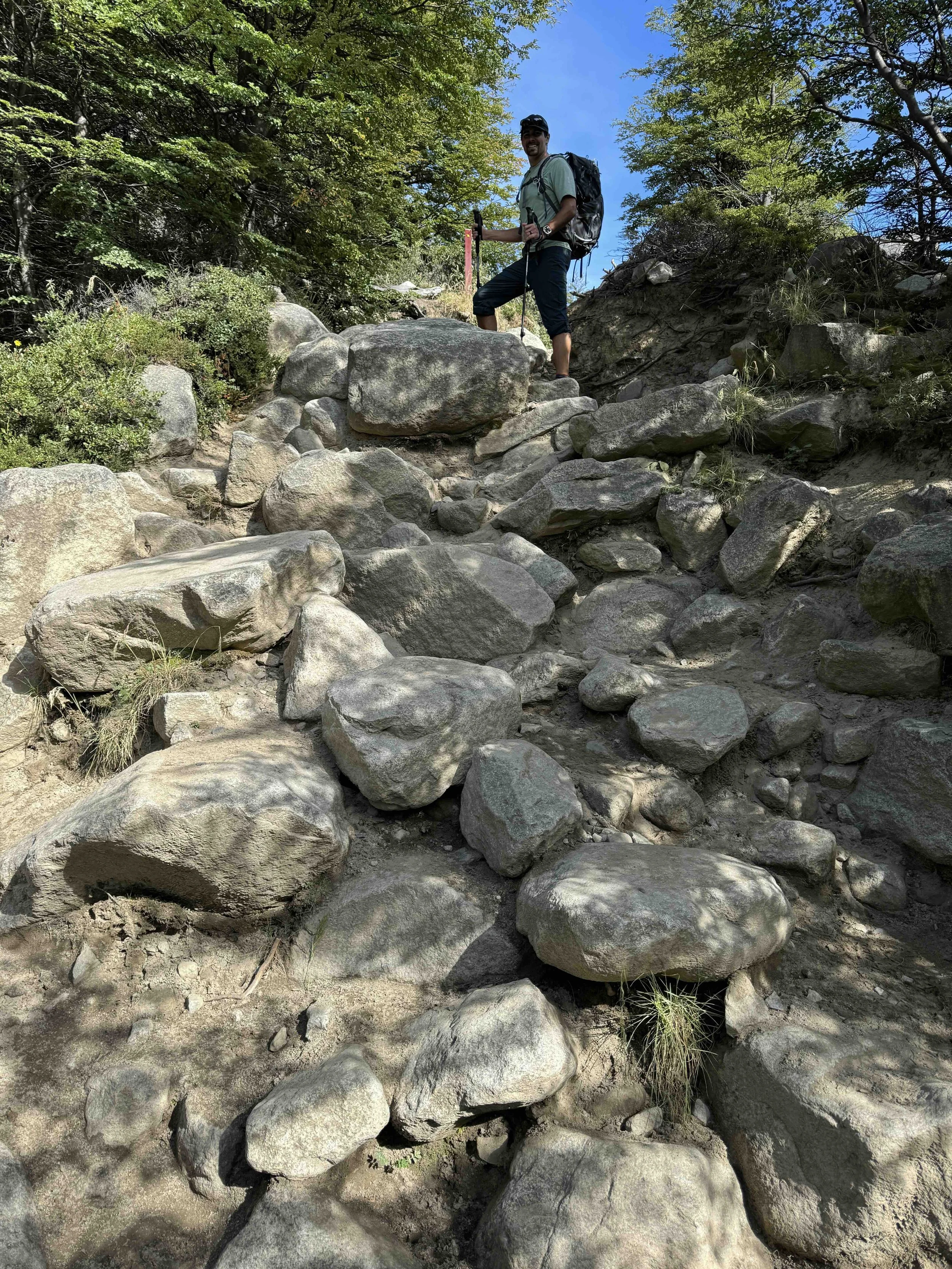
One of the things we were MOST excited to do was to hike the famous W Trek, but regardless of whether you’re planning a quick single day hike or multi-day hikes, be aware that though the trails are VERY well marked (there’s absolutely no need for a guide), they are also VERY rocky - see photo below of one section of trail which was not unique to this park!
Transportation to/from the Park: It is most common to enter the park via Puerto Natales (1.5 hrs bus or car ride). When we visited in 2026, we opted for a bus which was very easy to book, and very comfortable. Bus Fernandez and Bus Sur both offered multiple trips per day to/from Puerto Natales, making 2 stops within the park - 1) Laguna Amarga and 2) the Pudeto Ferry. Note for your transportation back to Puerto Natales, it’s possible to take the bus directly from the Pudeto Ferry OR Laguna Amarga, all the way to Puerto Natales.
Rental cars are available in Puerto Natales if you’re inclined to drive yourself and explore the park on your own.
It’s also possible to rent a car in El Calafate, Argentina, and drive across the border into Chile. The rental car process at the El Calafate airport is easy and the 5-ish hour drive into Chile was uneventful for us. Google maps was accurate and GPS worked the whole way (though cell/internet did not until we crossed into Chile). At the time we did this, it wasn’t possible to book a One-Way rental between Argentina and Chile, so if you choose this option, you’ll likely have to return the car back in Argentina.
If you’re driving from El Calafate to Torres del Paine, you will take Hwy 40 S from just outside of El Calafate to 5S to Esperanza (a small travel stop with reliable gas stations and mini markets). You would then take Hwy 7W to Estancia Tapi Aike and back onto 40S to Cancha Carrera and on to the border crossing. During our research, we read that some travelers took Hwy 40 straight from El Calafate directly to Tapi Aike (skipping Esperanza). However, where 40 splits from 5, it becomes a VERY rough road. We drove it for a few minutes to test it out, and wouldn’t recommend it unless you’re in a 4WD and ready for a BUMPY segment of road. Also, the Tapi Aike gas station may not hold as regular of hours as the stations in Esperanza, and we knew we would need gas to safely complete our trip, so we didn’t really want to skip Esperanza.
The border crossing was little more than 1 building on the Argentina side, and 1 building a few miles further on the Chile side. You need to stop at each building and go through the clearly marked queues to get your passport properly stamped. Each one took only 15-20 minutes and then we were on our way!
Click the tab below to see our Planning/Logistics tips for the park:

Summary
We loved Chile - the people, the adventure, the weather…you name it. We’ve heard wonderful things about Eco-Camp type lodges near the Futaleufu River - a little further north in Patagonia than Torres Del Paine where we visited. If you’re into white water rafting, this would be the place to go. If you have a chance to visit Chile, DO IT!
“Adventure is worthwhile.”
– Aesop